How to receive signs from pets in 2026: a complete guide
March 14, 2026

Have you ever wondered what your cat or dog is trying to tell you when they behave in unusual ways? Missing or misunderstanding your pet’s messages can leave you feeling disconnected, especially during behavioral challenges or after losing a companion. This guide teaches you to recognize and interpret the signs your pet sends, helping you strengthen your bond and respond with compassion when it matters most.
Table of Contents
Preparing To Receive Your Pet’s Signs: What You Need To Know
Responding To Your Pet’s Signs And Supporting Through Grief Or Behavior Changes
Key takeaways
Point | Details |
|---|---|
Communication basics | Pets use body language, vocalizations, and scent to express emotions and needs |
Recognition skills | Identifying specific signals helps you understand contentment, anxiety, grief, or distress |
Behavioral changes | Shifts in routine, appetite, or activity often indicate emotional challenges or loss |
Response matters | Appropriate reactions to pet signs strengthen bonds and support well-being |
Understanding your pet’s communication signals
Your pet communicates constantly, but most owners miss the subtle messages. Cats and dogs have distinct communication methods you need to learn.
Cats communicate through body language, including tail position, movement, and fur appearance. Their ears rotate to show attention or fear. Eye contact varies: slow blinking signals trust, while dilated pupils can mean excitement or stress. Vocalizations range from purring (usually contentment) to hissing (defensive warning). Each sound carries specific meaning based on context.
Dogs communicate through body language, vocalizations, and scent. Tail position, ear placement, and facial expressions reveal emotional states. Barking varies in pitch and intensity depending on the message. Whining often signals anxiety or desire. Growling can indicate fear, discomfort, or playfulness depending on body posture.
Understanding these basics helps you notice daily signals you previously ignored. A wagging tail means different things for cats versus dogs. In cats, rapid tail movement often signals agitation or conflict. In dogs, tail wagging usually indicates emotional arousal, which could be positive excitement or negative tension depending on height and speed.
Pro Tip: Watch your pet’s entire body, not just one signal. A dog with a wagging tail but tense body language may feel uncertain rather than happy.
Mastering animal communication techniques requires observing multiple signals simultaneously. Consider the situation, your pet’s normal behavior patterns, and any recent changes in their environment. This holistic approach prevents misinterpretation.
Tail signals reveal immediate emotional state
Ear position shows attention and comfort level
Vocalizations express specific needs or warnings
Facial expressions indicate mood and intention
Body posture demonstrates confidence or anxiety
Preparing to receive your pet’s signs: what you need to know
Before interpreting pet messages effectively, you must prepare yourself emotionally and mentally. Your state of mind directly affects how well your pet communicates with you.
Emotional stability creates safety for your pet. Animals sense human stress and anxiety, which can suppress their natural communication. When you remain calm, your pet feels secure enough to express genuine feelings. This becomes especially important during challenging times like illness, behavior problems, or grief.
Consistent observation builds pattern recognition. Spend dedicated time watching your pet without distractions. Notice their normal behaviors so changes become obvious. Small shifts in routine, energy level, or interaction style often signal important messages you need to receive.
Owners should be patient and observant, looking for changes in their dog’s usual behavior especially after loss or with behavioral challenges. Rushing to conclusions prevents accurate interpretation. Give yourself time to gather information before deciding what your pet’s signs mean.
Behavioral changes deserve special attention. Recognizing distress early allows pet parents to provide targeted emotional support, prevent long-term anxiety, and strengthen bonds. Withdrawal, altered vocalizations, or changes in eating patterns may indicate grief, fear, or physical discomfort.
Pro Tip: Keep a simple journal noting unusual behaviors, times of day, and surrounding circumstances. Patterns emerge quickly when you track signs systematically.
Prepare mentally for difficult messages. Your pet may communicate pain, fear, or sadness. Staying open rather than defensive helps you respond appropriately. This communication guide for grieving owners explains how emotional readiness improves connection during loss.
Create calm, quiet observation time daily
Notice baseline behaviors to spot changes
Stay emotionally centered during interpretation
Document patterns rather than isolated incidents
Remain open to challenging messages
How to interpret common pet signs and messages
Now that you understand communication basics and personal preparation, you can actively interpret specific signals your pet sends.
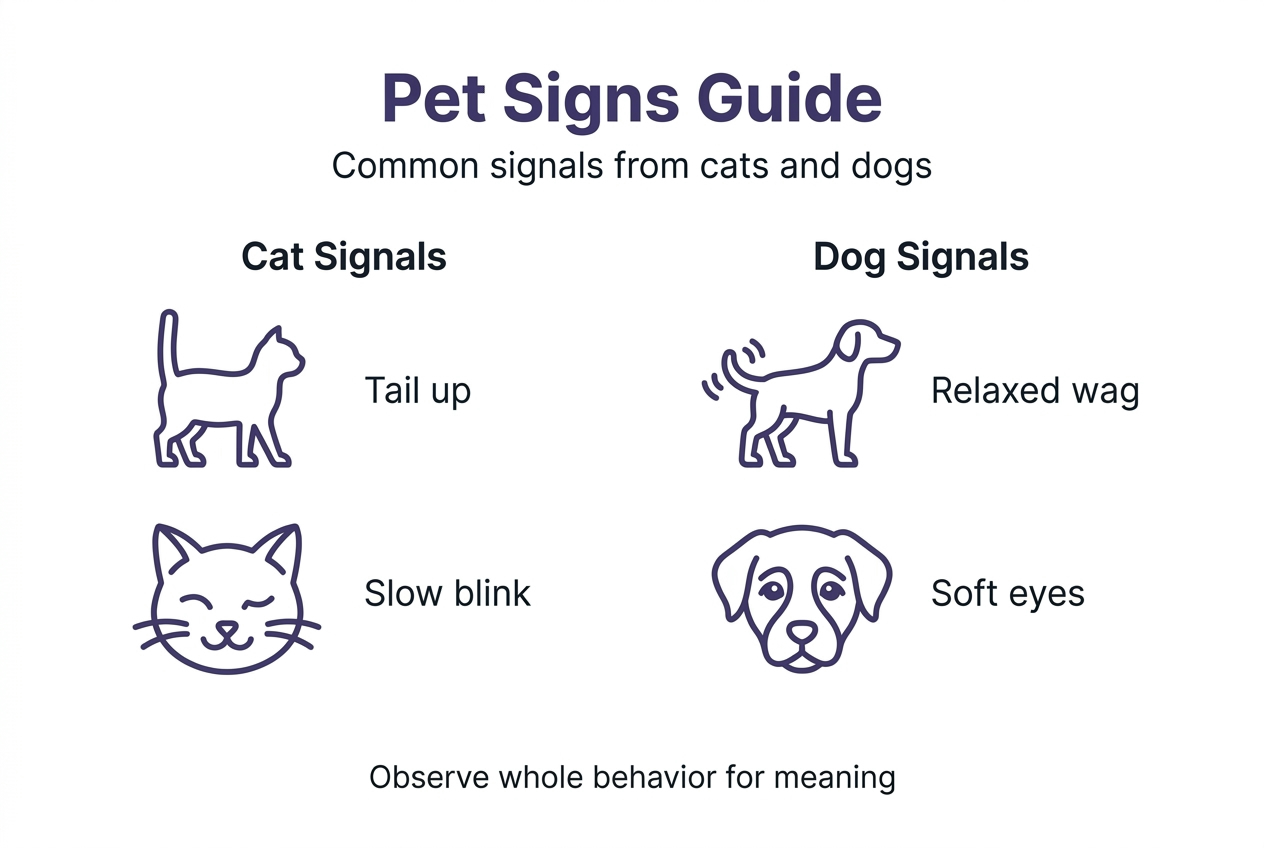
Cat communication signals
Tail position indicates emotional state: straight up with a slight curve means confident and friendly; puffed up means defensive. A tail wrapped around you shows affection. Low or tucked tails signal fear or submission. Thrashing indicates agitation, annoyance, or internal conflict about a situation.
Slow blinking from cats signals trust and deep affection. Return the gesture to strengthen your bond. Direct staring without blinking can feel threatening to cats. Dilated pupils show excitement, fear, or hunting mode depending on context.
Meowing primarily targets humans, not other cats. Your cat developed this vocalization to communicate needs to you. Frequency, pitch, and volume convey urgency or specific requests. High-pitched meows often request food or attention. Low-pitched sounds may indicate complaint or discomfort.
Dog communication signals
Tail wagging signifies emotional arousal which could be positive or negative; a higher tail indicates assertiveness. Fast wagging with loose body language shows happiness. Slow wagging with stiff posture suggests uncertainty. A tucked tail reveals anxiety, fear, or submission.

Ear position matters significantly. Forward-facing ears show attention and confidence. Ears pulled back indicate fear, submission, or friendliness depending on other signals. Relaxed ears in natural position signal comfort.
Facial expressions reveal emotions clearly. Soft, relaxed eyes show contentment. Whale eye (showing whites) indicates stress or discomfort. Mouth position changes with mood: relaxed and slightly open means calm, while closed tight suggests tension.
Interpreting vocal communication
Dogs use varied vocalizations with different meanings. Barking pitch changes convey command intention and emotion. High-pitched barks often signal excitement or play. Deep barks may warn or threaten. Whining expresses anxiety, desire, or submission. Growling can indicate play, warning, or fear.
Pro Tip: Context determines meaning. A growl during play with loose body language differs completely from a growl with stiff posture and direct stare.
To understand cats and communicate with dogs effectively, observe the whole picture. Combine vocal signals with body language, facial expressions, and situational context for accurate interpretation.
Signal Type | Cat Meaning | Dog Meaning |
|---|---|---|
Upright tail | Friendly, confident | Alert, assertive |
Low/tucked tail | Fearful, submissive | Anxious, scared |
Slow movements | Cautious, hunting | Uncertain, stressed |
Direct stare | Challenge, focus | Confidence or threat |
Relaxed posture | Content, safe | Happy, comfortable |
Step-by-step interpretation process
Observe the primary signal (tail, ears, vocalization)
Check body posture and muscle tension
Note facial expressions and eye contact
Consider environmental context and triggers
Compare to your pet’s normal baseline behavior
Combine all signals for complete message
Responding to your pet’s signs and supporting through grief or behavior changes
Interpreting signs means nothing without appropriate responses. Your reactions teach your pet whether communication works.
Recognize emotional distress signals early. Lethargy or unusual tiredness may indicate depression or illness. Withdrawal from family activities shows emotional pain. Changes in vocalization and appetite can indicate grief in pets; early recognition helps provide targeted support. Excessive vocalization or unusual quietness both deserve attention.
Be calm and reassuring during difficult times. Your emotional stability helps your pet feel safe enough to express vulnerable feelings. Speak in soothing tones. Maintain consistent routines to provide security. Avoid punishment for grief behaviors like accidents or withdrawal, which only add stress.
Use gentle communication techniques appropriate for each species. Slow blinking works wonders with anxious cats. Soothing verbal tones calm distressed dogs. Physical touch should match your pet’s comfort level. Some pets seek extra contact during stress, while others need space.
“Understanding pet communication goes beyond basic training. It requires empathy, patience, and willingness to see the world through your animal’s perspective. When you truly listen, your pet will share feelings you never imagined they could express.”
If behavior problems persist despite your efforts, seek professional help. Consult certified trainers or veterinary behaviorists to accurately interpret and address behavioral challenges. Complex issues like severe anxiety, aggression, or prolonged grief may need expert intervention you cannot provide alone.
Early and compassionate responses strengthen your bond and aid pet recovery. When your pet learns that communicating brings understanding and support, they will share more openly. This creates a positive cycle of deeper connection.
This dog body language system and learning to communicate with dogs provides frameworks for ongoing improvement. Practice daily observation and response to build stronger intuitive understanding over time.
Respond promptly to distress signals
Maintain calm, reassuring presence
Adjust environment to reduce stress
Seek professional help when needed
Validate your pet’s feelings through appropriate response
Connect deeper with your pet through professional guidance
You have learned to recognize and interpret many pet signs yourself, but some messages remain subtle or unclear. Professional animal communicators offer expertise that enhances what you have started building.

Expert guidance helps during behavioral challenges, grief, or when you sense your pet has important messages you cannot quite understand. Pet Psychic animal communication readings provide detailed insights into your pet’s thoughts, feelings, and needs through personalized sessions. These readings work remotely using photographs, making professional support accessible regardless of location. Whether you are navigating loss, addressing behavior issues, or simply wanting to deepen your bond, professional communicators translate the nuances you might miss. This personalized approach complements your own observation skills, giving you confidence in understanding and responding to your pet’s unique communication style.
FAQ
How can I tell if my pet is trying to communicate grief?
Look for behavioral changes like decreased appetite, withdrawal from normal activities, increased vocalizations, or unusual quietness. Pets grieving a companion or family member may search for the lost individual or show less interest in play. These signs typically appear within days of a loss and may persist for weeks.
What does a cat’s tail position usually mean?
An upright tail with a slight curl at the tip signals friendliness and confidence. A puffed-up tail indicates fear or defensive aggression. Thrashing or whipping movements show agitation or emotional conflict. A low or tucked tail reveals fear, submission, or discomfort in the current situation.
How can I improve my pet’s comfort when they show anxiety?
Provide a calm, quiet environment free from sudden noises or disruptions. Maintain consistent daily routines for feeding, walks, and play. Use gentle touch if your pet finds it comforting, or give space if they prefer distance. Consider consulting certified behavior experts if anxiety persists despite your efforts.
Can pets communicate through sounds to express needs?
Yes, cats meow primarily to interact with humans, signaling desires for food, attention, or access to spaces. Dogs use varied vocalizations including barks, whines, growls, and howls, each with different meanings based on pitch, intensity, and context. Learning your individual pet’s vocal patterns helps you distinguish specific requests from general communication.
What should I do if my pet’s behavior suddenly changes?
First, rule out medical issues by consulting your veterinarian, as pain or illness often causes behavioral shifts. If health checks clear, evaluate environmental changes, family dynamics, or recent losses that might affect your pet emotionally. Document specific behavior changes, their frequency, and triggering situations. This information helps professionals provide targeted support if needed.
Recommended
Animal communication techniques for pet connection 2026 | PetPsychic Blog
Animal mediumship guide 2026: 85% gain emotional insight | PetPsychic Blog
Pet afterlife communication: comfort and closure in 2026 | PetPsychic Blog
A Pet Psychic’s Guide on How to Communicate with Dogs | PetPsychic Blog
6 Effective Pet Calming Techniques for Urban Dog Owners – Teddy Pet