Animal communication guide for grieving owners: 70% success
March 6, 2026

Losing a pet creates a profound emotional void that society often dismisses, leaving you isolated in your grief. Grieving pet owners often face disenfranchised grief, where the depth of your pain goes unrecognized by friends, family, and colleagues. Animal communication offers an intuitive pathway to connect with your deceased companion, providing emotional closure and healing through practical, stepwise techniques that honor your bond and validate your experience.
Table of Contents
Key takeaways
Point | Details |
|---|---|
Grief validation | Society minimizes pet loss pain, but animal communication acknowledges your emotional bond |
Preparation matters | Meditation and focused intent improve success rates by over 70% |
Healing benefits | Communication reduces guilt, loneliness, and provides reassurance about your pet’s wellbeing |
Avoid common pitfalls | Expecting instant answers or misinterpreting symbolic messages causes frustration |
Complementary support | This practice supports but does not replace professional mental health therapy |
Understanding grief and animal communication
The pain of losing a pet cuts deep, yet many people around you may struggle to understand why you’re still grieving weeks or months later. Disenfranchised grief in pet loss occurs when society fails to validate your emotional experience, leaving you feeling isolated and misunderstood. Your grief is real, legitimate, and deserves recognition.
Pets grieve too, which validates the depth of animal emotional bonds. Over 60% of pets exhibit behavioral changes after the loss of a companion, showing reduced appetite, lethargy, or searching behaviors. This evidence confirms that animals form profound connections, and your bond with your pet was mutual and meaningful.
Animal communication provides a bridge to emotional healing by allowing you to connect intuitively with your deceased companion. This practice validates your emotional bond and offers comfort when traditional support systems fall short. Key benefits include:
Receiving reassurance that your pet is at peace
Resolving guilt about end-of-life decisions
Understanding your pet’s final messages
Finding closure through continued connection
Honoring the relationship you shared
While skeptics may question telepathic communication, the emotional relief and healing many owners experience makes this practice a valuable tool for processing grief. You deserve support that acknowledges your pain and helps you move toward acceptance.
Prerequisites and preparing for animal communication
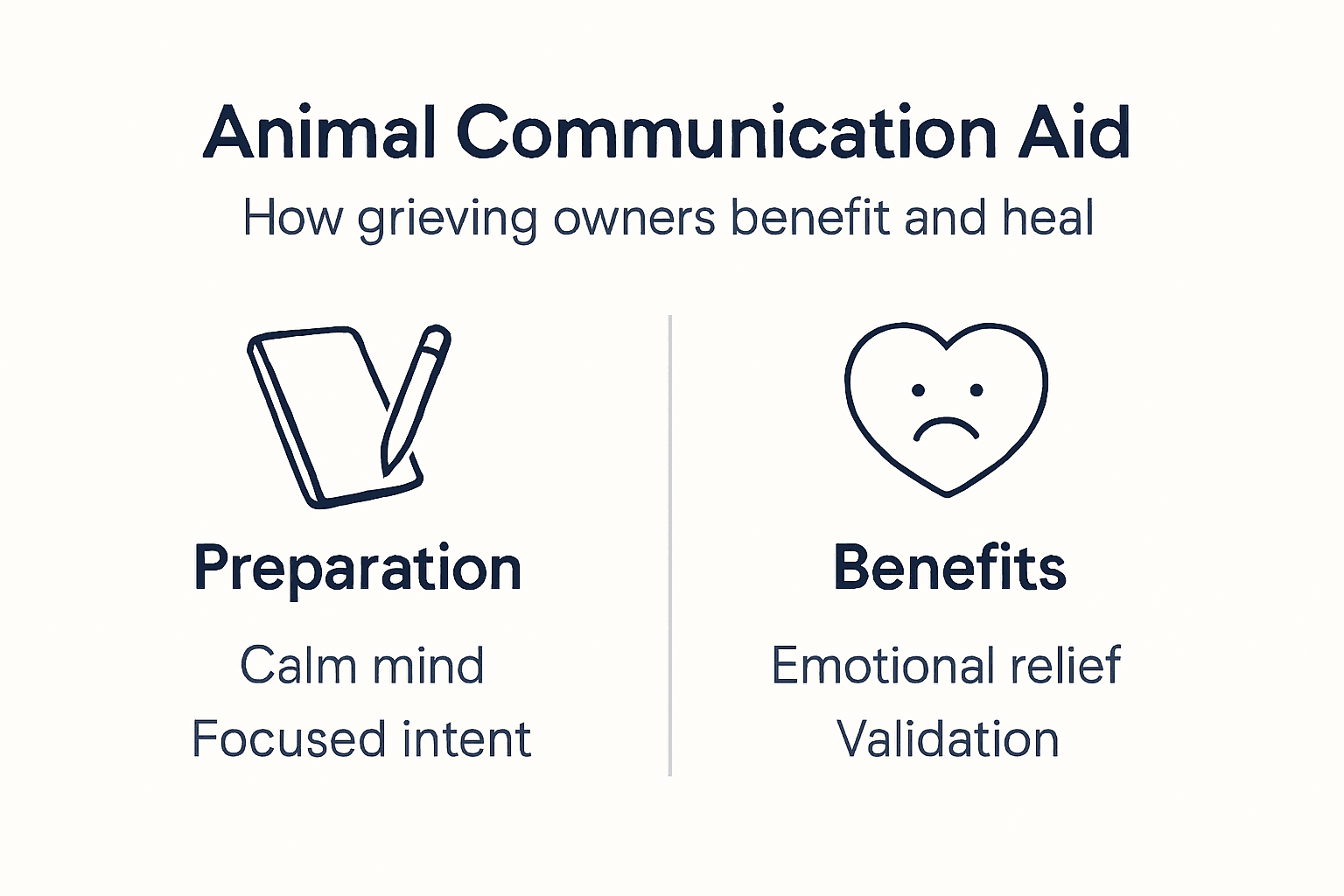
Successful animal communication requires specific mental, emotional, and environmental preparations. Rushing into a session without proper groundwork often leads to frustration and disappointing results. Taking time to prepare dramatically improves your chances of meaningful connection.

Mental preparation starts with calming your racing thoughts. Meditation and focused intent improve communication success over 70% because a quiet mind becomes receptive to subtle impressions. Spend 10 to 15 minutes breathing deeply and releasing tension before attempting communication.
Emotional readiness prevents misinterpretations driven by wishful thinking. Acknowledge your grief without letting desperation control the session. When you approach communication from a place of openness rather than need, you receive clearer messages. Pets exhibit behavioral changes linked to grief, reminding us that emotional honesty strengthens connection.
Your physical environment matters significantly. Essential preparation steps include:
Choose a quiet environment free from interruptions and noise
Gather focal points like your pet’s photo, collar, or favorite toy
Dim lighting or use candles to create a calming atmosphere
Silence phones and eliminate potential distractions
Allow at least 30 minutes of uninterrupted time
Pro Tip: Keep a journal nearby to record impressions immediately after your session. Fleeting thoughts and images fade quickly, but written records help you track patterns and validate genuine connections over time.
Patience is your most valuable asset. First attempts rarely produce dramatic results, but consistent practice builds your intuitive muscles. Approach each session with curiosity rather than expectation, allowing whatever comes through to arrive naturally.
Step-by-step guide to initiating animal communication
Following a structured approach transforms abstract concepts into practical action. These steps create conditions for authentic connection while honoring your emotional needs and your pet’s energy.
Begin every session by entering a meditative state. Sit comfortably, close your eyes, and focus on your breathing for 10 minutes. Notice thoughts without engaging them, letting mental chatter settle like sediment in water. A calm mind becomes the foundation for receptivity.
Set your intention clearly and respectfully. Speak aloud or mentally state your purpose, such as “I wish to connect with [pet’s name] to receive comfort and understand they are at peace.” Clarity prevents confusion and focuses your energy on healing rather than desperation.
Use a focal point to anchor your connection. Hold your pet’s photo, close your eyes, and visualize them in vivid detail. Remember their physical presence, personality quirks, and the feeling of being together. This visualization acts as a telepathic communication technique that bridges dimensions.
Listen receptively without forcing outcomes. Open your awareness to impressions, which may arrive as:
Mental images or fleeting visions
Emotional sensations like warmth or peace
Physical feelings in your body
Sudden knowing or intuitive thoughts
Scents, sounds, or sensory memories
Never dismiss subtle impressions as imagination. Genuine communication with pets often feels gentle and natural rather than dramatic. Trust your first instincts without second-guessing.
Journal immediately after your session ends. Write everything you experienced, even details that seem insignificant or confusing. Patterns emerge over multiple sessions, and written records help you distinguish authentic messages from wishful thinking.
Communication Element | Description | Success Indicator |
|---|---|---|
Mental State | Calm, receptive, patient | Thoughts flow naturally |
Emotional Tone | Open without desperation | Feelings of peace emerge |
Physical Sensations | Warmth, tingling, pressure | Body responds subtly |
Message Clarity | Symbolic or literal impressions | Insights feel right |
Post-Session | Comfort, reduced grief | Emotional relief occurs |
Pro Tip: Practitioners report positive connections in over 70% of cases with preparation, proving that consistent practice and proper groundwork significantly improve outcomes. Don’t abandon the process after one attempt.
Common mistakes and troubleshooting animal communication
Even well-intentioned attempts can fail when common errors derail your focus and expectations. Recognizing these pitfalls helps you adjust your approach for better results and emotional protection.
Expecting instant, dramatic messages sets you up for disappointment. Communication develops gradually through practice, and your first sessions may produce only subtle impressions. Frustration blocks receptivity, creating a negative feedback loop that prevents connection.
Skipping mental and emotional preparation significantly reduces success. Jumping straight into communication without meditation, intention-setting, or environmental preparation leaves your mind too chaotic to receive delicate impressions. The groundwork matters as much as the session itself.
Misreading symbolic messages causes unnecessary confusion and doubt. Animals often communicate through metaphors, emotions, and sensory impressions rather than clear words. A vision of your pet running freely might symbolize their peace, not a literal location. Avoid misinterpretations by considering emotional context over literal meaning.
Key mistakes to avoid include:
Practicing in noisy, distracting environments
Forcing specific answers instead of allowing natural flow
Dismissing subtle impressions as mere imagination
Attempting communication during emotional breakdowns
Comparing your experience to others’ dramatic stories
Troubleshooting begins with honest self-assessment. If you receive no impressions, return to preparation basics and extend your meditation time. If messages feel confusing, journal more thoroughly and look for patterns across multiple sessions. If grief overwhelms you mid-session, pause and return when emotional intensity subsides.
Patience and repeated practice solve most challenges. Your intuitive abilities strengthen with use, like muscles developing through exercise. Early struggles don’t predict long-term failure, so give yourself permission to learn gradually.
Safety considerations and ethical warnings
Animal communication supports emotional healing but cannot replace professional mental health care. Understanding boundaries protects your wellbeing and ensures you receive appropriate support for serious psychological challenges.
This practice complements but does not substitute therapy. Animal communication complements but does not replace mental health treatment for depression, trauma, or complicated grief. If you experience suicidal thoughts, severe depression, or inability to function daily, seek professional mental health support immediately.
Beware of practitioners making unrealistic promises. No one can guarantee specific messages or contact on demand because intuitive work involves variables beyond human control. Red flags include:
Guarantees of hearing your pet’s voice clearly
Pressure to purchase multiple expensive sessions upfront
Claims of exclusive abilities no one else possesses
Refusal to acknowledge limitations or unsuccessful attempts
Maintain realistic expectations about what communication can achieve. You may receive comfort, reassurance, and emotional closure, but you won’t have conversations identical to when your pet was alive. The connection differs in quality and clarity.
“Pet loss grief deserves the same respect and support as any profound loss. Combining intuitive practices with professional counseling creates the most comprehensive healing approach, honoring both emotional and spiritual needs while ensuring mental health safety.”
Respect ethical boundaries in your practice. Never use animal communication to avoid necessary grief work or bypass emotional processing. Healing requires facing pain, not escaping it through supernatural means. The goal is integration and acceptance, not denial or avoidance.
Expected outcomes and realistic healing timelines
Understanding typical healing trajectories helps you set appropriate expectations and measure progress accurately. Grief resolution takes time, and animal communication accelerates but doesn’t eliminate the natural mourning process.
Healing unfolds gradually over weeks to months rather than days. Healing timelines vary from weeks to months, with communication sessions providing comfort and guidance at each stage. Early sessions may focus on reassurance, while later connections help you release guilt and embrace memories without pain.
Repeated sessions build cumulative benefits. Each successful connection reinforces that your pet’s energy continues and your bond transcends physical death. This ongoing relationship provides comfort during difficult moments and gradually reduces the intensity of your grief.
Communication reduces guilt and loneliness by addressing specific concerns weighing on your heart. You might receive confirmation that your pet forgives end-of-life decisions, understands why circumstances forced difficult choices, or wants you to stop suffering. These messages lift emotional burdens that therapy alone might not resolve.
Healing Stage | Typical Timeline | Expected Outcomes |
|---|---|---|
Initial Contact | Weeks 1-2 | First impressions, reduced panic |
Processing Grief | Weeks 3-8 | Decreased guilt, occasional peace |
Finding Acceptance | Months 2-4 | Integration of loss, reduced intensity |
Ongoing Connection | Months 4+ | Comfortable memories, sustained peace |
Emotional milestones include moments when thinking about your pet brings smiles before tears, when guilt stops dominating your thoughts, and when you feel grateful for your time together rather than only bereft of their presence. These shifts signal genuine healing progress.
Patience and openness enhance results significantly. Approaching each session without rigid expectations allows authentic messages to emerge naturally. Your pet’s energy may communicate differently than you anticipate, and flexibility prevents disappointment while maximizing healing potential.
Alternatives and complementary support methods for grieving owners
While animal communication offers unique benefits, other resources provide valuable support that addresses different aspects of pet loss grief. Combining multiple approaches creates comprehensive healing that honors your practical, emotional, and spiritual needs.
Pet loss hotlines connect you with trained counselors who understand companion animal grief. Pet loss hotlines and support groups offer immediate, professional emotional support 24/7 without requiring telepathic abilities. These services validate your pain and provide coping strategies during crisis moments.
Support groups create communal validation through shared experience. Meeting others who truly understand your grief combats isolation and normalizes intense emotions. Both in-person and online groups connect you with people who won’t minimize your loss or rush your healing.
Professional grief counseling addresses complex psychological challenges that may accompany pet loss. Therapists help you process trauma, navigate difficult memories, work through guilt, and develop healthy coping mechanisms. This support proves essential when grief triggers depression or impacts daily functioning.
These alternatives differ from animal communication in important ways:
No telepathic connection or spiritual messages
Focus on psychological healing and coping skills
Immediate availability without preparation requirements
Evidence-based therapeutic approaches
Insurance coverage in some cases
Support Method | Primary Benefit | Best For | Limitations |
|---|---|---|---|
Animal Communication | Spiritual connection, closure | Those seeking pet’s perspective | Requires openness to intuitive work |
Pet Loss Hotlines | Immediate crisis support | Acute grief moments | No ongoing relationship |
Support Groups | Validation, community | Combating isolation | No personalized guidance |
Grief Counseling | Professional therapy | Complex psychological issues | No spiritual/telepathic element |
You don’t need to choose one approach exclusively. Many grieving owners benefit from combining animal communication with therapy, support groups, or hotline access. Each resource addresses different needs, and comprehensive healing often requires multiple tools.
Consider your personal preferences, beliefs, and specific challenges when selecting support methods. If spiritual connection matters deeply, prioritize animal communication. If you need immediate crisis intervention, hotlines provide faster access. If isolation worsens your grief, groups offer community. Match resources to your unique situation for optimal healing.
Discover expert animal communication services at PetPsychic
While self-directed communication offers valuable healing, professional animal communicators bring years of experience and refined intuitive skills to help you connect more deeply with your deceased pet. PetPsychic provides expert services specifically designed to support grieving owners seeking closure and emotional peace.
Professional readings offer clarity and validation that self-practice may not achieve, especially during early grief when your emotions run high and your intuitive abilities feel unreliable. Experienced communicators translate subtle impressions into coherent messages, helping you understand your pet’s perspective on their passing, their current state, and their wishes for your healing. Explore animal communication explained to understand how professional services work and what you can expect from a session.
The PetPsychic blog provides extensive resources to deepen your understanding of telepathic connection. Learn how to talk to animals through detailed guides that complement your self-practice and prepare you for professional sessions. These educational materials empower you with knowledge while connecting you to a supportive community of pet lovers who understand your grief journey.
Ready to experience expert guidance? Visit PetPsychic to book a professional pet psychic reading that honors your bond and supports your healing. Compassionate communicators help you find peace, release guilt, and maintain your loving connection with your companion beyond physical separation.
Frequently asked questions
What is animal communication and how does it work?
Animal communication is an intuitive practice where you connect telepathically with your pet’s energy to receive impressions, emotions, and messages. It works through focused meditation, visualization, and receptive awareness that allows subtle information to reach your consciousness. Unlike verbal conversation, messages arrive as feelings, images, knowing, or symbolic visions that require interpretation.
Can animal communication really help me heal from pet loss grief?
Yes, many grieving owners find significant emotional relief through animal communication by receiving reassurance about their pet’s wellbeing, resolving guilt over end-of-life decisions, and maintaining a sense of connection despite physical separation. The practice validates your bond and provides comfort when traditional support systems fail to understand the depth of your loss. While not a replacement for therapy, communication offers unique spiritual healing that addresses grief’s emotional and existential dimensions.
How long does it take to successfully communicate with a deceased pet?
Success timelines vary widely based on your intuitive sensitivity, emotional state, and preparation quality. Some people receive impressions during their first session, while others need weeks of practice to develop receptivity. Most practitioners report meaningful connections within three to five dedicated attempts when proper meditation and intention-setting precede each session. Patience and consistent practice matter more than immediate results.
What’s the difference between self-directed communication and hiring a professional?
Self-directed communication empowers you to connect personally with your pet using meditation and intuitive techniques, but requires significant practice and emotional stability. Professional animal communicators bring years of experience, refined sensitivity, and objectivity that help translate subtle messages more clearly, especially valuable when grief clouds your own receptivity. Many owners combine both approaches, using professionals for initial clarity and self-practice for ongoing connection.
Are there risks or downsides to attempting animal communication while grieving?
The primary risk involves using communication to avoid necessary grief work or bypass professional mental health care when experiencing severe depression, trauma, or suicidal thoughts. Some people also experience frustration or disappointment when early attempts produce no clear results, potentially deepening their emotional pain. Approach the practice as one healing tool among many, maintain realistic expectations, and seek professional therapy if grief significantly impairs your daily functioning or mental health.
How do I know if messages are real or just my imagination?
Authentic messages often carry qualities distinct from imagination, including unexpected details, symbolic content you wouldn’t consciously create, emotional tones that feel foreign yet familiar, or information that later proves accurate. Real communication feels gentle and natural rather than forced, arrives spontaneously rather than through mental effort, and brings emotional relief or insight. Journaling multiple sessions helps identify patterns that validate genuine connection versus wishful thinking, though some uncertainty remains inherent to intuitive work.