Animal mediumship guide 2026: 85% gain emotional insight
March 6, 2026

Many pet owners initially misunderstand animal mediumship as mystical mind reading or mere entertainment. This guide clarifies what animal mediumship really is and how it genuinely benefits you and your pet. You’ll learn how sessions work, common misconceptions that hold people back, proven benefits backed by data, and how to engage effectively with reputable mediums to strengthen your bond with your pet.
Table of Contents
Key takeaways
Point | Details |
|---|---|
Animal mediumship connects intuitively with pets’ emotions and thoughts | Sessions provide emotional and behavioral insights through psychic interpretation |
Most sessions use pet photos and work remotely | You receive verbal or written messages translating your pet’s feelings |
Common myths include mind reading and replacing vet care | Both are false; mediumship complements professional care |
85% of owners report improved understanding | 77% of bereaved owners find emotional closure through sessions |
Selecting reputable mediums and preparing questions maximizes value | Clear expectations and focused questions enhance session outcomes |
What is animal mediumship? Definition and mechanisms
Animal mediumship uses intuitive methods like emotions and telepathic impressions to communicate with animals. This psychic form of communication taps into your pet’s emotions, mental images, and subtle energies that traditional observation might miss. Mediums perceive non-verbal cues such as feelings, visual impressions, or sensory experiences your pet projects.
Most sessions happen remotely using pet photographs as a connection tool. The photo serves as an energetic bridge between the medium and your animal. This method proves surprisingly effective because animals communicate through energy fields rather than spoken language.
The process involves three distinct layers:
Intuitive sensing where the medium tunes into your pet’s emotional and mental state
Interpretation where the medium translates these impressions into understandable messages
Application where you use these insights to improve your pet’s life
This method differs fundamentally from animal training or veterinary diagnostics. While vets examine physical symptoms and trainers modify observable behaviors, animal communication methods access the emotional and spiritual dimensions of your pet’s experience. All three approaches complement each other to support complete pet wellness.
How animal mediumship sessions work: process and expectations
Sessions begin when you send a clear recent photo of your pet to the medium. Quality matters because the image creates the energetic connection. You’ll also prepare focused questions about behavior, health concerns, or emotional issues you’ve noticed.
During the session, mediums often work remotely using pet photos and provide verbal or written messages translating animal feelings. The medium enters a receptive state to sense and interpret what your pet communicates. This isn’t theatrical performance. It’s quiet, focused work that requires concentration and skill.
The typical session follows these steps:
Send your pet’s photo and written questions to the medium
The medium connects with your pet’s energy field during the scheduled time
Messages, feelings, and impressions come through to the medium
You receive insights verbally during a call or in a written report
Apply the guidance by making adjustments to care, environment, or interactions
You receive insights that help you understand your pet’s perspective on situations causing stress or confusion. These messages often reveal emotional needs, preferences, or discomforts your pet couldn’t express otherwise. Applying insights involves reflection and possible behavioral or environmental adjustments.
Pro Tip: Prepare specific questions ahead to make the most of your session time and stay open minded throughout the process, as messages may surprise you.
Learning how to talk to animals yourself takes practice, but professional mediums offer immediate access to these insights.
Common misconceptions about animal mediumship
Animal mediumship involves interpreting intuitive impressions and does not replace veterinary care or fortune telling. Many people confuse it with fictional portrayals or carnival acts. Understanding what it genuinely offers helps you approach it with realistic expectations.
Key misconceptions include:
It’s not mystical mind reading where mediums know everything instantly; it’s intuitive sensory interpretation requiring focus
It complements but never replaces veterinary or behavioral care; always consult professionals for medical issues
It provides emotional and experiential value, not entertainment or party tricks
Remote sessions using photos work effectively; physical presence isn’t required for accurate communication
Scientific validation remains limited; it offers experiential insights rather than medical diagnostics
The confusion often stems from media portrayals that dramatize the process. Real animal mediumship involves quiet concentration and careful interpretation. Mediums receive impressions that require translation, not instant downloads of complete information.
Another common myth suggests that anyone can do this without training or natural ability. While some people develop animal telepathy myths about instant mastery, genuine skill requires years of practice and refinement. Reputable mediums invest significant time developing their abilities.
Understanding these realities helps you set appropriate expectations and appreciate the true value mediumship offers.
Comparison with other pet communication methods
Animal mediumship focuses on spiritual and emotional communication, complementing medical and behavioral methods. Each approach serves different but complementary purposes in supporting your pet’s complete well-being. Understanding these distinctions helps you choose the right resource for specific situations.
Animal mediumship differs from veterinary care by focusing on emotional and spiritual signals rather than physical diagnostics. Vets examine bodies, run tests, and treat medical conditions. Mediums interpret feelings, memories, and consciousness.
It’s also distinct from behaviorism, which focuses on observable behavior and training techniques. Behaviorists modify actions through conditioning and reinforcement. Mediums explore the emotional causes behind behaviors.
Method | Focus | Format | Best For |
|---|---|---|---|
Animal Mediumship | Emotional and spiritual insights | Remote via photo | Understanding feelings, closure after loss |
Veterinary Care | Physical health and diagnostics | In person examination | Medical conditions, preventive care |
Animal Behaviorism | Observable actions and training | In person sessions | Modifying behaviors, obedience |
All three methods work together to support comprehensive pet care. When your dog shows anxiety, a vet rules out medical causes, a behaviorist teaches coping strategies, and a medium reveals emotional triggers. The animal communication comparison shows how integrated approaches deliver the best outcomes.
Choosing the right approach depends on your pet’s specific needs and your goals. Medical issues always require veterinary attention first. Behavioral problems benefit from training. Emotional understanding and bonding deepen through mediumship.
Benefits of animal mediumship for pet owners
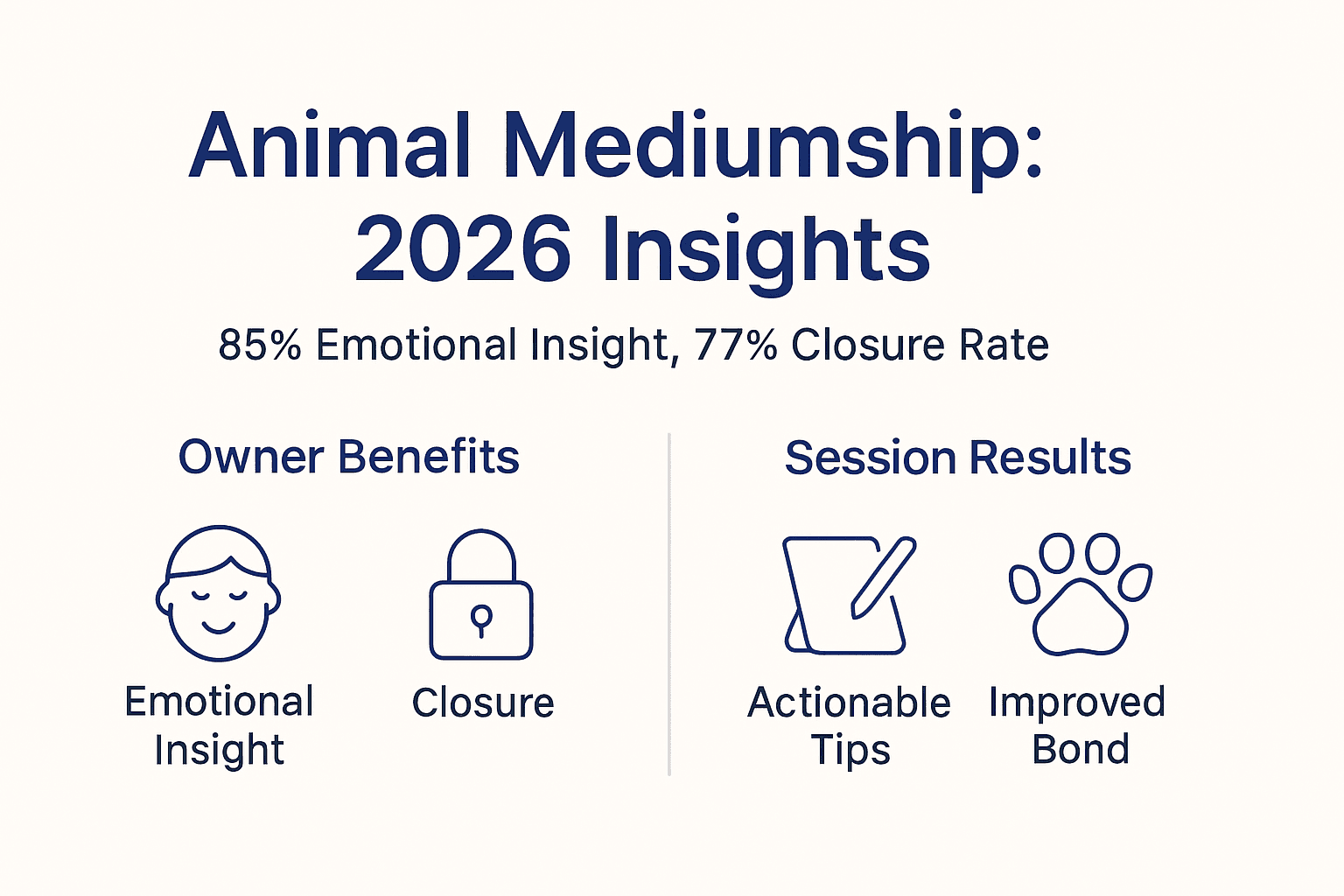
85% of pet owners report improved emotional understanding; 77% of grieving owners find closure; 68% get actionable insights. These statistics reflect research and client feedback showing mediumship’s genuine impact on pet owner experiences and relationships.
Key benefits include:
Improved understanding of your pet’s emotional needs and preferences in most sessions
Emotional closure and healing for bereaved owners after pet loss
Actionable insights that inform decisions about care, environment, or behavioral support
Strengthened emotional connection and bond with your pet
Resolution of confusion about unexplained behaviors or personality changes
The 85% improvement rate in emotional understanding represents a significant outcome. Most pet owners gain perspectives they couldn’t access through observation alone. These insights often explain puzzling behaviors or reveal hidden discomforts.
For grieving pet owners, the 77% closure rate offers meaningful comfort. Messages from pets who have passed provide reassurance that your companion is at peace and still connected to you energetically. This healing proves invaluable during difficult times.
The 68% actionable insight rate means most sessions deliver practical guidance you can implement. Whether adjusting diet, changing routines, or addressing environmental stressors, these recommendations improve your pet’s daily experience.
Pro Tip: Combine mediumship insights with veterinary advice for optimal pet care outcomes, using both emotional and medical perspectives.
Understanding dog communication insights enhances your relationship through deeper awareness of your pet’s inner world.
How to find and prepare for an animal mediumship session
Selecting mediums with verified testimonials and ethical transparency improves experience quality. Taking time to research and prepare ensures you maximize the value of your session and avoid disappointment with inexperienced practitioners.
Follow these steps for a successful experience:
Search for mediums with clear client testimonials and documented success stories
Verify ethical standards including confidentiality and realistic expectation setting
Prepare a recent, clear photo showing your pet’s face and eyes prominently
Write down focused questions about specific behaviors, health concerns, or emotional issues
Maintain realistic expectations, remembering mediumship complements rather than replaces veterinary care
Engage actively during the session by providing context when asked
Reflect on messages afterward and consider how to apply insights practically
The photo quality matters because it establishes the energetic connection. Choose an image where your pet looks alert and engaged. Avoid blurry or distant shots that make visual connection difficult.
Your questions guide the session’s direction. Instead of vague inquiries like “Is my pet happy?” ask specific things like “Why does my cat avoid the living room?” or “What does my dog need emotionally right now?”
Reputable mediums set clear boundaries about what they can and cannot provide. They never diagnose medical conditions or make guarantees about specific outcomes. They focus on emotional and behavioral insights within their scope of practice.
Learning how to prepare for animal mediumship properly ensures you get meaningful value from your investment.
Real world applications and case studies
Case studies show early health issue detection and behavioral problem insights provided by mediumship. Real experiences demonstrate how animal mediumship aids pet owners with health detection, behavior resolution, and emotional healing in practical situations.
Documented examples include:
A case where a medium sensed persistent discomfort in a dog’s hip area, prompting the owner to request targeted vet exams that revealed early arthritis the initial checkup missed
Instances where understanding emotional causes like fear from past trauma resolved aggressive behaviors that training alone couldn’t address
Owners who reported profound emotional healing after receiving messages from deceased pets expressing gratitude and continued love
A cat whose litter box avoidance was explained through mediumship as stress from a new household member, leading to successful environmental adjustments
These stories highlight mediumship’s complementary nature. In the arthritis case, the medium didn’t diagnose the condition but sensed discomfort that directed veterinary attention to the right area. This collaboration between intuitive and medical approaches benefited the dog significantly.
Behavioral resolutions often occur when mediumship reveals emotional root causes. A rescue dog’s fear aggression made sense once the medium communicated past abuse experiences. Understanding the trauma allowed the owner to implement gentle rehabilitation approaches.
Grieving pet owners consistently report that closure messages provide comfort during painful times. Knowing their companion is at peace and still spiritually connected eases the loss. These animal mediumship case studies encourage readers to consider this valuable tool for their own situations.
Explore expert animal communication services at PetPsychic
PetPsychic offers trusted animal communication and mediumship services designed to deepen your bond with your pet. Professional mediums provide remote sessions with ethical standards and compassionate guidance. You can access detailed educational content through the animal communication blog to understand the process better before booking.
The platform connects you with experienced practitioners who translate your pet’s thoughts and feelings into clear messages. Whether you’re addressing behavioral concerns, seeking health insights, or finding closure after loss, expert guidance helps you understand your companion’s perspective. Learn more about animal telepathy explained to see how intuitive communication works. Engage with a community dedicated to strengthening human animal relationships through animal communication readings that provide personalized insights for your unique situation.
Frequently asked questions about animal mediumship
What pets can animal mediumship communicate with?
Animal mediumship works with all domesticated pets including dogs, cats, birds, rabbits, horses, and even reptiles. The method doesn’t depend on species but on the energetic connection between the animal and medium.
How long does a typical session take?
Most animal mediumship sessions last 30 to 60 minutes depending on the number of questions and depth of communication needed. Initial sessions often take longer as the medium establishes connection and gathers context.
Is remote mediumship as effective as in person?
Remote sessions using photographs prove equally effective because animal communication operates through energy fields rather than physical proximity. Many experienced mediums work exclusively remotely with excellent results.
Can animal mediumship predict medical conditions?
Animal mediumship cannot diagnose or predict medical conditions and should never replace veterinary care. Mediums may sense discomfort or distress that warrants veterinary examination, but only licensed vets diagnose health issues.
How do I verify if a medium is reputable?
Look for clear client testimonials, transparent pricing, ethical guidelines about scope of practice, and realistic expectation setting. Reputable mediums never guarantee specific outcomes or claim to replace medical professionals.