Signs From a Deceased Pet and What They Mean
Updated October 16, 2026

The short answer: Signs from a deceased pet are moments of connection people experience after a loss. They include a familiar sound, a sense of presence, a weight on the bed, or a vivid dream. Many people find them comforting. Animal communicators approach these moments with care and intuition, honoring the bond you shared. You can welcome what feels meaningful to you.
You felt something brush your leg. Or you woke from a dream and, for a few seconds, expected your pet to be there. I know how hard it can be to put that moment into words, especially when you want to tell someone and fear they will dismiss it.
You do not have to decide what happened before you let it comfort you. I’ll walk you through what these moments feel like and a gentle way to invite connection tonight.
Signs From a Deceased Pet: The Full List
A sign rarely arrives with an explanation. It feels familiar first. You hear a sound you knew by heart, or notice yourself making room on the bed. People often say the smallest moments stay with them longest.
The University of Florida College of Veterinary Medicine says it is not uncommon after a pet dies to briefly see, hear, smell, or feel as though they are present.
You might recognize one of those experiences below. Others are personal symbols that people choose to associate with their pet.
Sounds
- A bark, meow, whine, or other familiar call when the house is quiet.
- The sound of footsteps, tags, or a movement you associate with your pet’s usual routine.
- A moment when you turn toward a sound, expecting to see them.
Touch and presence
- A brush against your leg or a sensation beside your hand.
- A familiar weight on the bed or couch.
- A quiet sense that your pet is nearby, even without a clear sound or touch.
Dreams
- Seeing your pet vividly while you sleep, then waking with a strong feeling of closeness.
- Dreaming about an ordinary moment together, rather than a grand reunion.
- Remembering a dream in unusual detail and wanting to hold onto it.
Glimpses
- Briefly thinking you see your pet in a familiar spot.
- Looking toward a doorway or resting place with a sudden sense of recognition.
- Catching a shape or movement that brings them immediately to mind.
Scent
- Noticing a familiar smell connected with your pet.
- Feeling close to them when you encounter the scent of their blanket, collar, or favorite place.
Symbolic visitors
- Seeing an animal that reminds you of your pet at a meaningful time.
- Noticing a feather or another small object that has personal meaning for you.
- Meeting a reminder of your pet when you were especially missing them.
A name appearing
- Hearing or seeing your pet’s name unexpectedly.
- Coming across a word or phrase you strongly associate with them.
Surviving pets
- Watching another pet pause by a familiar sleeping place or look for their companion.
- Noticing a change in their habits after the loss. Their health and behavior deserve attention in their own right.
Tech glitches
- A photo appearing on your phone when you needed to see their face.
- A recording, notification, or saved memory bringing them suddenly close.
The list is a place to begin, not a checklist to complete. What matters is the part of your shared life the moment touched.
Some people call these signs from pets in heaven; others simply describe it as feeling close again. Some describe signs your dead pet is with you as a strong feeling of peace. Others mean a small, startling reminder that interrupts a hard day. You can use the words that fit your experience.
What Pet Afterlife Signs Actually Feel Like
Pet afterlife signs often feel quieter than you expected. You sense your pet near you while you wash dishes, or you feel the old habit of checking where they are before you sit down. Nothing dramatic needs to happen for the moment to feel close.
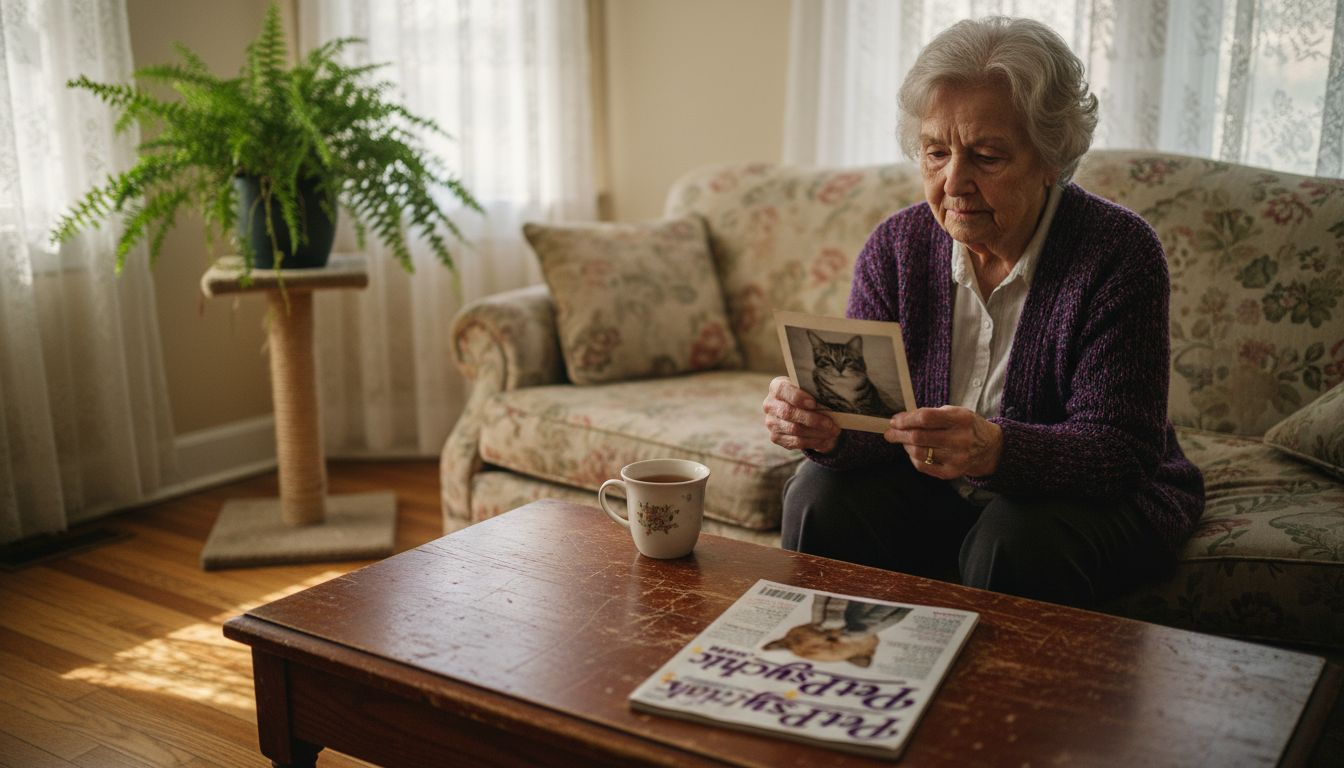
The most commonly described experience in bereavement research is a sense of presence. People generally still know the person or pet has died. They are describing what it felt like to be with them for a moment.
A dream has its own texture. You wake with your pet’s face clear in your mind, then the details begin to fade. Sometimes the feeling lasts longer than the story. You might feel relieved, sad, grateful, or all three before breakfast.
People often hesitate to speak about these moments because they sound too small out loud. “I felt like they were beside me” is enough. You do not need to make it bigger to be understood.
You might also feel two things at once: glad for the closeness and heartbroken that you cannot reach down and touch them. A comforting moment does not erase the loss. It gives you a little room to breathe inside it.
Signs From a Deceased Cat vs a Dog
The signs people notice often reflect the pet they knew: where they rested, the sounds they made, and the ways they asked for attention.
The examples below come from the kinds of moments people describe. Read them as invitations to remember your own pet, not as a test of what should happen.
| Kind of moment | Cat-associated reports | Dog-associated reports |
|---|---|---|
| A familiar sound | A meow or a sound near a usual resting place | A bark, whine, or the sound of movement nearby |
| A feeling of touch | A light brush against the leg or weight beside you | A nudge against your hand or weight at your feet |
| A familiar place | Looking toward a favorite chair or sunny spot | Looking toward a bed, doorway, or walking place |
| A dream | Seeing the cat settle close in an ordinary scene | Seeing the dog greet you or spend time beside you |
If you are looking for signs from a deceased pet cat, think about the habits only your cat had. What did you listen for at home? Where did your eyes go when you entered a room? The answer may tell you more than anyone else’s list.
The same holds for signs from a deceased pet dog. A moment that brings back the way your dog greeted you can feel personal because that greeting belonged to your life together. You do not need a stranger’s description to recognize it.
Questions about what cat reincarnation signs really mean are different from questions about sensing your cat nearby. Reincarnation concerns a possible new life. A sign, as people describe it here, is a moment of felt connection after death.
If your cat is still alive and showing changes that worry you, speak with a veterinarian first. A guide to spiritual cat dying signs is not a way to assess pain or decide whether care is needed. Your cat’s comfort comes before any interpretation.
How Soon Do Signs From a Deceased Pet Appear
There is no fixed schedule. People report meaningful moments soon after a pet dies, months later, or long after daily life has changed. An immediate dream is not more valuable than a memory that comes to you years later.

Early grief can fill the day with reminders. You reach for a bowl at feeding time or listen for movement at the hour your pet usually woke. A familiar moment can meet you right in the middle of those habits.
Later, it might be a date that draws your attention back. The American Psychological Association’s guidance on anniversary reactions describes how meaningful dates can stir emotions. Your pet’s birthday, the day they died, or a familiar holiday may bring a dream or a strong sense of closeness.
Not every important date will feel intense. Sometimes you remember the day only afterward. Grief does not keep a neat calendar, and neither do the moments that bring your pet to mind.
You also do not need to watch the clock after a loss. Waiting for a sign by a certain day can make a hard week harder. Give yourself permission to eat, rest, and accept company without checking whether anything has happened yet.
What this means for you: You have not missed a window. A meaningful moment can arrive while grief is new, while life is busy again, or while you are remembering your pet years later.
What If You Haven’t Gotten Any Signs Yet
Getting no signs is normal, and it says nothing about how deeply you loved your pet. Some people have vivid dreams or a felt sense of presence. Others have no experience they would call a sign.
That can still hurt to hear. When you miss your pet badly, silence can feel personal. You might wonder whether they know you are waiting, or whether your bond meant as much as you thought. Your life together does not depend on what happens after it.
You knew the way your pet asked for something, the places they liked, and the small changes in their mood. That knowledge came from time spent together. A quiet night cannot take it away.
You can make a space for connection without waiting for a spontaneous moment. Say their name when you come home. Write down a memory before it fades. Keep a photo where you can greet them, or mark a date that mattered to you both.
Some days, connection looks like laughing at a story you have told many times. Some days, it looks like crying when you find a strand of fur. You are allowed to feel close through memory alone.
If looking for a sign has become exhausting, take a break. Your pet’s place in your life remains yours whether you watch closely, stop watching, or change your mind tomorrow.
Is Pet Afterlife Communication Real or Just Grief
Pet afterlife communication can be a meaningful part of grieving. People describe sensing a presence, dreaming of their pet, or hearing or feeling something familiar. In intuitive practice, I approach these moments as opportunities to listen to the bond that remains.
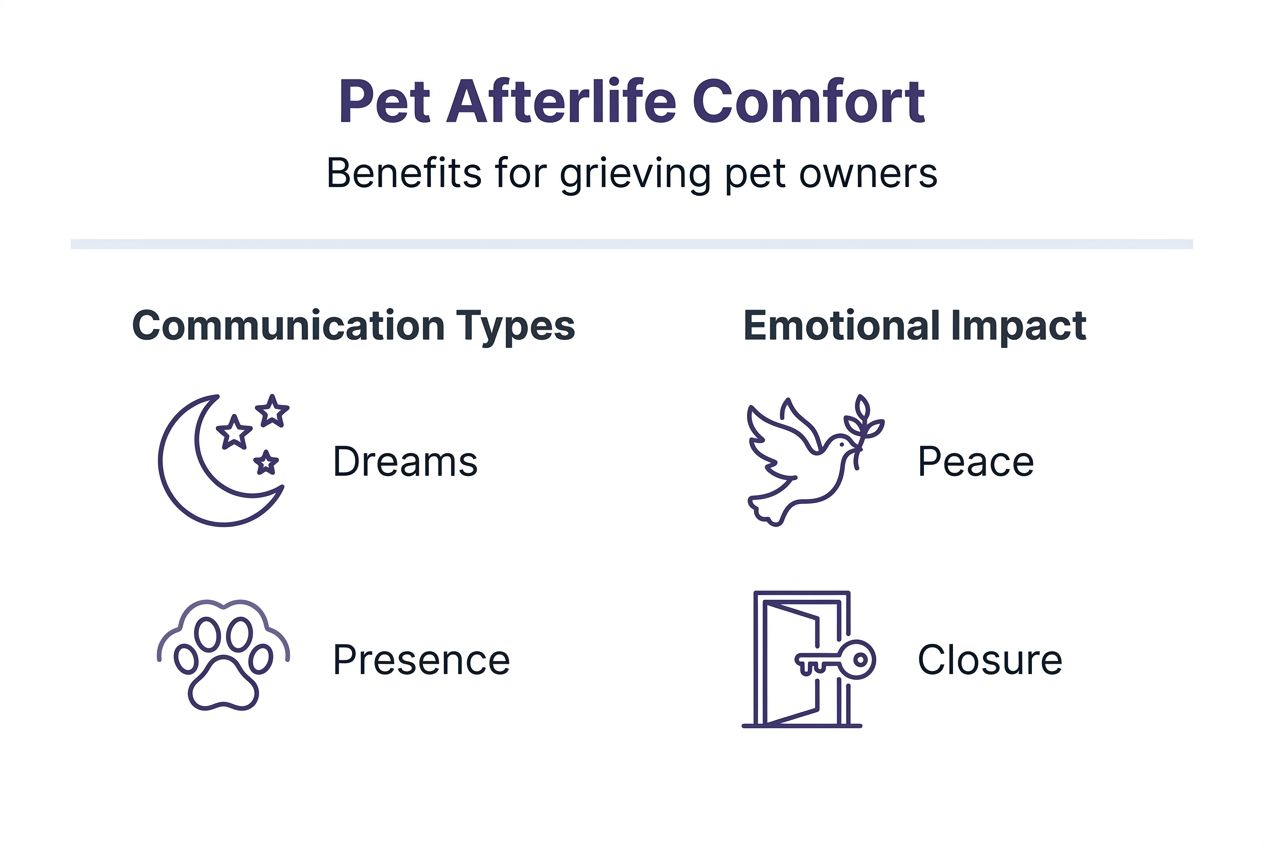
How intuitive communication is practiced: An animal communicator listens with kindness and attention to the impressions that arise around a pet. A reading gives you space to share what you are experiencing and explore what feels meaningful in your relationship.
What belief traditions say: Ideas about animal souls and what follows death differ. Some Hindu and Buddhist traditions include rebirth and animal lives within their accounts of existence. Jewish discussions of an animal afterlife also hold different views.
Your own belief does not have to fit neatly into one of those accounts. You might be certain you felt your pet with you. You might be unsure what to call it and still feel grateful that it happened.
When people ask me whether pet psychics are real, I take the question seriously. Often they are also asking whether someone will listen without treating their love as foolish. You deserve that care whatever you decide about the experience.
You can begin with the moment you experienced and share what it meant to you. A thoughtful reader will listen without asking you to force a conclusion.
How to Receive Signs From Pets Tonight
If you are wondering how to receive signs from pets, start with an invitation, not a demand. Tonight’s routine gives you a quiet way to remember your pet and make room for a dream. It also gives you somewhere to put the feelings that come up before sleep.
You do not need special objects. A photo, a collar, a toy, or no keepsake at all is enough. Choose what feels comforting rather than what you think you are supposed to use.
- Make the next few minutes gentle. Lower the lights and put your phone aside. If you are tired, keep the routine short. You are preparing for rest, not setting yourself a task to finish.
- Choose one memory. Picture your pet doing something ordinary and familiar. Let that memory be specific to the life you shared, without trying to turn it into a message.
- Hold a keepsake if you want to. Sit with their collar, toy, or photo. If touching their things feels too painful tonight, leave them where they are and say their name.
- Speak one clear invitation. You might say, “I’d love a comforting dream about you.” Say it once, softly. You can also ask to remember a happy moment when you wake.
- Place a notebook nearby. Leave a pen within reach. If you wake with a dream, write down a few words before starting your day.
- Let yourself sleep. You do not have to stay alert for a sound or a feeling. Rest is a kind thing to offer yourself while you are grieving.
MIT Media Lab’s work on targeted dream incubation explores how prompts can influence dream themes.
You can borrow the simple idea of setting an intention, without turning bedtime into an experiment. The Harvard sleep hygiene guide also favors a steady schedule and a calmer bedtime routine.
If you wake with nothing to write, you can still note the memory you chose and how you felt saying your pet’s name. The ritual has room for you on nights without a dream.
Try again another night if it brings you comfort. If it makes bedtime tense, stop. You can honor your pet in daylight instead, with a photo, a walk, or a few written lines.
How to Ask For and Interpret a Sign
Ask for something comforting and leave room for it to arrive in its own way. “I would love to feel close to you today” is gentler than asking your pet to produce one exact event by a deadline.

You can speak aloud, write the request, or hold it quietly in mind. Use your pet’s name if that feels natural. You are continuing a familiar act of love: turning toward them.
If something happens, begin with what you noticed. Was it a dream, a sound, a memory, or a feeling? Then ask what part of your pet it brought back. Interpretation can begin with recognition rather than a search for a hidden code.
How to know if your pet is sending you a sign often comes down to what the moment means in your shared story. A name on a screen has one meaning to a stranger and another to someone who just whispered that name before bed.
An ambiguous moment can stay ambiguous. You are allowed to say, “That reminded me of you, and I’m glad it did.”
For a wider explanation of how animal communication works, it helps to keep your own question clear. Are you asking what you experienced, or what you believe your pet meant? Those questions deserve different kinds of attention.
A simple journaling tip: Write the date, what happened, what you felt, and what it reminded you of. Include meaningful dates if they matter. Keep your first description plain, then add your interpretation on a separate line.
Over time, those notes can become a record of your bond. They can hold difficult days alongside peaceful ones, without requiring every entry to have an answer.
When a Sign Feels Unsettling Instead of Comforting
An upsetting dream does not mean you did anything wrong. You might see your pet ill again, wake frightened, or feel shaken by a moment you hoped would soothe you. Grief can bring the hardest memories close, especially at night.
Start with your surroundings. Turn on a light. Put your feet on the floor and take a sip of cool water. Give yourself a moment to notice where you are now.
If you want to write, keep it brief. “I dreamed about the last day and woke scared” is enough. You can come back to it in daylight, when the feeling is less sharp.
Before you return to bed, do something calm and familiar. Sit quietly, read a few pages, or call someone you trust if you need a voice. You do not have to ask for another dream tonight.
Frequent nightmares or dreams that make it hard to sleep deserve medical or mental health support. The American Academy of Sleep Medicine’s nightmare guidance includes treatments such as imagery rehearsal therapy. Tell a clinician what has been happening rather than trying to manage repeated distress alone.
If what you need right now is someone who understands pet loss, a support line can help. You can also tell a friend, “I had a rough dream about my pet. Can you stay with me for a few minutes?”
One frightening night does not define your relationship with your pet. The ordinary years, the habits you shared, and the gentler memories are still there when you are ready for them.
Signs in a Surviving Pet’s Behavior
A surviving pet might search for their companion, call out more, sleep differently, eat differently, or stay closer to you. Some pets show no noticeable change. Their behavior deserves care, whether or not it feels connected to a moment you experienced.
The University of Florida’s guidance on other pets in the home describes these changes after a companion dies. Your household’s routine has changed, too. Your surviving pet is living through that change with you.
Watch for:
- Searching places where the other pet used to rest.
- More vocalizing or unusual quietness.
- Changes in appetite or sleep.
- Clinginess or a change in usual habits.
You might see your dog pause at the other dog’s bed and feel a rush of recognition. You can honor that feeling while paying attention to the living dog in front of you. What do they need from you today?
If a surviving pet has appetite, sleep, health, or behavior changes, contact your veterinarian. Do that promptly when a change worries you, and again if it persists or worsens. A reading cannot assess pain, illness, or behavior needs, and it does not replace a trainer when training help is needed.
You do not have to choose between remembering the pet who died and caring for the one who remains. Familiar routines and your attention give you both something steady to return to.
Finding Comfort and Closure After the Signs
A sign can give you a moment of closeness. It cannot do all the work of missing someone who was part of your day. You still have meals, quiet rooms, familiar routes, and decisions that bring the absence back.
Closure does not have to mean you stop looking for your pet in the places they loved. It can mean finding ways to carry the relationship while making space for your life now. That can happen slowly, with plenty of days that feel unfinished.
Try choosing one small act that fits the pet you knew. Write down a habit you never want to forget. Keep a photo near a place you sit. Tell someone a story about them, or make a simple memorial with an object that feels right.
If you are grieving saying goodbye to your dog, the details of that goodbye may come back often. A loving choice made during a painful time can still leave you wishing you had one more ordinary day. You can talk about those feelings with someone who will listen.
Human support matters. The Tufts Pet Loss Support Helpline, Cornell Pet Loss Support Hotline, and Blue Cross pet-loss support service offer places to speak about your pet.
Check their pages for current contact details and availability.
You can also ask someone close to you for something specific. Try: “Can I tell you what I dreamed?” or “Will you sit with me while I look at photos?” People often want to help but do not know which part of the day hurts most.
I believe the love you practiced with your pet does not disappear when their body is gone. You can hold that belief while accepting grief support, caring for a surviving pet, and letting a good memory make you smile.
If a more personal reflection would comfort you, you can book a pet psychic reading through PetPsychic.com. It is an option for connection, not a substitute for veterinary care or grief support.
Questions people also ask
Do pets grieve when their owner dies?
Yes, a surviving pet can show grief-like behavior changes after a person or another animal in the household dies. You might notice searching, more vocalizing, clinginess, or changes in eating and sleeping; some pets show no change. If your pet’s health or behavior changes, speak with your veterinarian, especially if the change persists or worsens.
Can dogs sense human emotions?
Yes, dogs can pick up some human emotional cues through scent and facial expressions. In a controlled study of human stress scent, trained dogs distinguished stress samples from calm ones.
Your dog’s response to you is still individual, so watch what your dog does rather than assuming you know what they feel.
How long after a pet dies do signs usually start?
There is no usual start time; people report meaningful experiences days, months, or years after a pet dies. A dream or reminder might arrive near an anniversary, or on an ordinary day. Timing says nothing about how much your pet meant to you.
What if I never get a sign from my pet?
Never getting a sign is normal, and it says nothing about the love you shared. You can stay connected through stories, photos, a memorial, or a quiet word to your pet. There is no experience you must have to honor them well.
How do I connect with my pet after death?
You can connect with your pet through a gentle ritual, such as holding a keepsake, saying their name, and inviting a comforting dream before bed. Keep a notebook nearby if you want to remember what you dreamed. If no dream comes, the time you spent remembering them still belongs to your relationship.
What are things a deceased pet might want you to know?
Comforting words to imagine from your pet include a few simple phrases. “You loved me.” “You did your best with what you knew.” “You can remember me with joy.” Choose the words that help you treat yourself with the kindness you gave your pet.

Hear from a pet who has crossed over
A personalized reading can bring through a loving message from your pet, and the peace of knowing they are at rest.
Get a Reading Get a Reading
Delivered within 24-48 hours · Double Reading Guarantee