What is the pet-human bond? Understanding your connection
March 14, 2026

Many pet owners assume all pets provide the same emotional connection, but research reveals attachment varies significantly by species, owner characteristics, and psychological factors. The bond between you and your pet is far more complex than simple companionship. Understanding what shapes this connection can transform how you interact with your animal and enhance both your well-being and theirs. This guide explains the science behind the pet-human bond, how pet behavior and your own psychology influence it, and practical ways to deepen your relationship through intuitive communication and awareness.
Table of Contents
Psychological Factors And Their Impact On Pet Interaction And Owner Well-Being
Practical Ways To Deepen Your Pet-Human Bond Through Communication And Understanding
Key takeaways
Point | Details |
|---|---|
Attachment strength varies | Dogs typically generate stronger bonds than cats, influenced by owner age and gender. |
Psychology shapes benefits | Traits like neuroticism and attachment style determine how pet interaction affects your well-being. |
Pet empathy strengthens bonds | Dogs display comfort behaviors that deepen emotional connections with owners. |
Social context matters | People with less social support may form compensatory bonds with pets. |
Communication enhances connection | Understanding pet signals and practicing intuitive techniques strengthens your relationship. |
Understanding the pet-human bond: What it really means
The pet-human bond refers to the emotional attachment and intuitive communication that develops between you and your animal companion. This connection goes beyond basic care, encompassing mutual understanding, emotional support, and non-verbal communication that enriches both lives.
Scientific research shows attachment to dogs is stronger than to cats, though individual experiences vary widely. Your demographic characteristics play a surprising role in bond strength. Women and younger adults typically report higher attachment levels to their pets compared to men and older individuals. This doesn’t mean older men can’t form deep connections, but it highlights how personal factors shape relationship intensity.
Your psychosocial context influences specific emotional dimensions of bonding without necessarily affecting overall attachment strength. Loneliness, for example, may intensify certain aspects of how you relate to your pet emotionally, but it doesn’t automatically create a stronger or weaker bond. The relationship between social support and pet attachment is particularly fascinating. People with limited human social networks sometimes develop compensatory bonds with their animals, treating pets as substitutes for human relationships.
This compensation dynamic isn’t inherently positive or negative. For some, pets provide crucial emotional support during isolated periods. For others, over-reliance on pet relationships might signal unmet human connection needs. Understanding where you fall on this spectrum helps you assess whether your bond serves your overall well-being or masks deeper social needs.
Key factors shaping your pet-human bond include:
Species of your pet and breed-specific behavioral traits
Your age, gender, and life stage when acquiring the pet
Your current social support network and relationship satisfaction
Time invested in daily interaction and care activities
Your emotional availability and capacity for non-verbal communication
Exploring pet afterlife communication comfort closure reveals how bonds transcend physical presence, demonstrating the profound nature of these connections.
Pro Tip: Reflect on your own attachment style and social context to understand what drives your bond with your pet, helping you recognize whether the relationship fulfills genuine emotional needs or compensates for gaps elsewhere.
How pet behavior reflects and shapes the bond
Your pet’s behavior directly influences how your bond develops and deepens over time. Dogs particularly exhibit empathy-like behaviors that owners interpret as emotional support, strengthening attachment through perceived mutual understanding. When your dog nuzzles you during stress or maintains eye contact during difficult moments, these actions reinforce your sense of connection and emotional reciprocity.

Owner perceptions play an equally powerful role in shaping bond quality. Your tendency to anthropomorphize your pet, attributing human-like thoughts and emotions to them, directly affects relationship dynamics. When you interpret your cat’s purring as contentment or your dog’s tail wagging as joy, you’re engaging in a cognitive process that deepens emotional investment. This isn’t mere projection; it’s how humans naturally build empathy and connection across species boundaries.
Research on role perception in human-pet relationships shows that comparative anthropomorphism and affective valence shape how you and your pet interact. Affective valence refers to the positive or negative emotional tone you associate with your pet’s behaviors. If you consistently interpret your pet’s actions through a positive emotional lens, you’re more likely to engage in nurturing behaviors that reinforce the bond.
Dogs and cats differ significantly in emotional expression and the behaviors owners find bonding:
Aspect | Dogs | Cats |
|---|---|---|
Empathy signals | Direct eye contact, physical comfort, following owner | Subtle proximity changes, purring, slow blinks |
Owner interpretation | Easily read as supportive and emotionally engaged | Often misunderstood or seen as aloof |
Bonding behaviors | Active play, obedience, enthusiastic greetings | Independent affection, selective interaction |
Communication clarity | Overt body language and vocalizations | Nuanced signals requiring close observation |
These differences explain why dog owners often report stronger attachment. Dogs provide more obvious feedback that owners interpret as emotional reciprocity, while cats require more sophisticated observation skills to recognize their bonding behaviors. Neither approach is superior; they simply demand different interpretive frameworks.
Your pet’s relational behaviors respond to your emotional states more than you might realize. When you approach interactions with positive expectations and emotional openness, your pet often mirrors this energy through increased engagement and affectionate behaviors. Conversely, stress and emotional unavailability can dampen your pet’s responsiveness, creating a feedback loop that weakens connection over time.
Understanding animal mediumship guide principles can enhance your ability to read subtle behavioral cues that deepen your bond.
Pro Tip: Spend five minutes daily observing your pet without interaction, noting their unique behavioral patterns and emotional signals to develop a more sophisticated understanding of their communication style.
Psychological factors and their impact on pet interaction and owner well-being
Your psychological traits fundamentally shape how pet interaction affects your emotional health and life satisfaction. Research reveals that neuroticism moderates pet interaction benefits among middle-aged and older adults, with surprising implications for how you should approach your pet relationship.
Individuals with high neuroticism, characterized by emotional instability and anxiety proneness, may experience decreased well-being despite spending more time with pets. This counterintuitive finding suggests that personality traits influence whether pet interaction serves as a stress buffer or an additional source of emotional complexity. If you have high neuroticism, you might project anxieties onto your pet or interpret their behaviors through a negative emotional lens, diminishing potential benefits.
Your attachment orientation, particularly anxious attachment style, also moderates how pet time affects your emotional health. Anxious attachment involves fear of abandonment and excessive need for reassurance in relationships. When directed toward pets, this can create an unhealthy dynamic where you rely too heavily on your animal for emotional regulation, leading to distress when separated or when the pet doesn’t respond as desired.
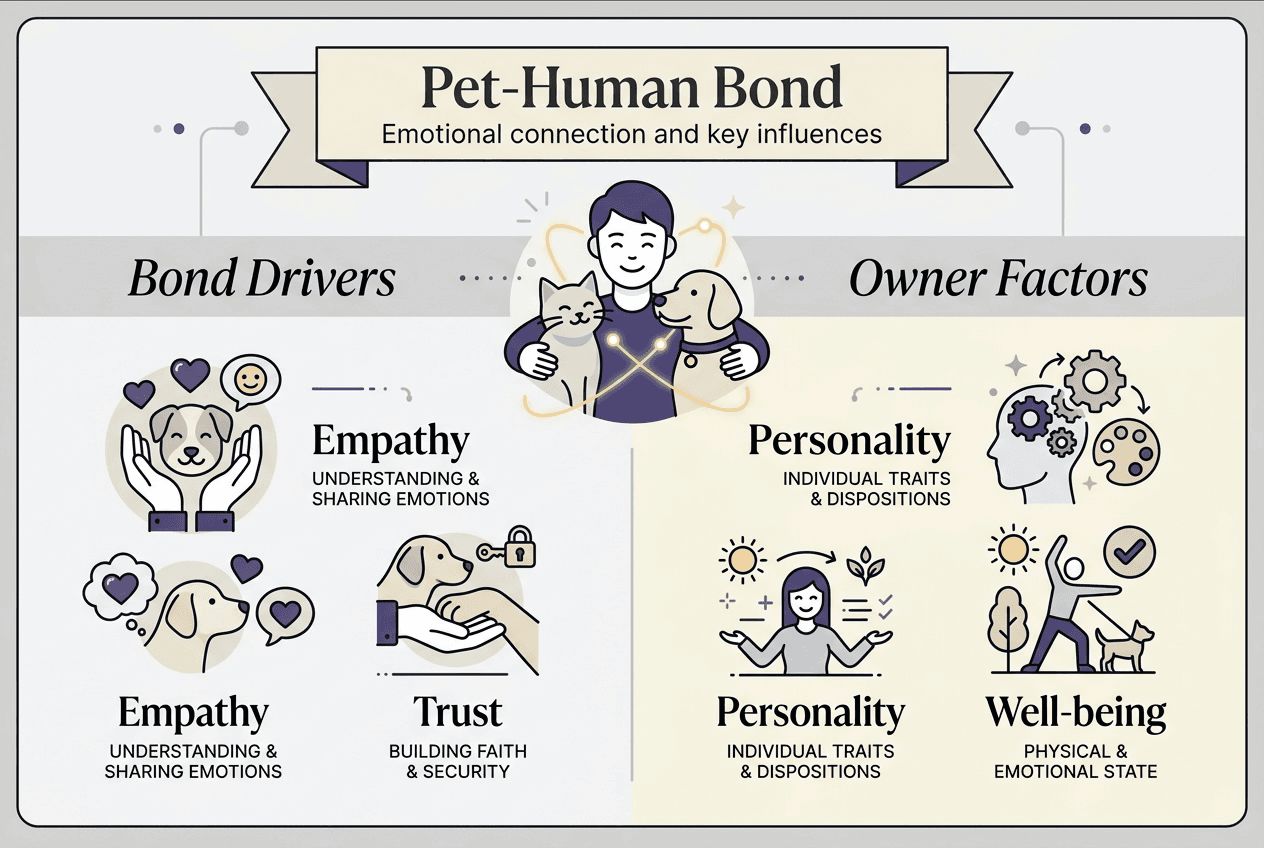
These psychological dynamics don’t mean certain people shouldn’t have pets. Rather, they highlight the importance of self-awareness in cultivating healthy pet relationships. Understanding your emotional patterns allows you to adjust interactions for maximum mutual benefit.
To assess and optimize your pet interactions for well-being:
Identify your dominant emotional patterns and how they manifest in your pet relationship, noting whether you project anxiety or seek excessive reassurance from your animal.
Monitor your emotional state before and after pet interactions, tracking whether time with your pet consistently improves or sometimes worsens your mood.
Establish healthy boundaries that prevent over-dependence on your pet for emotional regulation, maintaining diverse sources of support and connection.
Practice mindfulness during pet interactions to stay present rather than using your pet to avoid difficult emotions or situations.
Seek professional support if you notice your pet relationship reflects problematic attachment patterns from human relationships.
The psychological context you bring to pet bonding determines whether the relationship enhances your well-being or reflects unresolved emotional needs that require different interventions.
This doesn’t diminish the genuine benefits pets provide. For many people, pet relationships offer unparalleled emotional support and life enrichment. The key is ensuring your psychological traits work with, rather than against, the natural benefits of animal companionship.
Being mindful of your emotional state when connecting with your pet creates space for authentic bonding rather than using your animal to fill voids that require human connection or therapeutic intervention. Practices like meditating with animals can help you develop the emotional awareness needed to engage with your pet from a centered, healthy place.
Your pet responds to your emotional energy more sensitively than you might realize. When you approach interactions with balanced emotional health and realistic expectations, you create conditions for a mutually enriching bond that supports both your well-being and your pet’s emotional needs.
Practical ways to deepen your pet-human bond through communication and understanding
Enhancing your connection with your pet requires developing observation skills and intuitive communication techniques that go beyond basic training and care. Start by learning to read your pet’s body language and behavioral signals with greater sophistication. Dogs communicate through ear position, tail carriage, eye contact patterns, and subtle postural shifts. Cats use whisker position, tail movements, pupil dilation, and vocalizations that vary in pitch and intensity.
Intuitive animal communication techniques strengthen emotional bonds by helping you tune into your pet’s internal experience. This involves quieting your mental chatter, observing without interpretation, and noticing subtle impressions or feelings that arise when you focus on your pet. Many owners dismiss these intuitive hits as imagination, but they often contain genuine insights into your animal’s emotional state.
Common communication pitfalls that weaken your bond include:
Projecting your emotions onto your pet rather than perceiving their actual state
Interpreting all behaviors through a single lens without considering context
Ignoring species-specific communication patterns in favor of human-centric expectations
Rushing interactions instead of allowing time for mutual attunement
Dismissing subtle signals that don’t fit your preconceptions about your pet’s personality
Different communication techniques work better for specific species and situations:
Technique | Effectiveness for Dogs | Effectiveness for Cats | Best Used For |
|---|---|---|---|
Direct eye contact | High (builds trust) | Low (can threaten) | Emotional bonding with dogs |
Slow blinks | Low (less responsive) | High (signals safety) | Calming anxious cats |
Mirroring energy | High (very responsive) | Medium (selective) | Play and engagement |
Quiet observation | Medium (prefers interaction) | High (respects independence) | Understanding preferences |
Intuitive sensing | High (emotionally open) | High (subtle communicators) | Deeper emotional insight |
The scientific community continues debating whether dogs are capable of empathy in the true psychological sense or simply display behaviors that appear empathetic. This debate shouldn’t discourage you from recognizing and responding to your dog’s supportive behaviors. Whether the mechanism is genuine empathy or learned response patterns, the bonding effect remains real and valuable.
Developing your intuitive communication skills requires consistent practice and openness to non-verbal information. Techniques covered in guides on communicating with dogs and broader animal communication techniques provide structured approaches to enhancing this subtle skill.
Pro Tip: Practice five minutes of quiet meditation with your pet daily, focusing on their presence without agenda or expectation, allowing intuitive impressions to surface naturally without forcing interpretation.
Approach communication enhancement with patience and realistic expectations. Not every interaction will produce profound insights, and that’s perfectly normal. The goal is developing a more attuned, responsive relationship where you notice patterns and signals you previously missed. Over time, this heightened awareness creates a feedback loop where your pet recognizes your increased attentiveness and responds with greater openness and trust.
Your willingness to meet your pet on their terms, respecting their communication style rather than forcing them to adapt entirely to yours, demonstrates the emotional flexibility that deepens bonds. This doesn’t mean abandoning training or boundaries, but rather balancing structure with sensitivity to your individual animal’s personality and needs.
Enhance your pet bond with expert communication readings
While developing your own observation and intuitive skills strengthens your pet relationship, professional animal communication readings can reveal deeper insights you might miss on your own. Expert communicators specialize in bridging the gap between human and animal consciousness, translating your pet’s thoughts, feelings, and needs into clear messages you can understand and act upon.
Personalized readings address specific questions about your pet’s behavior, emotional state, or preferences that puzzle you. Whether you’re dealing with behavioral challenges, sensing your pet is trying to tell you something, or simply wanting to deepen your understanding, professional communication provides clarity that transforms your relationship. PetPsychic offers compassionate, detailed sessions conducted remotely through photographs, making expert guidance accessible regardless of your location.
Benefits of professional animal communication include:
Emotional clarity about your pet’s internal experience and unmet needs
Behavioral understanding that helps you address issues at their root cause
Healing support for both you and your pet during difficult transitions
Validation of intuitive impressions you’ve sensed but couldn’t confirm
These readings complement your own developing skills, providing expert interpretation that accelerates your learning and deepens your connection in ways that might take years to achieve independently.
Frequently asked questions
What does ‘pet-human bond’ mean?
The pet-human bond is the emotional attachment and intuitive communication between you and your animal companion. It encompasses mutual understanding, non-verbal connection, and the emotional support you provide each other. This bond goes beyond basic care to include genuine relationship dynamics that affect both your well-being and your pet’s emotional health.
How does the bond differ between dogs and cats?
Dogs typically generate stronger attachment because they display more obvious empathy-like behaviors and emotional reciprocity that owners easily recognize. Cats communicate through subtler signals requiring closer observation, leading some owners to perceive them as less emotionally engaged. Both species form deep bonds, but they express and experience connection differently based on their evolutionary and behavioral traits.
Can understanding my pet’s behavior improve our bond?
Yes, recognizing your pet’s unique communication style and behavioral patterns dramatically strengthens your connection. When you accurately interpret their signals and respond appropriately, your pet feels understood and develops greater trust. This mutual understanding creates a positive feedback loop where both you and your pet become more attuned and responsive to each other’s needs and emotional states.
Does my personality affect how I bond with my pet?
Your psychological traits significantly influence how pet interaction affects your well-being and relationship quality. Characteristics like neuroticism and attachment style moderate whether time with your pet enhances or complicates your emotional health. Self-awareness about these patterns helps you cultivate a healthier dynamic that benefits both you and your animal.
How can I tell if my pet is empathetic towards me?
Look for comfort behaviors when you’re distressed, such as physical proximity, gentle touching, sustained eye contact, or vocalizations that seem responsive to your emotional state. Dogs often display these behaviors more overtly than cats. While scientists debate whether these actions reflect true empathy or learned responses, they nonetheless indicate your pet’s attunement to your emotional state and strengthen your bond.
What are the basics of animal communication?
Animal communication involves developing intuitive perception and observational skills to understand your pet’s thoughts and feelings beyond verbal language. It requires quieting mental chatter, noticing subtle behavioral cues, and being open to impressions that arise when you focus on your pet. Learning animal communication basics provides a foundation for developing this skill through practice and patience.