What Is Animal Communication And How Does It Work?
February 27, 2026
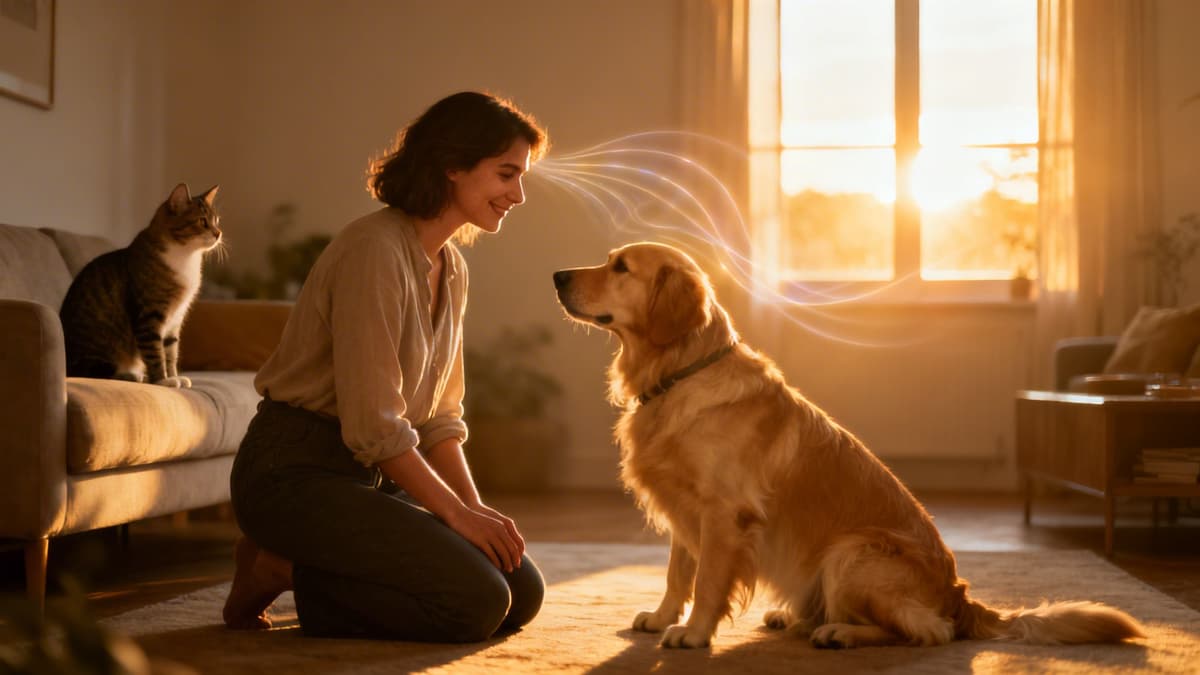
Have you ever looked at your pet and felt like they were trying to tell you something important? That feeling is real. They are.
Simply put, animal communication is the rich, complex exchange of information between animals and humans. It goes so much deeper than the barks, meows, and chirps we hear on the surface. We're talking about a whole world of signals—from the twitch of an ear to a scent left on the sofa, and even that gut feeling you get that something is on their mind.
Decoding The Language Of Your Pet
Have you ever just known what your pet was thinking or feeling, without a single sound passing between you? That powerful sense of connection is the very heart of animal communication. It's a silent language, one that builds a bridge between species and allows for a kind of understanding words just can't capture.
This isn't just about reading a chart of common body language cues; it's about tuning into your pet's unique frequency and seeing the world through their eyes.
Think of it like learning a new dialect. It’s spoken through tilted heads, specific whines, and subtle shifts in energy that you start to pick up on over time. It's a skill many of us use every day without even realizing it. When you know your dog needs to go out before he even gets to the door, or you sense your cat feels unwell just by the way she’s curled up, you're tapping into this incredible form of interspecies communication.
More Than Just Barks And Meows
This process is a fascinating blend of observable science and intuitive connection. To really get a handle on it, let's break down the main ways animals send and receive messages.

The map shows how animals use a combination of physical and non-physical signals to paint a complete picture of what they’re feeling and needing. It’s a multi-layered approach that explains why traditional training sometimes falls short.
A dog that suddenly becomes aggressive, for example, might not have a "training problem" at all. It could be sending a clear message about deep-seated fear or physical pain—a message that only becomes clear when you look at the whole picture.
To get a clearer sense of these channels, here’s a quick overview of the primary methods animals use to communicate, both with each other and with us.
The Four Main Channels Of Animal Communication
Communication ChannelDescriptionExampleBody LanguageThe use of posture, facial expressions, and physical movements to convey intent or emotion. This is the most visible channel.A dog tucking its tail between its legs to show fear or submission.VocalizationThe sounds animals make to communicate. This includes everything from a simple meow to a complex series of chirps.A cat purring to signal contentment or to self-soothe when in pain.Scent MarkingUsing odors (like pheromones in urine) to send messages, claim territory, or signal reproductive readiness.A dog urinating on a fire hydrant to leave a "business card" for other dogs.Telepathy/IntuitionThe direct transmission of thoughts, feelings, images, and sensations from one mind to another, without using the known senses.Suddenly getting a mental image of your cat's empty water bowl while you're in another room.
Each of these channels offers a different piece of the puzzle, and skilled communicators learn to receive information from all of them at once.
Animal communication is less about "hearing words" and more about receiving a complete package of feelings, images, and physical sensations. It’s an immersive experience that reveals your pet's true perspective.
By learning to recognize and interpret these signals, you shift from being just a pet owner to becoming a true partner to your animal. It empowers you to address their needs more effectively, clear up misunderstandings, and forge a bond built on genuine trust and mutual respect.
How Animals Actually Talk to Each Other (Scientifically Speaking)

While the idea of having a deep, intuitive chat with your pet is amazing, all animal communication is grounded in real, observable science. From the smallest bee to the biggest whale, every creature uses a complex set of tools to send and receive messages. These signals aren't just random tics; they're instincts honed by evolution to help them survive, find a mate, and keep the peace.
Think of these signals as the basic alphabet of the animal world. Before you can understand the poetry of their communication, you have to learn the letters. These observable cues are the foundation for every single interaction.
The Four Main Ways Animals Communicate
Across the animal kingdom, communication really boils down to four primary methods. Each has its own job and works best in different situations. Once you start recognizing these, you'll be amazed at what your own pets are telling you.
Vocal Cues: This is the one we’re most familiar with—the barks, meows, chirps, and growls. Sound is great because it can travel long distances and works even when you can't see the sender, like at night or through a thick forest. A bird’s sharp chirp, for instance, can alert the entire flock to danger from hundreds of feet away.
Visual Signals: This is all about body language. Posture, facial expressions, and even color changes convey a ton of information without a single sound. When a dog rolls over to show its belly, it's a clear signal of trust. A cat with its ears pinned back? That’s a universal sign of fear or aggression.
Chemical Messages: You can think of this as communication through scent. Animals use pheromones and unique odors to leave little messages for others to find. It’s a bit like leaving a sticky note—the message stays long after the animal has left. When your dog is intensely sniffing a fire hydrant, he's really just catching up on the neighborhood gossip left by other dogs.
Tactile Communication: This is simply communication through touch. Things like grooming, nuzzling, or a gentle lick are powerful ways animals build bonds, show affection, and sort out their social standing. This physical connection is absolutely vital for social animals, from apes to our own dogs and cats.
It's a Rich, Complex World of Expression
Animals rarely use just one of these methods at a time. They're usually combining them to create a rich, detailed conversation that we're only just beginning to truly appreciate. Scientific research keeps proving that animal communication is far more sophisticated than we ever imagined, with billions of creatures expressing complex emotions daily.
For example, a 2023 study revealed that cats use 26 different facial movements to create 276 unique expressions—and a whopping 45% of them are friendly! It’s a far cry from the aloof reputation they often get.
This constant blend of signals is a living, flowing dialogue. By learning to see and interpret these scientific pillars of communication, you can begin to translate what your own animals are telling you, every single day.
If you want to dig deeper into your pet’s specific behaviors, you can find more helpful articles right here on our blog. Understanding why a dog might suddenly act out or why a cat is hiding often comes down to deciphering these core communication methods. This knowledge helps you meet their needs with more empathy and accuracy.
Exploring Intuitive And Telepathic Connections

While the science of animal behavior gives us a solid framework for what we can see, many pet owners feel there’s something more going on. This is where we step into the world of intuitive or telepathic connection—a direct, mind-to-mind exchange of thoughts, feelings, and images with an animal.
Think of it like tuning into a specific radio station. There are no spoken words or physical cues, but a message comes through loud and clear. This "broadcast" is often a mix of raw emotion, mental pictures, and even physical feelings that seem to travel from your pet’s mind straight to yours. It’s a subtle, deeper channel that goes way beyond what our eyes and ears can pick up.
Tapping Into Your Natural Intuition
Does this sound a little out there? Just think about those moments you’ve had with your pet where you just knew something was up. Ever get a sudden urge to check on them, only to find they’ve tipped over the trash can? Or had a gut feeling your dog was sad, even though they were acting perfectly normal?
That "gut feeling" is your natural intuition in action. It’s the quietest, yet often the most profound, form of animal communication. Many of us have this ability without ever realizing what it is.
This intuitive link is what allows us to sense our pet’s needs from another room or feel their joy before we even reach for the leash. This is the heart of telepathic communication—a shared stream of consciousness that doesn't need physical senses to work.
How Intuitive Connection Works
Unlike body language, which you have to be physically present to see, intuitive communication isn’t limited by distance. It functions on an energetic level. This is how a skilled communicator can connect with an animal’s consciousness using just a photograph.
This type of connection can uncover things that physical observation alone might miss.
Emotional History: A communicator might feel the lingering fear from a rescue animal's past, helping to explain their anxieties.
Hidden Pain: They can sometimes pinpoint the location and sensation of discomfort that a vet hasn't been able to find yet.
Inner Desires: It can be as simple as learning what would truly make your pet happier or more comfortable in their daily life.
By opening ourselves up to this deeper connection, we get a much fuller picture of who our pets are. It isn't about ignoring science; it’s about adding a powerful intuitive layer to it. This approach gives us a window into the rich inner world of our animal friends, letting us understand their history, their feelings, and their deepest wishes in a way that truly strengthens our bond.
When To Seek An Animal Communication Reading

So, you understand the idea of animal communication, but when is it actually helpful? Most people reach out to a professional when they’ve hit a wall. They're facing confusing, stressful, or emotional situations with their pets, and the usual approaches just aren't cutting it. A reading can offer a completely fresh perspective—one that comes directly from the animal.
Think of it as opening a direct line to your pet's inner world precisely when you need it most. It’s incredibly valuable during times of change, stress, or even just when you have that gut feeling that something is off.
Navigating Behavioral And Emotional Issues
Sudden behavioral changes are probably the #1 reason people book a reading. One day your dog is perfectly content, and the next, they're tearing the house apart with separation anxiety. Or your usually social cat suddenly starts hiding under the bed. These aren't random acts; they're signals.
An animal communicator can help get to the bottom of it. The cause could be anything from a subtle change in the household routine to a past trauma you never even knew about. Once you understand the "why," you can stop guessing and start taking meaningful steps to help your pet feel secure again.
A professional reading can translate confusing behaviors into actionable insights. It’s about shifting from guessing what your pet needs to knowing what they need, straight from the source.
Here are just a few common scenarios where a reading can bring much-needed clarity:
Understanding Rescue Animals: Many rescues come with baggage we can't see. A session can shed light on past fears or traumas, giving you the insight to create a truly supportive and healing home for them.
Conflict Between Household Pets: When your furry family members who used to be best buds are suddenly at odds, a communicator can act as a mediator, helping you understand each animal's side of the story.
Sudden Phobias or Anxieties: Has your pet developed a new fear of thunderstorms, car rides, or even the vacuum cleaner? A reading can often pinpoint the trigger and reveal what might help soothe their anxiety.
Making Compassionate Health And End-Of-Life Decisions
This is one of the toughest parts of being a pet parent. Dealing with an animal's health issues, especially as they get older, is emotionally draining. While a communicator is never a substitute for a veterinarian, their input can offer powerful emotional support and insight during these times.
For instance, a reading can help you gauge your pet’s comfort level, their desire to continue with difficult medical treatments, or just how they feel about their overall quality of life. This information, used alongside your vet's expert medical advice, empowers you to make decisions that feel truly compassionate and aligned with your pet’s wishes.
And when it’s time to say goodbye, a session can help ensure you're honoring their needs, bringing a sense of peace to an impossibly difficult process.
If you're facing these kinds of tough questions, you can learn more about how a reading might help by exploring the services at PetPsychic.com. It’s a way to make sure your best friend feels heard during life’s most critical moments.
Why Everyone's Suddenly Talking to Their Pets
Ever looked at your dog and just wished you knew what was going on in that furry head of theirs? You’re not just being sentimental—you're part of a huge cultural shift. The idea of truly understanding our animal companions has moved from the fringes right into the mainstream.
It seems people everywhere are waking up to the fact that animals are sentient beings with their own thoughts, feelings, and perspectives. This isn't some passing fad. It’s a genuine, collective yearning to build a more meaningful connection with the non-human world around us. We're starting to ask the big questions: What do they actually feel? What do they truly need? And how can we learn to listen?
It's a Worldwide Phenomenon
And this isn't just a hunch; the numbers back it up. A fascinating global survey from 2025 found that an overwhelming 70% of people worldwide want to know what animals say and feel. The study, which polled 1,057 people across 67 different countries, shows just how much public attitude is changing. If you're curious, you can dig into the complete findings in the full animal communication report.
This growing awareness isn't just about warm feelings, either. It has real ethical weight. It’s forcing us to rethink our relationships with animals in every part of life, from how we care for our pets at home to how major industries operate.
The same survey revealed that 85% of people believe companies profiting from animals should be held to strict rules regarding the use of technology for interspecies communication.
Paving the Way for a Kinder World
Ultimately, this desire to understand animal communication is about more than just satisfying our own curiosity. It’s about building a future where our empathy doesn't stop at our own species. When we learn to really listen to animals, we unlock the potential to improve everything from wildlife conservation to animal welfare standards.
Your own journey to connect with your pet is a small but powerful piece of this global movement. Every time you try to understand them on a deeper level, you’re helping to create a more compassionate, interconnected world for every living thing.
How A Professional Pet Psychic Reading Works
So, you're thinking about getting a reading for your pet? It’s a big step, but I want to assure you the whole process is actually very gentle and straightforward. It's designed to be completely non-invasive, so your pet won't feel any stress—in fact, they often seem to enjoy the connection. And because it all happens remotely, it doesn’t matter where in the world you are.
This approach works beautifully whether your animal friend is right here beside you or has already crossed the Rainbow Bridge. A communicator simply tunes into your pet's specific energy, almost like finding a radio station, to pick up on their feelings, thoughts, and any messages they want to share.
The Journey From Photo To Insight
It all starts with just two things that hold your pet’s unique energetic signature: their name and a photograph. That's truly all a skilled communicator needs to make a clear, focused connection. From there, the steps are simple.
Send Us Your Pet’s Details: You’ll share a recent, clear photo of your pet and tell us their name. Think of this as the "address" that lets the psychic connect directly with your animal's consciousness.
Ask Your Questions: Now’s your chance to get the answers you’ve been looking for. You can ask about anything, from confusing behaviors (“Why are you suddenly so scared of the car?”) to their general happiness (“Are you feeling content and loved?”).
The Psychic Makes the Connection: A certified pet psychic will find a quiet space, enter a meditative state, and tune into your pet. They'll start receiving information, which can come through as images, gut feelings, physical sensations, or even words and direct thoughts.
Get Your Written Reading: Within 24–48 hours, you’ll receive a detailed written summary of the entire conversation. This isn't some generic template; it’s a personal transcript of the dialogue with your pet, giving you real insights you can read over and absorb.
The real purpose of a reading is to be a bridge. We translate your pet’s perspective into a language you can understand, empowering you with the clarity to strengthen your bond and meet their needs in a whole new way.
What You Can Expect From The Reading
A professional reading gives you so much more than simple "yes" or "no" answers. It’s like opening a window into your pet's mind and heart, offering context and depth to what they’re experiencing. These insights can shine a light on everything from past traumas and current anxieties to sources of physical pain that aren't obvious from the outside.
This kind of information is priceless when it comes to making decisions about their care. For example, finally understanding the root cause of a behavioral issue often shows you a clear path to resolving it with compassion. And for those grieving, hearing from a beloved pet who has passed on can bring an incredible sense of comfort and closure.
If you have questions about how a reading might help in your specific situation, please don't hesitate to get in touch with our team to learn more.
Frequently Asked Questions About Animal Communication
Even after digging into the science and intuition behind animal communication, it's totally normal to have some questions rattling around. This field really does walk the line between what we can see and what we can feel, so being curious is a good thing.
Let's tackle some of the most common questions people have, from the practical to the skeptical.
Is Animal Communication Real Or Just Guessing?
This is the million-dollar question, isn't it? The truth is, a good reading is a mix of two things: a solid understanding of animal behavior and a finely-tuned intuitive sense.
It's smart to be skeptical. But what often turns people around is when a communicator shares a piece of information they couldn't possibly know. Things like a pet’s secret hiding spot in the closet, a long-forgotten injury, or a very specific food preference—details that only you and your pet share. That's when you know it's far more than just a lucky guess.
How Can A Reading Work From Just A Photo?
It’s a strange concept at first, but think of a photo as more than just a picture. It’s like an energetic fingerprint for your pet.
Just as your phone number connects you to a specific person no matter where they are, a photo gives a communicator a clear, focused link to your animal's unique energy. It allows them to tune out the noise and zero in on your companion's consciousness. This is why distance doesn't matter, and a psychic can connect with an animal halfway across the world. It’s also why it works for pets who have passed on; their energy signature still remains.
What Kind Of Questions Can I Ask About My Pet?
Honestly, you can ask just about anything that will help you better understand their life from their perspective. Most questions usually fall into a few common areas:
Behavioral Puzzles: "Why did my dog suddenly start barking at the mailman?"
Health and Comfort: "Can you ask my cat where she's feeling pain?" or "What would make him more comfortable?"
Emotional State: "Is my rescue dog happy in our home?" or "How does she feel about the new baby?"
End-of-Life Decisions: "Are you tired and ready to go, or do you want to keep trying?"
Connecting After Loss: For pets who have crossed the Rainbow Bridge, you can ask if they are okay or if they have any messages for you.
Is A Reading A Substitute For A Vet Visit?
No, absolutely not. An animal communication session is a wonderful complementary tool, but it is not a medical diagnosis and should never, ever replace professional veterinary care.
A communicator can offer amazing insights into what your pet is feeling—where it hurts, what's causing them stress, or what they might need emotionally. This information can be a huge help for your veterinarian, giving them extra clues to solve a medical puzzle. Think of it as another valuable perspective in your pet’s total wellness plan.
Ready to finally understand what your pet is trying to tell you? The certified readers at PetPsychic.com can help you bridge the communication gap. Get the clarity you've been searching for today.

Curious what your pet is thinking?
Get a personal, intuitive reading from a gifted animal communicator, delivered to your inbox within 24-48 hours.
Get a Pet Psychic Reading Get a Pet Psychic Reading
Delivered within 24-48 hours · Double Reading Guarantee