Why Is My Dog Pacing and How Can I Help in 2026
March 14, 2026
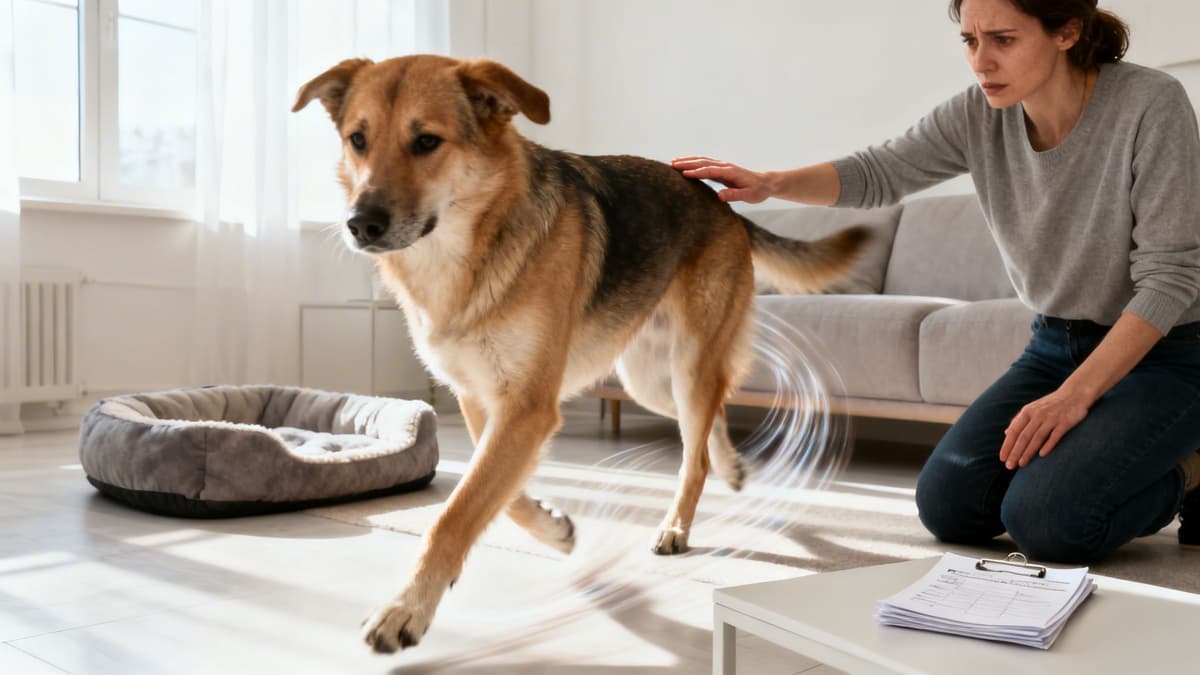
Why Is My Dog Pacing? An Animal Psychic Explains
After 27 years of connecting with animals and their people, one of the most common questions I hear is, “Why is my dog pacing?” My first response is always to reassure the worried pet parent. This restless behavior is communication. What I tell pet parents is that your dog is trying to tell you something important, and they trust you enough to show you that something feels wrong. You will learn how to decode their pacing and understand what they are truly feeling.
What Is Your Dog's Pacing Trying to Tell You?

In my experience, a dog pacing back and forth is never just a random habit. It’s a physical symptom of an internal state. Think about it this way, the pacing is the smoke, and our real goal is to find the fire. Over thousands of readings, I’ve found that this behavior almost always boils down to one of a few core messages they’re desperately trying to send.
I remember a client with a sweet terrier mix named Finn who would pace relentlessly every single evening. The owner said, “Margaret, I’m at my wit’s end. What is he doing?” When I connected with Finn, I wasn't sensing pain or fear. Instead, the feeling was a buzzing, frantic energy. It was like he had a motor running inside with nowhere to go. What that really means is his body was screaming for an outlet. His mom confirmed they had recently moved to an apartment with less yard space, and he wasn't getting the same level of exercise. The pacing was his body’s way of communicating his frustration.
A Quick Guide to Potential Pacing Causes
To help you start decoding this behavior at home, I’ve put together a table of the most common reasons for pacing that I encounter in my practice. This is the part I love most, because understanding is the first step to helping.
| Potential Cause | What Your Dog May Be Feeling | Common Outward Signs |
|---|---|---|
| Physical Pain | Aching, stinging, throbbing, or internal pressure | Licking a specific spot, whimpering, reluctance to be touched, changes in posture. |
| Anxiety or Fear | Worried, scared, insecure, overwhelmed | Panting, trembling, whale eye (showing the whites of their eyes), tucked tail. |
| Cognitive Decline | Confused, lost, disoriented, "foggy" | Staring at walls, getting stuck in corners, forgetting commands, house-soiling. |
| Boredom/Pent-up Energy | Restless, antsy, frustrated, under-stimulated | Destructive chewing, barking for attention, an inability to settle down calmly. |
| Environmental Stress | Unsettled, agitated by an external trigger | Hypervigilance (ears pricked, constant scanning), reacting to specific sounds or sights. |
In my 27 years as a pet psychic, I can say with certainty that pacing is a powerful, direct message. Your dog isn't being "bad" or "weird." They are asking for help in the only way they know how.
Uncovering that root cause is everything. It's the key to helping them find peace again. For a deeper understanding of these signals, you can learn more about how to interpret your dog's silent messages in our guide to the dog body language system. Trust me, learning to truly listen is the most powerful first step you can take.
Could Your Dog Be Pacing From Hidden Pain?

When a concerned dog parent asks me, "Why won't my dog settle down?" the very first place I look is pain. I know that might surprise you, but in my experience, it’s the most common and overlooked cause.
Dogs are absolute masters of hiding their discomfort, it's a survival instinct. But their bodies don't lie. That relentless pacing is often their way of trying to walk away from an ache or a sharp twinge they can't tell you about. It’s a coping mechanism I’ve seen time and time again.
I'll never forget a reading I did for a sweet Golden Retriever named Buster. His mom was beside herself because he had suddenly started pacing nonstop through their house. As soon as I connected with Buster, I felt this intense pulling sensation deep in his lower back. It was undeniable. I told his mom, "Buster's showing me it feels like his back legs can't keep up with his front legs, and it's making him feel scared." Sure enough, a trip to the vet confirmed he had a painful condition affecting his lower spine. The pacing was the only way he could communicate that his body was betraying him.
What Kinds of Pain Cause Pacing?
Buster’s case was serious, but the source of pain-driven pacing isn't always so dramatic. Often, it's something much more common. Over the years, I've seen pacing triggered by all sorts of discomfort:
- Arthritis: A chronic, dull ache in the joints is a huge one, especially for our senior dogs.
- Dental Issues: Imagine a throbbing toothache you can't escape. It makes it nearly impossible to get comfortable.
- Gastrointestinal Upset: Nausea, gas, or cramping creates a deeply unsettled feeling that keeps them on the move.
- Injuries: Even something as small as a thorn in a paw or a pulled muscle can cause a dog to pace to avoid putting pressure on the sore spot.
In everyday terms, their pacing isn't just a quirky habit, it's a direct signal about their quality of life. They are literally trying to physically move away from a pain they cannot escape.
Learning to spot the subtle cues is the first critical step. To get a better handle on whether pain might be the root cause, this guide on how to tell if your dog is in pain is an invaluable resource. You are your dog's best advocate, and keen observation can put them on the path to relief.
Is Anxiety the Real Reason Your Dog is Restless?
If pain isn't the culprit, the next place I always look is anxiety. It’s a powerful emotion, and when I tune into a pacing dog, I can often feel the hum of it. Think about it, when we’re worried or nervous, we pace. We walk back and forth, trying to burn off that restless, jittery energy. Your dog is doing the exact same thing.
This is where it gets really meaningful. Once we pinpoint what’s making them so fearful, we can finally start to bring them some peace. In my 27 years as a pet psychic, I’ve seen anxiety spring from countless sources. A new baby, a cross-country move, or even a past trauma that’s suddenly been stirred up can all trigger it.
I once worked with a client whose rescue dog, Luna, would pace for hours every single afternoon. Her owner told me, "I don't know what to do, Margaret, it's breaking my heart." When I connected with Luna, she showed me this vivid, gut-wrenching memory of being abandoned at a loud, terrifying shelter. It turned out my client had just started a new job with longer hours, and that feeling of being left behind was rushing back to Luna in waves. Luna wasn't being disobedient. She was terrified. The pacing was her body's only way of trying to cope with that overwhelming panic.
What Are the Different Kinds of Canine Anxiety?
It's crucial to realize that anxiety isn't a one-size-fits-all issue. Every dog experiences it differently, which I find absolutely fascinating because it shows how rich and complex their inner worlds really are. The pacing you're seeing could be coming from a few different places:
- Generalized Anxiety: Some dogs live in a near-constant state of worry. There isn't always a clear, single trigger; they just seem to be on high alert most of the time.
- Specific Phobias: This is a much more direct fear. The pacing only kicks in when they're confronted by something specific, like thunderstorms, fireworks, or the dreaded vacuum cleaner.
- Separation Anxiety: This is a very common one. The distress and pacing start *only* when they're left alone or separated from their favorite person. We have a whole guide dedicated to helping with calming dog separation anxiety if this sounds like your dog.
You're not alone in feeling this. Anxiety is one of the most common reasons for behavioral issues I see. The best part is that once you know what's at the heart of their fear, you can take real, meaningful steps to help. Learning a few simple ways to lower stress for your dog can make a world of difference. Your calm, reassuring energy is often the anchor they need to feel safe again.
Does Your Senior Dog Pace Due to Cognitive Decline?

If your older dog has started pacing, especially after the sun goes down, one of the first things that comes to my mind is a sense of confusion. Think of Canine Cognitive Dysfunction (CDS) as a kind of mental fog that can slowly roll in for our senior pets. It’s not something they can control, and it's a very common reason why your old friend might be restlessly walking the halls.
What I'm seeing with more and more animals lately is that as this cognitive fog sets in, a dog's entire reality can shift. Familiar places in the home can suddenly feel strange, and their internal clock gets completely scrambled. For them, nighttime might as well be the middle of the day.
A Beagle's Confused Night
I recently connected with a sweet 15-year-old Beagle named Sam who was keeping his family up all night with his endless pacing. His mom was beside herself, worried he was in pain or suffering from deep anxiety. But when I tuned into Sam’s energy, the feeling wasn’t fear. It was pure, profound confusion. Sam showed me a crystal-clear image of the sun high in the sky, even though it was 2 AM. He genuinely believed it was time for his morning walk. The pacing wasn't coming from a place of distress, but from a deep-seated routine and the belief that he was supposed to be *doing* something.
This is actually a beautiful sign because it shows their spirit and love for their routine are still incredibly strong, even if their mind is getting a bit scrambled. Sam wasn't losing his will to live; he was just losing track of time.
This condition, often called doggy dementia, is a real, age-related change in the brain. Research shows just how common it is: up to 28% of dogs aged 11 to 12 and a staggering 68% of dogs aged 15 to 16 show at least one symptom. The disruption to their sleep-wake cycles is a major culprit behind that nighttime pacing. If you want to dive deeper, you can read the full research about these findings on canine cognition.
How Can You Help a Confused Senior Dog?
The wonderful news is that you can make a real difference with a few small, loving adjustments. Watching a beloved dog struggle with this can be heartbreaking, but helping them navigate this fog is a powerful act of compassion. From my experience with dogs like Sam, here are some simple things that can bring them immense comfort:
- Stick to a Routine: Keep feeding times, walks, and bedtime as predictable as possible. A solid routine becomes an anchor for them in a confusing world.
- Keep the Lights On: A few well-placed nightlights can do wonders. They help reduce disorientation and shadows that might look frightening when it gets dark.
- Create Clear Pathways: As their spatial awareness declines, make sure they can easily get from their bed to their water bowl without bumping into furniture. Clearing clutter makes their world feel safer.
These simple environmental changes can bring so much relief. When you help quiet the confusion, you can often quiet the pacing, too.
What I'd Tell a Friend Worried About Pacing
If a friend called me, panicked because their dog won't stop walking in circles, the very first thing I’d say is, “Okay, take a deep breath.” It's so easy to spiral into worry when you see them like that, but that panic comes from a place of love. Here's the thing: let's use that love to get practical instead of jumping to the worst-case scenario. After connecting with animals for 27 years, my advice is always the same, whether to a client or a friend. Your first call has to be to your vet.
What Should You Do While Waiting for the Vet?
So, you've made the appointment. Great. While you're waiting, you can become a detective for your dog. This is incredibly helpful. Grab a notebook or use the notes app on your phone and start jotting down what you see. Don't overthink it, just observe.
- When does the pacing start? Is it only at night? Maybe after dinner? Or right when you grab your keys to leave?
- How long does it go on? Are we talking a few minutes of happy wiggles before a walk, or is it hours of relentless trekking back and forth? * What else is happening? Think about the environment. Are there thunderstorms rolling in? Did the neighbors start a loud construction project? Is someone new staying over?
I had a client who realized through this exact process that her dog only paced on Tuesdays. It turns out, that was the day the city's new, incredibly loud recycling truck rumbled through the neighborhood. By the way, your notes give your vet, and an animal communicator like me, a roadmap to the real issue.
How Do You Connect From the Heart?
Finally, I’d tell my friend to do something that sounds almost too simple, but it’s deeply powerful. At some point, when your dog is pacing, just find a quiet spot on the floor nearby. Don't try to stop them or fix it. Just sit, maybe put a gentle hand on their side if they pass by, and breathe with them.
Send them your calm, steady energy. In a moment of chaos, your peaceful presence can be an anchor for a dog who feels stressed, confused, or uncomfortable.
When you do this, you’re shifting out of "worried owner" mode and into "supportive partner" mode. Put simply, you're showing them, with your energy and your presence, "I'm right here with you. We'll figure this out together." By combining that critical vet check with your own intuitive, heart-centered support, you're creating a complete circle of care that honors both their body and their spirit.
What Should You Actually Do Right Now?
So, you’ve noticed the pacing, you've been watching closely, and you’ve made that crucial call to your veterinarian. I speak with so many pet parents who feel helpless while waiting for an appointment, but this is actually a moment where you can make a huge difference. Here's another way to look at it: your gentle, intentional actions right now can immediately bring a sense of relief to your dog.
While you're waiting for your vet visit, the goal isn't to "fix" the pacing itself. Instead, it's all about reducing your dog's immediate stress and creating a bubble of comfort. Here are a few simple things I always suggest to my clients in my practice:
- Create a Safe Haven: Find a quiet, low-traffic corner of your home and make it a cozy den. Fill it with their favorite bed and an old t-shirt that smells like you. This gives them a secure base to retreat to when they feel overwhelmed.
- Use Calming Sounds: It's fascinating how many dogs I connect with who respond beautifully to sound. Playing gentle, classical music or specific dog-calming audio tracks on a low volume can help turn down the "noise" in their nervous system.
- Keep Routines Rock-Solid: Predictability is your best friend, especially for a dog who is anxious or confused. Sticking to regular feeding times, potty breaks, and quiet periods helps them feel grounded and secure.

As the chart shows, your immediate job is to observe, consult a professional, and provide comfort. You can find even more gentle techniques in our guide on how to calm an anxious dog. This is where things get deeply interesting. While your vet works on addressing the physical side of things, you can start addressing the emotional. If a medical cause is ruled out or you’re still seeing signs of deep anxiety, a certified animal behaviorist can be a wonderful next step. This is also where a PetPsychic reading can bring incredible clarity, helping translate the "why" behind their feelings into words you can understand.
Frequently Asked Questions
Can pacing ever be a normal behavior for a dog?
The kind of repetitive, relentless pacing that has you worried is almost never “normal.” While a dog might do a little excited dance by the door before a walk, that behavior is brief and context-specific. In my experience, ongoing pacing is a clear sign from your dog that something is wrong, whether it's physical pain, anxiety, or confusion. I always advise pet parents to take this communication seriously and not dismiss it as a random quirk.
My vet can't find anything wrong. What should I do now?
This is a situation I encounter frequently in my work as a pet psychic. When a full medical workup comes back clear, it's a strong indication that the root cause is emotional or energetic, not physical. This is the moment to look deeper into your dog's emotional world. A PetPsychic reading can be incredibly helpful here, as it can uncover hidden anxieties, past traumas, or environmental stressors that a medical exam can't detect, providing the clarity needed to finally help your dog find peace.
How quickly can I expect to see a change in my dog's pacing?
The timeline for improvement really depends on the underlying cause. If the pacing is due to a physical issue that can be treated, like pain, you might see relief very quickly. However, for issues rooted in deep-seated anxiety or cognitive decline, progress is often more gradual. The wonderful news is that as soon as you start addressing the true cause, you begin to soothe their spirit. Lasting change requires patience, consistency, and a deep commitment to understanding their needs.
If you feel like you've hit a wall and want to get to the heart of what your dog is trying to tell you, PetPsychic.com is here to help. A reading can offer the insight and peace of mind you've been searching for. Find out what your pet is trying to tell you.