Dog Separation Anxiety: Proven Steps to Calm Your Pet and Restore Peace
March 9, 2026
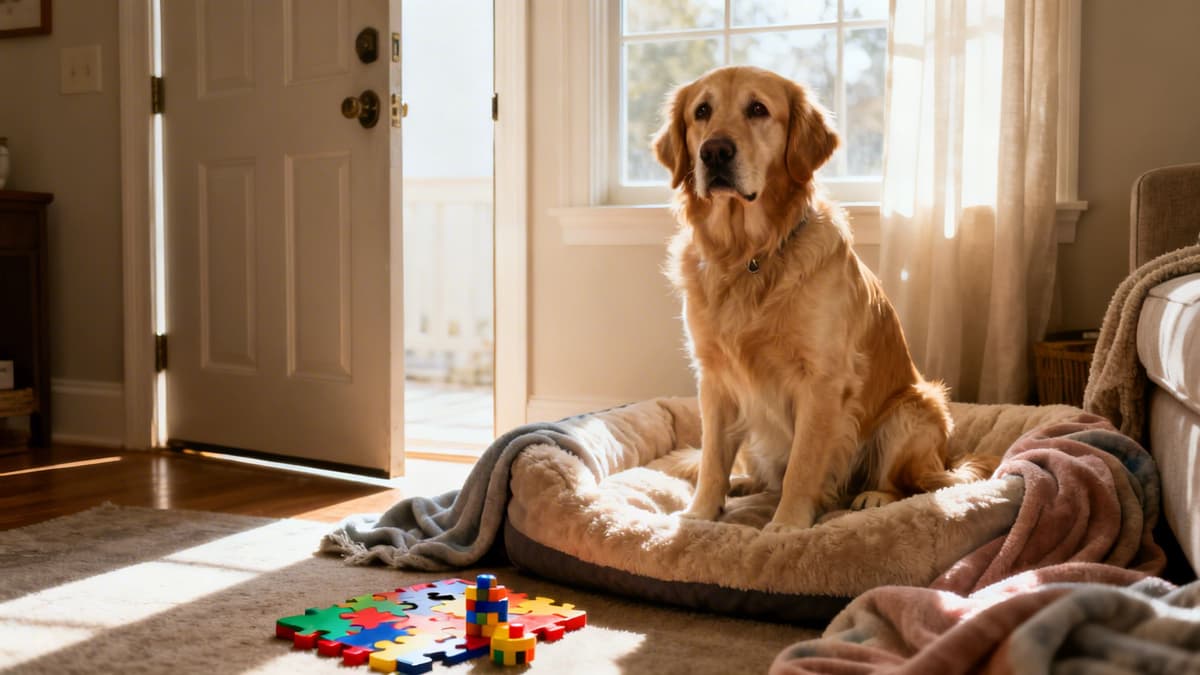
Are You Ready To Hear Your Dog's Side of the Story?
For the past 27 years, I've had the deep privilege of listening to what animals are truly feeling. As a pet psychic, one of the most painful issues I help people with is dog separation anxiety. What I want to share with you is that for your dog, this isn't just about missing you; what they show me is a real, overwhelming panic that their world is falling apart when you leave. In this guide, I'll explain what your dog is trying to tell you so you can finally help them feel safe and at peace.
Is It Just Boredom or Is It Real Panic?

This is the first question I always get from worried pet parents. Here's the thing, when I connect with their dogs, what the animals show me is almost never simple sadness. In my experience, it’s an active state of fear, not a passive feeling of loneliness.
I know that might surprise you, but understanding this difference is the secret to helping them. A bored dog might chew a pillow out of frustration. But a dog caught in true panic is trying to escape what feels like a life-or-death threat. That’s why their actions can become so destructive or even harmful to themselves, they are literally trying to find their way back to safety.
What I Learned From a Terrier Named Pip
I remember a session with a little terrier mix named Pip. His person, Carol, was at her wit's end. She told me, "He shreds the doorframe, Margaret! He was always such a good boy."
When I tuned into Pip, he didn't show me boredom. He flooded my senses with the feeling of being trapped in a silent, empty house that felt like it was closing in on him. The emotion he sent me was pure, instinctual panic, an overwhelming sense that he had been forgotten forever. What that really means is his destructive behavior wasn't him being "bad." It was a desperate attempt to dig his way back to his person, who was his only anchor in the world.
How Can You Tell the Difference at Home?
| Behavior Sign | What Boredom Looks Like | What Separation Panic Looks Like (From My Experience) |
|---|---|---|
| Destructive Behavior | Chewing is unfocused and happens anytime, even when you're home. They might chew on random, accessible items like shoes or pillows. | Chewing and scratching are intensely focused on escape routes like doors and windows. This only happens when you are gone or preparing to leave. |
| Vocalization | Barking or whining might happen here and there, often triggered by outside noises. It's usually a call for attention or play. | Barking and howling are persistent and have a distressed, high-pitched tone. It often starts before you even leave and doesn't stop. |
| Energy & Pacing | They might seem restless, but can usually be redirected with a toy or a quick training session. | Pacing is frantic and repetitive. They can't settle, even with puzzle toys available. Their focus is entirely on your absence. |
| Potty Accidents | Accidents are rare and random if the dog is properly house-trained. | Urination or defecation happens consistently when left alone, even if they were just outside. This is a physiological response to extreme stress. |
Please remember, this table is a guide. A bored dog is asking for more stimulation. An anxious dog is sending an SOS, a desperate call for help because they feel unsafe. This is actually a beautiful sign because it shows the profound bond you share. Throughout this guide, I'll share more of what the animals themselves have shown me, helping you see what your dog is truly feeling so you can begin to help them feel safe again.
What Does It Feel Like for Your Dog When You Leave?

After 27 years of communicating with animals, I can tell you that for a dog with separation issues, you leaving the house isn't just a minor event. To them, it feels like a catastrophic abandonment. They don't have our human understanding of time to reassure them you'll be back in a few hours.
In their minds, you’ve vanished. And with you goes the entire foundation of their safety and security. This triggers a primal, overwhelming panic, a deep, gut-wrenching terror that they have been left behind for good. This is where things get deeply interesting.
A Golden Retriever's Silent Panic
I remember a session with a wonderful Golden Retriever named Buddy. His person, Jane, was worried sick. "He's tearing the couch apart, Margaret," she told me, her voice trembling. "He's never been destructive before."
When I connected with Buddy, he showed me a feeling of being completely engulfed by silence the moment Jane walked out the door. The image he shared was of him alone in a vast, empty void, his heart pounding like a drum. His chewing wasn't "bad behavior" at all, it was a frantic attempt to escape a feeling so immense and terrifying it felt like it would swallow him whole.
The core emotion that dogs consistently show me during episodes of dog separation anxiety is not sadness, but pure, unfiltered terror. It’s the feeling of being utterly lost, with no hope of ever being found.
Why Can't They Just 'Settle Down'?
Here's another way to look at it: when a dog enters this state of panic, their thinking brain effectively shuts off. All the obedience cues and good manners you've worked so hard to teach them simply evaporate. Their system is flooded with stress hormones, throwing them headfirst into a fight-or-flight response.
Think about it this way: if you were convinced your life was in danger, could someone calmly ask you to sit down and do a crossword puzzle? Of course not. Your every instinct would be screaming at you to find safety. That's precisely what your dog is doing when they frantically dig at the door, they're trying to claw their way back to you, their safe place.
- Pacing and Whining: This is your dog frantically patrolling their territory, searching for any sign of you and calling out for their pack leader to return.
- Destructive Chewing: This is often focused on exit points like doors and windows. It’s not random destruction, it’s a literal escape attempt driven by instinct.
- House Soiling: When a dog is under this level of extreme stress, their body can't regulate itself. This is a physiological response to panic, not a deliberate act of defiance.
Recognizing these behaviors as symptoms of fear, not disobedience, is the single most important step you can take. My clients tell me this shift in perspective changes everything, replacing frustration with compassion. By looking at the world from their point of view, you can finally start to understand their behavior. Learning more about their signals is a great next step, and you can explore that in our guide on the dog body language system. You're not alone in feeling this, and together, we can work to restore peace in your home.
What Causes Sudden Separation Anxiety in Dogs?
“He was always fine before, what changed?” It’s a question I hear from worried dog owners almost every day. If your dog has suddenly started panicking when you leave, I know how confusing and upsetting it can be. It often feels like it came out of nowhere.
But in my 27 years of experience connecting with animals, I’ve learned there’s always a reason. While big life changes are easy to spot, sometimes the trigger is a subtle shift in routine or household energy that we might not even register.
What I'd Tell a Friend
If a friend called me, heartbroken over their dog’s separation issues, here’s exactly what I’d tell them. First, take a breath. I know how stressful this is, but what you're seeing isn't a "bad dog." It's a dog who loves you so much that the thought of you leaving feels like the end of the world. Their panic is a raw, unfiltered expression of the incredible bond you share. They aren't shredding the couch to spite you, they're trying to cope with a very real fear of being abandoned. The wonderful news is, you are their anchor. And in my experience, we can teach them that being alone is okay. It starts with small, gentle steps that rebuild their trust.
Could It Be the Obvious (or Not-So-Obvious) Triggers?
When a dog’s behavior changes suddenly, I always encourage owners to think like a detective about what’s different in their world. The root cause is almost always tied to a disruption in their sense of security. Some of the most common triggers I've noticed with animals include:
- A Change in Family Structure: Think a new baby, a partner moving in, or a teenager leaving for college. From your dog’s point of view, the entire dynamic of their pack has been re-written.
- Moving to a New Home: A new house means unfamiliar smells, strange noises, and zero established territory. Their "safe den" is gone, and it takes time to build that feeling of security from scratch.
- A Traumatic Event: A terrifying experience that happened while they were alone, like a violent thunderstorm, fireworks, or loud construction, can create a powerful and lasting fear of being left.
- The Loss of a Companion: When another pet in the home passes away, the remaining dog is not just grieving, they've also lost their constant buddy. This can lead to profound loneliness and a new fear of being by themselves.
Why Is This Happening So Much Now?
What I'm seeing with more and more animals lately is a direct result of our changing work schedules. For months, even years, many of us were home 24/7. Your dog’s entire reality became one of constant companionship. Then, you went back to the office. One study revealed that reports of separation anxiety in dogs skyrocketed from an estimated 14% before the pandemic to an incredible 76% afterward. You can explore the full research about these findings to better understand this behavioral shift.
I recently had a client with a Beagle named Gus who, for five years, was perfectly happy being left alone. When she returned to the office, he started howling and having accidents. During our reading, Gus communicated an intense feeling of confusion and betrayal, as if the rules of his world had been changed without any warning. He simply couldn’t understand why his person was suddenly “abandoning” him every day.
How Does This Compare To What a Vet or Trainer Does?
So, where does a pet psychic fit in with your vet and trainer? It’s a question I get all the time, and I love it because the answer gets to the heart of what it means to build a true support team for your dog.
Let me explain. I see it like this: your veterinarian and trainer are experts in the ‘what’ and the ‘how’ of your dog's anxiety. My work as an animal communicator is all about uncovering the ‘why’. A great trainer gives you the roadmap, the step-by-step plan and the techniques to modify behavior. Your vet makes sure there isn't a hidden medical condition causing the panic. I come in to share your dog's side of the story, giving you the emotional context behind it all. By the way, this context is often the missing piece.
Why Knowing the 'Why' Changes Everything
A recent session I had really brings this to life. I was working with a woman named Sarah, whose sweet rescue dog, Leo, would have a complete meltdown anytime he was put in his crate. She’d hired a trainer and was following a great plan, but Leo was only getting more frantic.
When I tuned in to Leo, he showed me a flash of a memory from before Sarah found him. He was in a dark, terrifyingly small space, feeling completely trapped and abandoned. Put simply, the crate wasn't a cozy den for him, it was a direct trigger for that old trauma.
Sharing this insight with Sarah changed everything. It wasn't that the training plan was bad, not at all. It was just the wrong plan for Leo's unique emotional baggage. Once we understood *why* he was so scared, we could change *how* they approached it.
Armed with this knowledge, Sarah ditched the crate and set up an open-topped playpen in the main living area. The shift was almost instantaneous. We weren't just managing a behavior anymore, we were acknowledging and honoring his feelings. This is the part I love most about my work.
Separation anxiety is a massive issue worldwide, affecting 20% to 40% of dogs referred to behavior specialists. You can read more about the global impact of dog separation anxiety. An animal communication session can be the key that unlocks the emotional reasons standard training can’t seem to touch. The best part is that these approaches are most powerful when they work together. If you're curious, you can learn more about my approach to telepathy with animals.
What Should You Actually Do To Help?
Alright, let's get practical. This is where we shift from theory to a simple, manageable plan for easing your dog's fear. This is about fundamentally changing the energy around your departures and arrivals. The first step is what I’ve been calling “No Big Deal Departures” for years. It’s a wonderfully effective technique built on one core idea: make the act of you leaving as boring as possible. Trust me.
How to Make Your Departures Boring
Your dog is a master at reading pre-departure cues. Our job is to break that connection. Here’s how you can start today:
- Practice "Fake-Outs": Several times a day, grab your keys and then toss them back on the counter. Walk to the door, touch the handle, and then wander back to the couch. These little "non-events" teach your dog that those triggers don't always predict the scary outcome of you leaving.
- Keep It Low-Key: When it's actually time to go, be matter-of-fact. What I tell pet parents is to skip the big "goodbye" speech. Your calm, confident energy says everything they need to hear: everything is fine.
Now for the other side of the coin: what happens when you get home. We'll practice “Calm Homecomings,” which can feel a little strange at first but is absolutely critical. The moment you walk in the door, ignore your dog for the first couple of minutes. Once they've settled, you can offer a gentle, quiet greeting. In everyday terms, this approach teaches your dog that being alone is safe and that your return is a certainty, not a surprise party.
I find this absolutely fascinating. Our quiet, consistent actions speak so much louder than any words. We are energetically communicating safety to them, moment by moment.

If your training is working, that's fantastic—keep at it! But if you feel stuck, it’s often a sign that there's an emotional 'why' that needs to be heard. This is where getting deeper insight can change everything. The good news is, you're not alone in facing this. A 2022 survey revealed a staggering increase in reported dog separation anxiety since 2020. As the world opened back up, millions of dogs were left confused and scared. You can get a better sense of just how widespread these post-pandemic challenges have become for pet owners. You can also learn more about this in our guide on how to communicate with dogs.
Frequently Asked Questions
Can you permanently cure dog separation anxiety?
Here's what I've noticed with animals, "curing" isn't really how it works. It's much more about managing and healing. For some dogs, especially those with deep-seated trauma, a certain sensitivity might always be part of their nature. The wonderful news is, with patience and consistent, loving effort, you can absolutely dial down that panic. You can teach them to feel so safe and secure on their own that the anxiety no longer runs their life, or yours.
Will getting another dog help my anxious dog?
This is a big one, but in my experience, it's a huge gamble. Sometimes, the anxious dog just transfers their frantic energy to the new dog instead of learning to be independent. Other times, they ignore the new dog because their anxiety is specifically about you leaving, not just about being lonely. I always advise pet parents to address the root of the existing anxiety first. It’s like fixing a leaky foundation before you build an addition onto your house.
Does crating make separation anxiety worse?
This is so dependent on the individual dog and their history. For some, a crate is a cozy, den-like sanctuary that makes them feel protected. For others, especially if they have a past involving being trapped, a crate can feel like a prison and send their panic into overdrive. Your dog is always communicating with you through their behavior. If they are fighting the crate and showing sheer terror, they are telling you what they need, and it’s our job to honor that by exploring other options.
Could my own anxiety be making it worse?
Absolutely. Here's where it gets really meaningful. Dogs are energetic mirrors, they are incredibly tuned in to our emotional states. If you feel guilty, stressed, or anxious about leaving, they will sense that energy. They interpret your anxiety as a signal that something is wrong or unsafe about you being gone. Your calm, confident energy is one of the most powerful tools you have to reassure them that everything is okay.
Why did my adult dog suddenly develop this?
It's a huge myth that this only happens to puppies. I often work with senior dogs who develop it for the first time. Often, the trigger is a subtle change we don't notice, like a decline in their hearing or vision. This makes their world feel less predictable, and your presence becomes an even more critical source of security. What I tell pet parents is to look for any small shift in their dog's life or environment, as that is often where the answer lies.
Are you looking for deeper insights into what your pet is trying to tell you? At PetPsychic.com, we connect you with your dog's true feelings. A reading can reveal the hidden 'why' behind their anxiety and give you the clarity needed to help them heal. Discover your pet's side of the story today.