How to Calm Dog: A Pet Psychic's Guide - how to calm dog
March 11, 2026
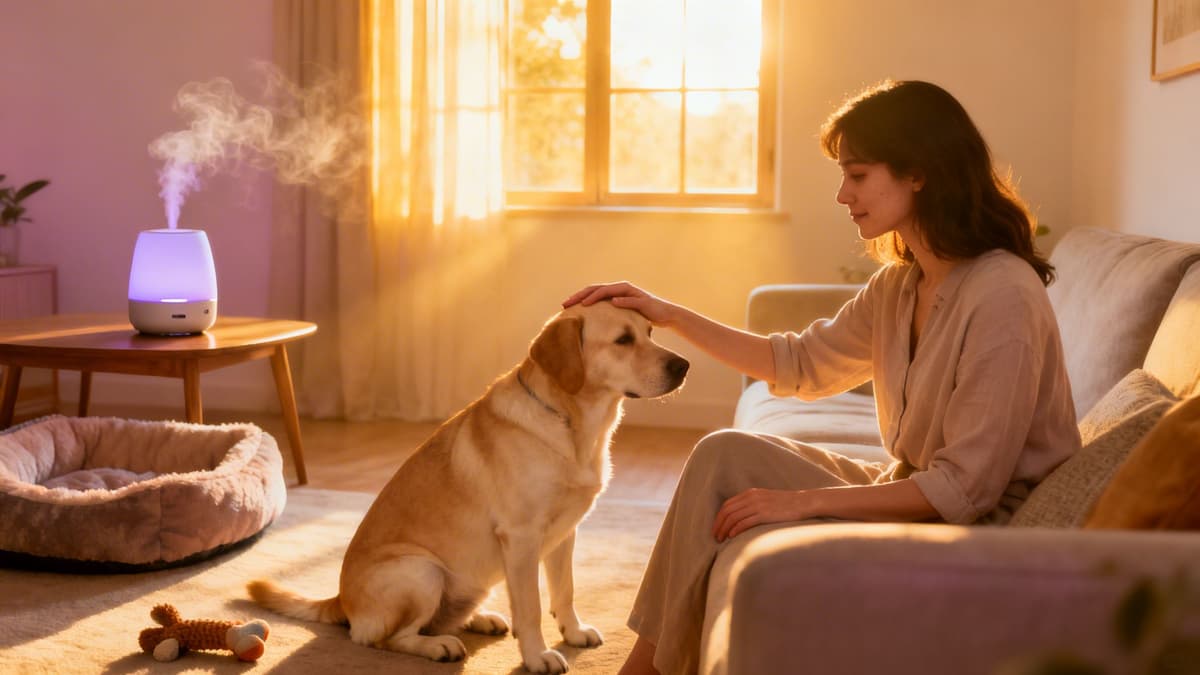
How to Calm Your Dog: A Pet Psychic's Guide
After working with animals for 27 years as a pet psychic, I’ve had the honor of listening to thousands of dogs. The first thing I tell pet parents is this: I know you’re here looking for advice on how to calm your dog, and what I’ve found is that their anxiety isn’t random. It’s a direct message to you. In this guide, I'll help you translate what your beloved dog is trying to say, so you can bring true, lasting peace to your home.
What Is Your Dog Trying to Tell You Through Their Anxiety?
Across all my readings, one truth always shines through: anxiety is a message. What I tell pet parents is that we need to shift our perspective from, "How do I stop this behavior?" to "What is my dog communicating right now?"
If you feel helpless seeing your companion in distress, you're not alone in feeling this. That feeling is actually a beautiful sign you're already connected to your dog's emotional state. It's why you're here. Now, let's work on translating what you're sensing into actions you can take.
Is It Fear or Anxiety?
When I connect with an animal, I feel a distinct energetic difference between fear and anxiety. Fear feels like a sudden lightning strike, a sharp, immediate reaction to a specific trigger, like a car backfiring or a stranger at the door.
Anxiety, on the other hand, is like a constant, low-grade hum of unease that never quite shuts off. It’s a feeling of dread that lingers.
- Fear is a direct response to a clear and present danger.
- Anxiety is the dread of a potential, often unknown, future threat.
Here's another way to look at it: a dog who’s afraid of thunder will run and hide once the storm actually begins. A dog with anxiety might start pacing and whining hours before the sky even darkens because they sense a change in the air pressure. Recognizing these subtle cues is the first step in decoding their language.
A Story From a Reading
I remember a session with a lovely woman and her rescue, Buster. Every single evening, Buster would pace the living room relentlessly for hours. His owner had tried everything from more exercise to calming treats and a fancy new bed, but nothing seemed to help.
When I connected with Buster, he didn’t show me a general sense of nervousness. He showed me a memory.
In his previous home, the evenings were filled with shouting and intense conflict. For him, the setting sun was a trigger that replayed that old trauma. His pacing wasn't random at all; it was a desperate attempt to escape a memory he was trapped in. His body was reacting to a threat that was no longer there.
Once his mom understood this, everything changed. Instead of just trying to stop the pacing, she started to change the entire evening's energy. She would sit on the floor with him, play soft music, and speak in a calm, reassuring voice before he even started his routine. She was helping him build a new, safe memory to replace the old, painful one.
It seems like more and more pet owners are dealing with this. A massive 2020 study confirmed that a staggering 72.5% of pet dogs exhibit anxiety-related behaviors, with noise sensitivity being the most common issue. It's a powerful reminder that you and your dog are not alone in this struggle.
The wonderful news is that you have the power to create change. It all starts by learning to listen on a much deeper level. To discover more about the ways your dog is communicating with you every single day, check out our guide on how to understand dogs.
How Can You Calm Your Dog in a Moment of Panic?
When a thunderstorm cracks overhead or fireworks start booming, your dog’s world can shrink into a state of pure terror. In those moments, you need something that works right now. After more than 27 years of connecting with animals, I’ve learned the most powerful tool for calming your dog is, without a doubt, your own energy.
What I tell every pet parent is simple: your calm is contagious. You have to become their anchor in the storm.
Your dog doesn't understand barometric pressure or holiday celebrations, but they are masters at reading energy. If you're tense, worried, or frustrated, you're essentially sending them a signal that confirms their fears: there really is something to panic about. You’re the leader of their pack, and they’re looking to you to see if they’re safe.
Become Their Calming Anchor
The very first thing to do, before you even reach for your dog, is to manage your own state. It’s a technique I call energetic grounding. Take a slow, deep breath. Feel your feet planted firmly on the floor and consciously focus on slowing your own heart rate.
When I tune into a frightened animal, their energy feels chaotic and frantic. Your job is to project an unwavering calm that says, "I'm here, I'm not afraid, and that means you are safe."
- Breathe with intention: Inhale for four counts, hold for four, and make your exhale longer, around six counts. Your dog will literally feel your body relax.
- Lower your voice: Forget the high-pitched, frantic "It's okay! It's okay!" That only fuels the fire. Instead, use a low, calm, reassuring tone.
- Move slowly: No sudden movements. Just calmly sit on the floor and let your dog decide whether to approach you.
This simple shift in your presence can make an immediate and profound difference. You’re showing them everything is alright, not just telling them.

This process is a great reminder to first observe their behavior, figure out what’s causing the reaction, and then choose the right way to respond with compassion.
Your In-the-Moment Calming Toolkit
Knowing which technique to grab from your toolkit can make all the difference. Not every situation calls for the same approach. Here’s a quick-reference guide to help you decide what to do based on what your dog is experiencing.
| Technique | Best For | Margaret's Tip |
|---|---|---|
| Energetic Grounding | Sudden, acute fear (thunderstorms, fireworks, loud noises) | Do this before your dog is in a full-blown panic if you can. Your preemptive calm sets the tone for the entire event. |
| Creating a Sensory Haven | Dogs who seek out small spaces when scared (hiding under tables, in closets) | Let them choose their spot. Don't force them into a crate if they prefer hiding behind the sofa. The goal is their sense of security, not our idea of it. |
| Slow, Gentle Petting | Mild anxiety or a dog who seeks physical contact for comfort | Use long, slow strokes down their back. Avoid frantic patting, which can increase excitement and anxiety. |
Think of these as your go-to immediate responses. The key is to match the tool to the dog and the moment.
A Lesson from a Golden Retriever Named Leo
I'll never forget a call from a client named Sarah. She was at her wit's end with her beautiful Golden Retriever, Leo, who had a terrifying phobia of storms. His panic was so severe he would start destroying furniture.
Here’s a piece of the advice I gave her:
“Sarah, the next time the sky even looks like it might storm, I want you to try something totally different. Before Leo even starts pacing, I want you to go to the quietest room in the house and just sit on the floor. And breathe.”
She asked, "Should I call him over to me?"
"No," I told her. "Don't say a single word. Just sit there and project the feeling of being completely calm and safe. Feel it in your bones. ‘This is my cozy spot, and nothing bad can happen here.’ Don't focus on him at all; focus entirely on your own peace."
A week later, she called back, and the change was astonishing. The moment she sat on the floor and grounded her own energy, Leo came over, circled once, and lay down with a heavy sigh, resting his head in her lap through the entire storm. He wasn't just looking for comfort; he was looking for her leadership. Leo needed her to be the calm, not just provide it.
If you’re interested in exploring this powerful energetic connection, you can learn more by meditating with your animal companions.
Create a Sensory Haven
While you are the primary source of calm, creating a safe physical space is just as important. Dogs are den animals by instinct. When they feel stressed, a small, dark, quiet space can offer an incredible sense of security.
What I've noticed with animals is that they don't want a huge, open-plan safe zone. They want a small, enclosed space where they can feel protected from all sides.
Help your dog build their own little "sensory haven" with a few key elements:
- Comforting Textures: Lay down their favorite soft blanket or even an old t-shirt of yours that smells like you.
- Familiar Scents: Your scent is the most powerful and grounding one for your dog. It's a direct link to safety.
- Muffled Sounds: An interior closet or a crate covered with a heavy blanket works wonders to muffle overwhelming noises from outside.
This gives your dog a predictable, safe place to retreat to when they feel overwhelmed, empowering them to start self-soothing. It's about giving them back a sense of control.
Is Your Home and Routine Secretly Stressing Out Your Dog?
After more than two decades of connecting with animals, I’ve seen time and again that a dog's anxiety often stems from something hidden in plain sight, woven right into their daily life and environment. To figure out how to calm a dog, we sometimes have to become detectives in our own homes.
So let’s take a look around. Think of it as seeing your home through your dog’s eyes or, more accurately, through their incredibly heightened senses.

What Are the Hidden Stressors in Your Environment?
It's so easy to forget that animals perceive the world very differently. Their hearing is far more sensitive, their sense of smell is exponentially more powerful, and their ability to pick up on energetic shifts is something we can only imagine. What seems perfectly normal to us can be a source of constant, low-level irritation for them.
Over the years, animals have shown me images and feelings tied to things their people never even considered.
- High-Frequency Sounds: Many of our modern electronics, like smart TVs, phone chargers, or even certain light bulbs, emit a high-pitched hum. It’s completely inaudible to us, but for a dog, it can be like nails on a chalkboard.
- Reflective Surfaces: Have a new glossy floor? Large windows or mirrors? These can be incredibly disorienting. A dog often doesn't recognize their own reflection and may see it as another animal invading their space.
- High-Traffic Areas: Think about where your dog’s bed is. If it’s in a busy hallway or right next to the kitchen, they may never be able to fully rest. They’re stuck on high alert, monitoring every little movement in the house.
What that really means is their safe space isn't actually safe. If they can't truly relax and let their guard down, their nervous system stays on high alert, which is the very definition of anxiety.
A Story of a Scary Monster
I once worked with a client, David, whose sweet, goofy Labrador, Barney, had started acting strangely. Out of the blue, Barney would stand at the end of the hallway, growling and barking. His hackles would rise, and nothing David did could soothe him.
When I connected with Barney, he showed me a "scary monster" that lived in the hallway. It was tall, it mirrored his every move, and it stared right back at him. In my 27 years of doing this, I've learned that the images animals show me are always their truth.
I asked David, "Is there anything new at the end of that hallway? Something reflective?"
There was a long pause. "Oh my gosh," he said. "My wife just put up a new full-length mirror there last week."
Barney wasn't being aggressive; he was being brave. He was trying to protect his family from the strange dog who had suddenly appeared in his home and wouldn't leave. Moving the mirror to a different room solved the problem almost overnight.
Why Is a Predictable Routine So Powerful?
Just as critical as the physical space is the energetic rhythm of your day. Dogs don't have watches or calendars; they rely on a predictable sequence of events to feel secure. Their routine is their roadmap. It tells them what to expect and when, creating a deep-seated sense of safety.
What I'm seeing with more and more animals lately is a huge number of cases where shifts in our human routines are creating chaos for our pets. The massive move to work-from-home, for example, completely upended the daily rhythms that many dogs had relied on for years. The once-clear signals of "human leaves, I can rest" and "human comes home, we go for a walk" became a confusing blur.
The data backs this up. Recent studies show a dramatic link between these routine changes and our pets' mental state, with separation anxiety surging by over 700% between 2020 and 2022. You can read more about how our recent lifestyle shifts are affecting our pets in this report on the compelling data on pet anxiety trends.
The good news is that you can rebuild that security. Creating a new, predictable schedule, even if you're home all day, can be a total game-changer. Set consistent times for meals, walks, playtime, and even quiet "settle time." This structure helps your dog understand their world again, giving them the stability they desperately need to feel truly calm.
What I'd Tell a Friend About Calming Products
If I had a dollar for every time a friend asked me, "Margaret, should I get a thunder shirt? What about CBD treats?" I could probably open my own sanctuary. Here's the thing, and this comes from over two decades of experience connecting with animals: calming products can be supportive, but they are never the whole solution.
This is where things get deeply interesting. So let's have a real, heart-to-heart chat and separate the marketing hype from what’s genuinely helpful for your dog.

Do Calming Vests and Pheromones Actually Work?
I get this question all the time. Let’s talk about something like a compression vest or a thunder shirt. The idea is that gentle, constant pressure can feel like a comforting hug, helping to soothe the nervous system. From an energetic perspective, what I've found is that for some dogs, it does feel like a reassuring embrace. It contains their frantic energy and helps them feel more grounded in their own bodies.
However, for other dogs, it can feel restrictive and confining, which only adds to their panic. Think about it this way: if you're feeling claustrophobic, the last thing you want is a tight hug. The animal's perception is everything.
Pheromone diffusers are similar. They mimic the calming scent signals a mother dog produces, which can be wonderful for creating a generally peaceful atmosphere. But it’s often not powerful enough to override a moment of intense, trigger-based fear, like fireworks. It's like lighting a lavender candle during a hurricane. A nice thought, but it won't stop the storm.
A Story About Using Products as a Crutch
I remember a client who had spent hundreds of dollars on every calming product imaginable for her anxious Beagle, Rosie. She had pheromone plug-ins in every room, a special bed, and a whole cabinet of calming chews. Yet, Rosie was still a nervous wreck.
During our reading, Rosie showed me a feeling of deep confusion. She felt all these things happening to her but didn't understand the "why." Her core issue was a deep-seated fear of being left alone, rooted in being rehomed multiple times as a puppy. The products were just masking symptoms, not addressing the actual wound.
The wonderful news is, once we identified the root cause, her owner could focus on what really mattered: rebuilding Rosie’s trust and showing her that she was finally in her forever home. The products became a small part of a much bigger, more meaningful healing plan, not the entire strategy.
What Should You Actually Do With Calming Aids?
When a friend asks for my honest take, this is what I tell them. Use products as a complementary tool, not a primary fix.
Here’s a practical way to approach them:
- Compression Vests: Introduce the vest during calm, happy moments with lots of treats and praise. Don't just pull it out when a storm is already rolling in. You want your dog to associate it with safety, not with the scary event itself.
- Pheromone Diffusers: These are best for creating a supportive background environment. They can be helpful for general unease, but don't expect them to be a miracle cure for acute panic.
- Calming Chews & Treats: I know that might surprise you, but I often find the act of giving the treat is more powerful than the ingredients. It’s a moment of connection where you are offering comfort. Always make sure any supplement you use is approved by your vet first.
In my experience, no product on earth can replace the power of your calm presence, a predictable routine, and a deep understanding of what your dog is truly feeling. Use these aids to support your work, not to do the work for you.
When Should You Look for Deeper Answers?
You’ve tried adjusting the routine, you've created a sensory haven, and you’ve practiced grounding yourself, but your dog is still struggling. If this sounds familiar, please know you aren't alone. It’s one of the most common reasons pet parents reach out to me, often feeling stuck after they’ve already done all the "right things."
Sometimes, the root of the problem isn't something we can easily see. This is where we need to dig a little deeper and build a true support team for your dog.
What I'd Tell a Friend About Vet Visits
The first stop for any persistent or sudden anxiety is always your veterinarian. I can't stress this enough. In my 27 years of experience, I’ve connected with countless animals whose anxiety was actually a desperate cry about physical pain.
They can’t just tell us their hip hurts or a tooth is aching. Instead, they show us through their behavior.
- Sudden aggression when you touch a certain spot.
- A new hesitation to jump on the couch or go up the stairs.
- Unexplained restlessness and an inability to truly settle down.
These aren't just "bad habits" cropping up out of nowhere. More often than not, they are direct signals of physical discomfort. Ruling out an underlying medical issue is the most responsible first step. Think about it this way: no amount of calming energy is going to fix an untreated ear infection.
When Is a Professional Trainer the Next Step?
Once your vet gives you the all-clear, a certified professional behaviorist or trainer can be an incredible ally. A great trainer does so much more than teach "sit" and "stay." They are true experts in canine body language and how dogs learn.
A trainer is especially crucial for issues involving:
- Reactivity or Aggression: If anxiety leads to lunging, growling, or biting, you absolutely need hands-on, professional guidance to keep everyone safe.
- Severe Phobias: For deep-seated fears, like cars, strangers, or other dogs, a trainer can build a structured plan to gently desensitize and reframe your dog's experience.
- Compulsive Behaviors: If your dog is tail-chasing, licking obsessively, or pacing to the point of distress, a behaviorist can help you interrupt these patterns and address the cause.
A good trainer provides practical, real-world tools that build your dog's confidence and help you create a shared language of trust.
A Story of Grief Uncovered
So, what happens when the vet finds nothing and a trainer's methods help, but don't quite solve the core issue? This is where an intuitive reading can provide that missing piece of the puzzle. This is the part I love most.
I once worked with a woman whose Border Collie, Finn, had developed severe separation anxiety seemingly overnight. She had tried everything. The vet found no health issues, and a trainer had given her excellent exercises, but Finn's panic was relentless whenever she left.
When I connected with Finn, he didn’t show me fear of being alone. He showed me profound, heart-wrenching grief. He kept sending me an image of a fluffy, gray cat and an overwhelming feeling of loss.
"Was there a gray cat in his life who is no longer around?" I asked his owner.
She was silent for a moment. "Oh, my goodness," she finally said. "Yes. We had a cat named Smokey who passed away six months ago. They were inseparable. Finn's anxiety started right after that."
Finn wasn't anxious, he was mourning. He wasn't afraid his owner would leave; he was terrified of losing another family member. Once his person understood this, she could finally help him heal by talking to him about Smokey and reassuring him she was here to stay.
This is a powerful example of how complex these issues can be. With recent reports showing that over 70% of dogs globally show anxiety symptoms and 42% of U.S. owners noticing mental health shifts in their pets, it's clear we sometimes need a multi-layered approach. You can read more about these compelling pet anxiety statistics to see the full scope of the issue. If you're curious about how this works, you can learn more about what is animal communication in our detailed article.
Frequently Asked Questions
Can my own stress really make my dog anxious?
Without a doubt, yes. I have found this to be one of the most common reasons for a dog's unease. Dogs are like energetic sponges; they are incredibly tuned in to our emotional state. When you’re stressed, your heart rate changes and you give off a frantic energy they sense immediately. Since they don't know why you're stressed, all they feel is instability from their leader, which makes their world feel unsafe. The single most powerful thing you can do to calm your dog is to learn how to ground your own energy. Trust me, your calm gives them permission to feel safe.
Why did my dog suddenly become anxious after years of being calm?
In my experience, sudden anxiety is almost always a sign that something in their world has changed. The change could be environmental, like a new appliance humming at a frequency you can’t hear. It could also be a shift in the family, like a new partner moving in or a child leaving for college. Sometimes, the dog is trying to tell you about an underlying health problem that's causing them pain, so a vet check is a crucial first step. I always advise pet parents to ask, "What has changed in our world, no matter how tiny it seems to me?"
Will getting another dog help my dog's separation anxiety?
This question comes from a kind, loving place, but based on my experience, the answer is almost always no. Separation anxiety is about your dog's intense bond with you and their deep-seated fear of being left by you. Put simply, it’s not about a general dislike of being alone. A new dog just complicates things by introducing a new social dynamic and competition for your affection, adding more stress to an already anxious animal. It’s far more effective to focus on building your current dog's confidence first.
Is my dog's diet affecting their mood?
Yes, absolutely. Food is more than just fuel; it's energy. I have found that highly processed diets loaded with fillers and artificial ingredients can create a low-grade state of inflammation and agitation in a dog's body. This physical stress often translates directly into mental and emotional stress, making them more prone to anxiety. I often suggest clients talk with their veterinarian about switching to a whole-food or higher-quality diet, as a clean diet can help calm the nervous system from the inside out and create a stable foundation for your other calming efforts.
At PetPsychic.com, we specialize in getting to the "why" behind your dog's anxiety. If you feel like you've tried everything and are still at a loss, a reading can offer the clarity you need to finally help your best friend. Get the answers you and your pet deserve.