Why Does My Dog Lick Everything A Pet Psychic Explains
March 14, 2026
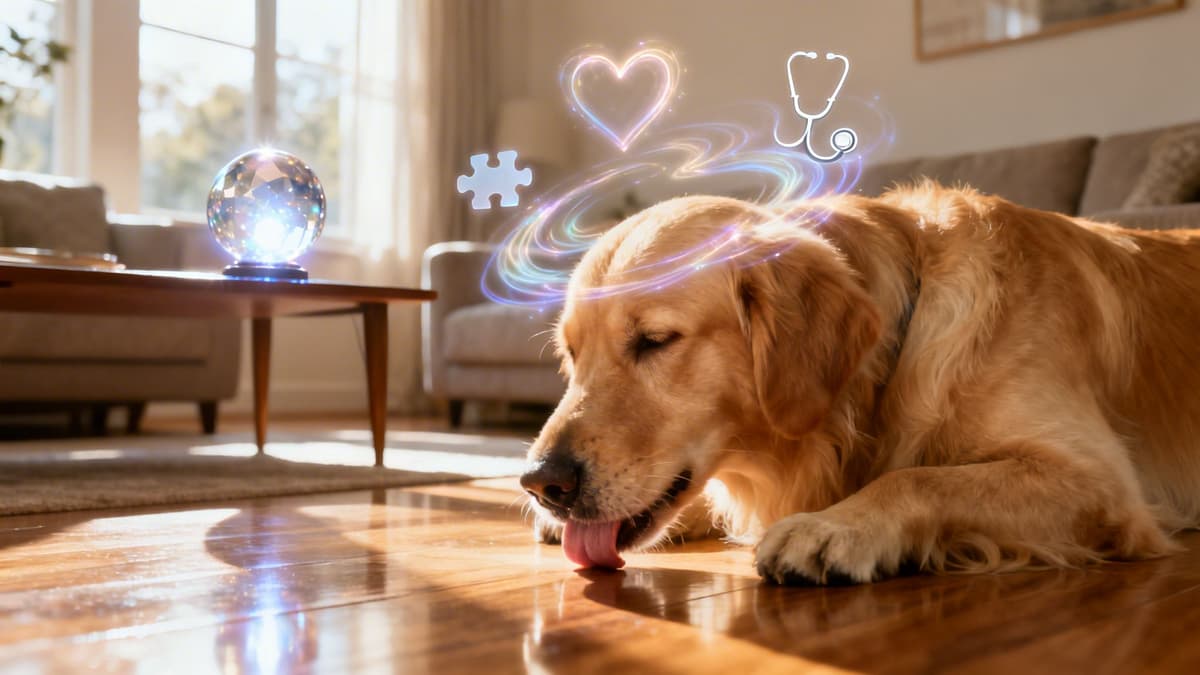
Why Does My Dog Lick Everything A Pet Psychic Explains
After 27 years of connecting with animals as a pet psychic, one question I hear almost every day from concerned pet parents is, “why does my dog lick everything?” It’s so easy to see it as just a strange quirk, but in my experience, it’s so much more than that. Licking is a primary language for your dog, a way for them to tell you what they’re thinking, feeling, and needing. I’m here to help you understand what your best friend is trying to say.

What Is Your Dog Really Telling You When They Lick?
From the thousands of animal readings I’ve done, I can tell you that licking is one of the very first languages a dog ever learns. Let me explain. It truly starts right at birth.
A mother dog licks her puppies to clean them and to get them breathing. Then, the puppies start licking back. They lick their mom and their siblings to show affection, ask for food, or just to say, "I feel safe." What that really means is the behavior triggers a release of calming endorphins in their brain, so it's a natural feel-good habit that sticks with them for life. This is the part I love most, because it shows how deep these instincts run.
Are They Showing Affection or Just Exploring?
What I tell pet parents is to think of their dog's tongue like their own hands. It’s a primary tool for interacting with and making sense of the world. Think about it this way: a quick lick on your hand might be a straightforward "I love you," but what about when they lick the floor? They could be tasting the faint, salty residue from your skin, or even sampling the energetic signature of a person who was just in the room. A dog licking the sofa might be investigating the interesting smells left behind or simply enjoying the texture. It’s all information to them.
A lick can be a kiss, a question, or a way to self-soothe. The real magic is in watching what they lick and when to understand what they're truly trying to say.
To help you decode this behavior, here's a quick cheat sheet based on what I’ve noticed with animals over the years.
Quick Guide To Licking Meanings
| Type Of Licking | What It Often Means |
|---|---|
| You (hands, face, feet) | Affection, greeting, grooming, or enjoying your salty taste. |
| Themselves (paws, body) | Self-grooming, but can also signal pain, allergies, or anxiety. |
| Other Dogs/Pets | Social bonding, showing submission, grooming, or playing. |
| Floors & Furniture | Exploration, seeking crumbs, boredom, or investigating scents. |
| The Air | A sign of nausea, dental issues, or a neurological tic. |
Remember, this table is just a starting point. Context is everything.
A Story of Licking and Love
I once had a session with a sweet beagle named Max. His owner, Sarah, called me, worried because Max had started obsessively licking one spot on the hardwood floor. She said, “Margaret, he just lies there for hours, licking the same area in the hallway. I don’t know what to do!”
When I connected with Max, he wasn't showing me boredom or stress. Instead, he showed me a clear image of Sarah's son, who had recently left for college. Max was tasting the lingering scent and energy left on the floor where his boy used to drop his backpack every single day after school. His licking wasn't a "bad habit." It was an act of profound love and remembrance. This is a beautiful sign because it shows the deep emotional bonds our animals form. This is the kind of insight that animal communication can offer.
Now, while Max’s licking was rooted in emotion, sometimes it can point to a physical problem. Let’s look at when it’s time to call your vet.
Could Your Dog's Licking Signal a Health Problem?

After more than two decades of communicating with animals, I’ve learned one rule that stands above all others. When you spot a new or sudden change in behavior, your very first step should always be to rule out a physical cause. While many licking habits are perfectly harmless, sometimes that repetitive motion is your dog's only way to tell you they’re in pain or feeling sick.
It’s our job to notice and investigate. I can't tell you how many times a client has come to me for a "behavioral problem," only for us to uncover an undiagnosed medical condition driving the issue. Here's the thing, it happens far more often than you'd think. I always tell people to start with a vet checkup.
How Can You Tell If It's Itchy Skin or Aching Joints?
Physical discomfort is a powerful motivator for licking. Put simply, it’s one of the few tools a dog has to self-soothe. In my work, I've found the most frequent physical triggers are:
- Skin Problems: This is a huge one. An intense, maddening itch from allergies, a hot spot, or even a tiny bug bite can easily lead a dog to lick an area raw in an attempt to find relief.
- Hidden Pain: Licking is a natural instinct to nurse a wound. Whether it's the deep ache of arthritis in an older dog or a sharp pain from a thorn stuck in a paw pad, they will often lick the spot that hurts.
- Stomach Upset: Gastrointestinal issues like nausea or acid reflux can cause a dog to frantically lick the air, their paws, or even surfaces like the carpet. It’s their equivalent of us trying to settle an uneasy stomach.
I vividly remember a reading I did for a beautiful Golden Retriever named Bella. Her owner, Mark, was worried because she had started obsessively licking one spot on her side. He assumed it was a new, quirky habit.
When I connected with Bella, she didn't show me any feelings of anxiety or boredom. Instead, my whole awareness was flooded with a deep, pulsing ache right in her hip. I told Mark, "She's showing me it hurts, a lot. Please have your vet look at her hip."
A few days later, Mark called. An x-ray had confirmed Bella had early-stage arthritis in that very hip. The licking was her desperate attempt to soothe the pain. It’s a powerful reminder that our dogs are always communicating; we just have to learn their language. If you're looking to better understand these subtle cues, our guide on understanding your dog's body language system can be a great place to start.
What Do Vets Say About Chronic Licking?
This connection between licking and health isn't just based on my intuition; the data from veterinary medicine tells the same story. What I'm seeing with more and more animals lately is a direct link between a new licking habit and a developing health issue. Vets report that a significant portion of dogs brought in for chronic licking have an underlying medical issue that needs attention.
Sometimes, the clues are more subtle. For instance, excessive licking around the mouth can point to dental pain. I know that might surprise you, but this is a critical connection, especially when you consider that a majority of dogs over age three suffer from some form of gum disease. Learning when to worry about your dog's dental health is essential for every pet parent.
Is Anxiety The Real Reason For The Licking?
Just like we might bite our nails when we’re stressed out, I’ve seen countless dogs turn to licking to handle big emotions. This could be anything from anxiety and stress to plain old boredom. I find this absolutely fascinating because it’s a direct window into their inner emotional world. You're not alone in feeling this way, as it's a very common concern.
These days, pet owners are telling me they're struggling with anxiety-related behaviors in their dogs, especially separation anxiety. The simple act of you walking out the door can be enough to kick off a marathon licking session. When a dog is left alone and feels insecure, that repetitive motion releases calming endorphins, making it a powerful self-soothing habit.
What Does Anxious Licking Actually Look Like?
Anxious licking isn't the same as a sweet, affectionate lick on the hand. In my experience, it has a compulsive quality to it. It’s repetitive, intense, and your dog might seem almost checked out while doing it.
It’s the difference between a quick, curious taste of the sofa versus non-stop licking of the exact same cushion for an hour. A dog caught in this cycle might focus on:
- Themselves: Licking their paws, flanks, or legs, sometimes to the point of creating raw, irritated hot spots.
- Surfaces: Furniture, floors, walls, and bedding are all common targets.
- People: This can look like frantic, incessant licking that feels less like a friendly greeting and more like a desperate plea for comfort.
A Story of Anxiety and Abandonment
I remember a reading I did for a client with a sweet rescue dog named Luna. Her person called me, at her wit's end, saying, "Margaret, Luna licks the legs of our coffee table for hours every single day. Why is she doing this?"
When I connected with Luna and asked her why she was so drawn to the table, she didn't show me a taste or a smell. Instead, I was hit with a powerful wave of deep, vibrating fear, and she showed me an image of a closing door. Luna had been rehomed before and was living in constant fear of being abandoned again. The licking was the only way she knew how to comfort herself when that panic took over.
How is Boredom Different From Anxiety Licking?
Emotional turmoil isn't always about fear. Sometimes, it's about a lack of stimulation. A bored dog's brain needs a job to do, and if you don't give it one, it will invent its own. Trust me, licking can easily become that job. This is where things get deeply interesting, as boredom licking can look very similar to anxiety licking on the surface.
The wonderful news is that once you recognize the emotional root of the behavior, you can start to help. For so many dogs, simply adding more enrichment and creating a predictable routine can make all the difference. You can find some great ideas in our guide on how to calm an anxious dog. And if you suspect deep-seated anxiety is the cause, it might be worth looking into pet insurance for dogs with anxiety to help manage long-term care.
What I’d Tell a Friend About Their Dog’s Licking
Whenever a friend calls me, completely beside themselves because their dog won’t stop licking, the first thing I say is, "Okay, take a breath." I know that feeling of worry all too well, and my advice always comes from a place of seeing this countless times and knowing there's a path forward. The best part? You have so much power to help your dog feel more secure and understood.
Let's shift that worry into action. After 27 years of working with animals, I can tell you that even small tweaks to their environment and daily rhythm can lead to huge changes in their well-being.
This flowchart is a great starting point for figuring out what might be going on. It helps you trace the behavior back to a potential cause.

As you can see, the "why" behind your dog’s licking can split off in a few directions. It might be an emotional need like separation anxiety, or it could be something as simple as boredom. This is exactly where you can make a real difference.
What Should You Actually Do To Help Your Dog?
Assuming you've already had your vet rule out any underlying health problems, the next step is to look at your dog’s emotional world. Here's another way to look at it: we need to give their brain a better, more rewarding job than just licking everything in sight.
Here are the first things I always suggest pet parents try:
- Enrichment Activities: Puzzle toys, snuffle mats, and lick mats are lifesavers. Smear a lick mat with a bit of dog-safe peanut butter or yogurt. This doesn't just redirect the licking; it gives them a puzzle to solve and engages their mind.
- "Find It" Games: This is just a simple form of scent work. Hide a few high-value treats around a room and encourage your dog to use their nose to find them. It taps into their natural foraging instincts and is a fantastic way to burn off mental energy.
- A Predictable Routine: Dogs are creatures of habit; they find immense comfort in knowing what to expect. Sticking to consistent times for walks, meals, and even just quiet time can lower their baseline anxiety dramatically.
I recently worked with a client whose poodle, Leo, was licking his paws raw due to separation anxiety. We, of course, started with a vet visit to treat his inflamed skin, but the real game-changer came from a new routine. His owner started giving him a special puzzle toy that he only got when she was gone.
This one simple ritual reframed the entire experience for him. It shifted Leo's focus from "Oh no, she's leaving me!" to "Oh, she's leaving, which means I get my favorite puzzle!" It created a positive association with her departure and gave him an important job to do.
This is what I love to see, because it shows how incredibly adaptable our dogs are. They just need us to show them a better way to handle their big feelings.
When Is It Time for Professional Help?
Listen, you don't have to navigate this all by yourself. By the way, if you've tried these enrichment strategies and have a solid routine in place, but the licking continues or even gets worse, that's your cue to call for backup.
A certified professional dog trainer or a veterinary behaviorist can be an incredible resource. They have specialized tools for tackling more severe issues like deep-seated compulsive disorders or intense separation anxiety. Your veterinarian is always the best person to ask for a referral to a trusted, qualified professional in your area.
Questions I Get Asked Most
After connecting with thousands of dogs over the past 27 years, you start to see patterns. Certain questions about licking seem to pop up in my sessions more than any others. Here are a few of those, along with the insights I’ve gathered from the dogs themselves and the practical advice that has helped their families find peace.
Why Does My Dog Lick My Pregnant Belly?
Here's what truly amazes me. From what animals have shown me, they absolutely know when their person is pregnant, often sensing the shift in your energy and hormones long before you even see a positive test.
When a dog licks a pregnant belly, it’s typically a deeply nurturing and protective gesture. I've had dogs communicate that they are 'checking in' on the new little soul, offering affection, or even standing guard. They feel the family dynamic changing and are simply responding with a whole lot of love.
Is It Dangerous if My Dog Licks the Couch?
My advice here is to be aware, but don’t panic. An occasional lick of the sofa is one thing, but if it becomes a non-stop habit, it's worth a closer look. Trust me, this is a topic that comes up frequently in my readings.
First, consider what might be on the couch. We often use cleaning sprays, fabric protectors, or even flame-retardant chemicals that can be ingested and lead to an upset stomach. It's also possible your dog has found a tasty spot where someone dropped a salty chip or a bit of food, and those ingredients aren't always great for them.
What if Licking is a New Habit for My Senior Dog?
Okay, this one is a red flag that you should take seriously. In everyday terms, when an older dog suddenly starts licking (themselves, the air, or objects), it often points directly to one of two things I see in my work: hidden pain or cognitive changes.
An arthritic dog, for instance, might start compulsively licking a sore paw or joint to soothe the ache. It can also be a brand-new self-soothing behavior tied to canine cognitive dysfunction (CCD), which is very similar to dementia in people. Your first and most important step is to get your dog to the vet for a full workup to rule out any underlying medical issues.
Frequently Asked Questions
Why does my dog lick my other dog's ears?
In my experience, this is usually a social grooming behavior. It’s a sign of affection and bonding, similar to how mother dogs clean their puppies. It can also be a way for a more submissive dog to show respect to a more dominant one. However, if it’s obsessive, it’s worth checking the other dog’s ears for signs of an infection, as your dog might be trying to "clean" an area that is bothering their friend.
Should I use bitter sprays to stop my dog from licking?
What I tell pet parents is that bitter sprays can be a temporary fix, but they don't address the root cause of the licking. Think of it like putting a band-aid on a deeper issue. If your dog is licking due to anxiety, pain, or boredom, they will likely just find another spot to lick once the original one tastes bad. It's always better to understand the 'why' behind the behavior first.
Is it normal for a dog to lick the air?
Occasional air licking can be a sign of anticipation, like when they're about to get a treat. But if it’s frequent or frantic, it's often a signal that something is wrong. I’ve found this can be linked to nausea, acid reflux, or dental pain. In some rarer cases, it can be a partial seizure or a neurological tic. This is one behavior I always recommend discussing with your veterinarian to be safe.