Why is my dog suddenly aggressive: Causes, Signs & Quick Tips
March 14, 2026
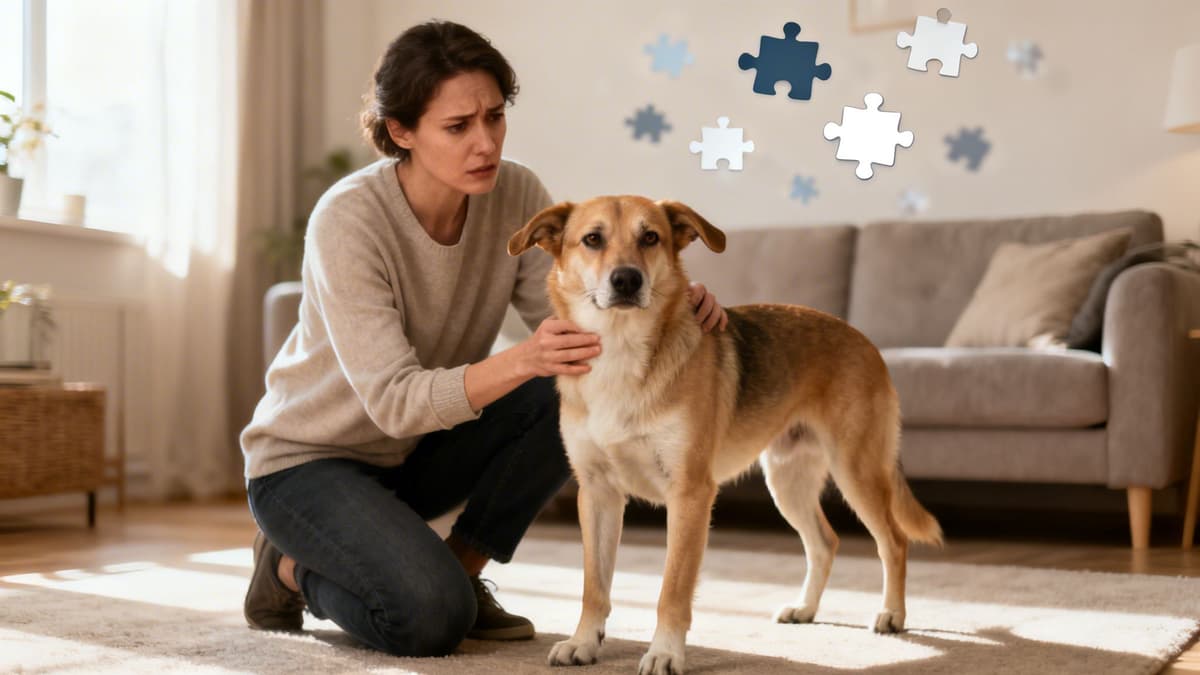
Over my 27 years as an animal communicator, some of the most urgent calls I receive begin with a heart-wrenching question from a worried pet parent: "why is my dog suddenly aggressive?" Let me start by saying this sudden shift in behavior almost never means your dog has turned "bad." In my experience, it's a desperate cry for help, and I'm here to help you translate what your dog is trying to tell you.
What Does Sudden Aggression in Your Dog Really Mean?

First, let's take a deep breath. Seeing a beloved companion growl, snap, or bite is profoundly unsettling. You're not alone in feeling this way; I’ve sat with thousands of pet parents who feel just as shocked, confused, and worried as you do right now.
Think about it this way: aggression is a primary form of communication for a dog in distress. They can't use words to tell you, "My tooth hurts," or "That new person scares me." Instead, they have to use the tools they have (a growl, a snarl, a snap) to send a clear message that something is very wrong.
What's the Hidden Message Behind the Growl?
In my work, I've found that this behavior is rarely the problem itself but a symptom of a much deeper issue. Here's what I've noticed with animals: it’s a giant, flashing sign that something in their physical body or emotional world is completely out of balance.
In thousands of readings, the number one reason I find for a dog's sudden change in behavior is unspoken physical pain. This is actually a beautiful sign because it shows you’re paying close attention and are deeply connected to your pet.
What I tell pet parents is this isn't just my intuition speaking. Veterinary studies have found that a significant number of aggression cases are rooted in medical problems. One report revealed that 68% of dogs showing a sudden change in temperament had underlying physical pain confirmed during an exam.
Can You Find a Path Back to Peace?
This guide will walk you through the most common reasons for sudden aggression that I’ve uncovered in my work. We'll look at everything from hidden health conditions and hormonal shifts to fear, trauma, and environmental stress.
The wonderful news is that understanding is always the first step toward healing. By learning to translate what your dog is trying to tell you and getting familiar with their more subtle signals by learning a dog’s body language system, you can find a path back to harmony for both of you.
Here's a quick overview of the potential causes we'll be exploring.
Quick Guide to Potential Causes of Sudden Aggression
This table provides a quick summary of the common triggers for sudden changes in a dog's behavior, helping you identify what might be affecting your pet.
Potential Cause | What It Looks Like | What It Means for Your Dog |
|---|---|---|
Medical Issues & Pain | Yelping when touched, reluctance to move, growling when being picked up or petted. | Your dog is likely in pain from an injury, arthritis, dental disease, or another hidden illness. |
Fear or Anxiety | Hiding, trembling, tucking tail, growling at strangers or specific objects. | Something new or old in their environment is making them feel unsafe and threatened. |
Resource Guarding | Snapping or growling when you approach their food bowl, toys, or favorite spot. | They are afraid of losing something valuable to them and are trying to protect it. |
Age-Related Changes | Confusion, disorientation, increased irritability, snapping when startled (common in seniors). | Cognitive decline (like doggy dementia) or loss of hearing/sight can make the world confusing. |
Hormonal Shifts | Increased irritability or aggression toward other dogs, especially in intact animals. | Fluctuations in hormones, especially in unspayed or unneutered dogs, can affect mood. |
This is just a starting point. Now, let's dig into each of these areas so you can get a clearer picture of what your dog is trying to communicate.
Could Your Dog Be Silently in Pain?

If I've learned one thing in my 27 years of speaking with animals, it's that the number one reason for a sudden personality shift toward aggression is almost always unspoken pain. It’s a survival instinct, really. Their wild ancestors couldn't afford to show weakness, so our modern dogs are masters at hiding their discomfort until it becomes completely unbearable.
Your dog can't just come over and say, “Hey, my tooth is throbbing,” or “My hips are stiff.” Let me explain: their language is behavior. A growl, a snap, or a sudden lunge is often their only way of screaming for help.
How Does Pain Translate into Behavior?
I’ll never forget a client, Sarah, who called me heartbroken. Her sweet Golden Retriever, Buster, had suddenly started growling whenever she tried to pet his back, something he’d always loved. As I connected with Buster, I felt this sharp, zinging pain shooting out from his hips.
I explained to Sarah, "Buster is showing me a feeling like a hot poker in his right hip. He's not mad at you; he's terrified of you touching that spot." A vet visit confirmed what Buster had told me: he was suffering from severe, advanced arthritis. His growl wasn’t about anger. It was a desperate attempt to protect himself from more hurt.
In everyday terms, the aggressive act isn’t the problem itself, it's a symptom. It’s a powerful message that something in their physical body needs immediate attention.
From an owner’s perspective, these changes can feel like they happened overnight. But in my experience, the underlying issue has usually been brewing silently for weeks, if not months, before it finally boils over.
What Unseen Conditions Might Look Like?
Here's another way to look at it: your dog's sudden irritability might be their only way to communicate that something is deeply wrong on the inside. Conditions like dental disease, joint pain, or even a thyroid imbalance can completely hijack their personality. These aren't just minor annoyances; for your dog, they can be all-consuming.
For instance, veterinary experts have found that conditions like hypothyroidism can affect 1 in 20 dogs, and it’s frequently linked to irritability and seemingly unprovoked aggression. And in many medium-to-large breeds, hip dysplasia is a major culprit in 15% of cases of sudden behavioral changes. You can explore more about dog bite statistics to see how these patterns play out on a larger scale.
Here are some of the most common, yet often hidden, sources of pain I’ve encountered in my animal communication sessions:
Dental Pain: A cracked tooth or infected gums can make eating, playing, or even being touched near the face excruciating.
Joint and Back Pain: Arthritis, hip dysplasia, or a slipped disc can cause sharp, stabbing pain with normal movements like getting up, climbing stairs, or being petted.
Internal Issues: Problems with organs like the kidneys, stomach, or pancreas can cause a chronic, nagging pain that leads to a constant state of grumpiness.
Ear Infections: A painful ear can make a dog incredibly sensitive to having their head touched, or even to loud noises they used to ignore.
I know that might surprise you, but a sudden change in temperament is your biggest clue. And honestly, it’s a beautiful thing that you’ve noticed. It means you’re in tune with your dog and have heard their call for help.
What Emotional Triggers Cause a Dog to Act Out?
Once physical pain has been ruled out, the next place I always look is into your dog’s emotional world. In all my years of connecting with animals, I’ve seen firsthand how powerful forces like fear, anxiety, and echoes of the past can be in shaping their behavior today.
It’s easy for us to forget just how deeply our dogs can be affected by what seem like minor changes. To a sensitive dog, a new roommate, a different work schedule, or even rearranging the furniture isn't just a small shift. It can feel like their entire world has been turned upside down, completely eroding their sense of security.
Is Your Dog Reacting to Fear or a Memory?
I remember a reading I did for a lovely rescue dog named Luna who had suddenly started lashing out, but only at men wearing hats. Her owner was baffled and heartbroken by this new aggression. When I connected with Luna, I was shown a startlingly clear and painful memory from her life before she was rescued: a man in a baseball cap had been incredibly cruel to her.
What that really means is Luna wasn't being 'bad' or 'mean.' She was having a flashback, a moment of pure terror, and her aggression was a desperate attempt to protect herself from being hurt again.
This is the part I love most, uncovering the stories they hold inside. Sometimes, the trigger isn't about past trauma at all, but about a fear in the present moment. A dog might guard their food bowl not from a place of dominance, but from a deep-seated anxiety about scarcity.
Another common scenario is redirected aggression. This happens when a dog gets intensely frustrated, say, by a squirrel chattering just outside the window, and can't get to the source of their frustration. Here's the thing: that intense emotion has to go somewhere, and it often gets aimed at the nearest target, which might be you.
Put simply, their emotional world is just as complex and rich as ours, but their vocabulary for expressing it is far more limited. My experience has shown me, time and time again, that these outbursts are communications, not character flaws. If you're struggling with this, you're not alone. Learning to interpret these emotional signals is a massive step toward helping your dog feel safe again. You can learn more about how to understand your dog on a deeper level in our other articles.
Unfortunately, when these signs of fear or anxiety go unnoticed, the situation can escalate. In the UK, the NHS reported a staggering 47% increase in hospital admissions for dog bites between 2012 and 2023. What I'm seeing with more and more animals lately is that many of these incidents were linked to pets whose distress signals were missed. You can read more about the surprising statistics behind dog behavior on goldbergloren.com.
What Should You Actually Do in the Moment?
When a dog suddenly growls or snaps, our gut reaction is often to scold or punish. After 27 years of working with animals, I can tell you this is the one thing you absolutely must not do. From your dog's point of view, punishment just confirms that the situation is scary and unpredictable, which almost always makes the aggression worse.
Your dog isn't trying to dominate you; they're trying to communicate. In that tense moment, they need a calm, confident leader, not an adversary. The immediate goal is to de-escalate the situation, not to win a battle of wills.
How Can You Create Calm and Safety First?
The absolute priority is keeping everyone safe, including your dog. Your first move is to calmly and quietly create space between your dog and whatever (or whoever) is triggering them. Avoid yelling, making sudden moves, or staring them down, as these actions can feel like a threat and escalate their fear.
Here are the immediate steps I walk my clients through:
Remove the Trigger or the Dog: If another person or pet is the trigger, calmly ask them to leave the room. If it's an object or a situation you can't remove, use a gentle voice to guide your dog to a safe space, like their crate or a separate, quiet room.
Give Them Space: This isn't a punishment or a "time-out." Think of it as a crucial "cool-down" period. You're allowing their stress hormones, like adrenaline and cortisol, to recede so they can feel safe again.
Breathe: Dogs are incredibly attuned to our energy. If you're panicked, they'll feed off that anxiety. Take a few slow, deep breaths to ground yourself. Your calm presence is one of the most powerful tools you have.
Once the immediate tension has passed, you can focus on building skills to prevent future incidents. Learning how to calm a dog who is feeling anxious or overwhelmed is an invaluable skill for any pet parent.
What Does It Mean to Become a Loving Detective?
After everyone is safe and the dust has settled, your real work begins. It’s time to shift from reacting to investigating. Your job now is to become a loving detective, not a disciplinarian.
Trust me on this: every behavior is a clue. Reacting with anger or frustration will only obscure the very information you need to understand the why behind your dog's sudden aggression.
This decision tree shows some of the most common emotional roots I've seen behind a dog's growl over the years.

As you can see, a growl is rarely about defiance. It’s a distress signal, often pointing to deep-seated fear, anxiety about a current situation, or a painful memory from their past.
How Does a Pet Psychic Reading Compare To a Vet Visit?
It’s one of the most important questions I hear in my work, and it often comes from a place of deep concern. A loving pet parent will call, their voice tight with worry, and ask, "Who should I see first for this aggression, you or my vet?" My answer is always the same: both.
Think of it like building a complete picture of your dog's well-being. Each professional you consult adds a vital, irreplaceable piece to the puzzle. They aren’t competing; they’re collaborating to give you the fullest understanding of what’s happening with your best friend.
Over my 27 years as a communicator, I've partnered with hundreds of veterinarians. Their role is absolutely non-negotiable. They are the experts on your dog’s physical health, the only ones who can run diagnostic tests, find a medical cause, and prescribe the right treatment.
What Does Each Professional Provide?
Once you have a medical workup, a certified behaviorist or trainer often steps in as your hands-on coach. They are the strategists, giving you practical, real-world plans to manage the behavior and keep everyone safe. They teach you the "how" of navigating the situation day-to-day.
My role as an animal communicator is to add another layer of insight. I step in to translate the emotional and mental side of the story, the "why" from your dog's own perspective. This is where we can uncover the feelings that fuel the behavior. This is where things get deeply interesting.
For instance, I worked with a client whose elderly dog was correctly diagnosed with arthritis by his vet. He was on pain medication, but the dog remained withdrawn and would sometimes snap. The physical issue was being addressed, but something was still missing.
What I'd tell a friend is this: Get the full picture. The vet gives you the 'what,' the behaviorist gives you the 'how,' and the animal communicator gives you the emotional 'why.'
During our session, the dog shared with me this profound sense of sadness. He showed me images of his favorite part of the day: joyfully greeting his person at the door. Now, his arthritic body couldn't manage it anymore. His grumpiness wasn't just from the pain; it was rooted in grief over losing his most important "job."
Understanding this changed everything. His mom could now comfort his aching heart, not just his aching joints. By addressing his emotional needs, their bond found a new, deeper way to connect, even as his body changed.
Your Next Steps to Help Your Aggressive Dog
Once the immediate scare has passed and everyone is safe, it's easy to feel overwhelmed. But this is where you can take a deep breath and create a clear, compassionate action plan. Your dog has sent a powerful message, and how you respond now is key to understanding their needs and preventing it from happening again.
What Should You Actually Do First?
Your absolute first stop should be your veterinarian's office for a thorough check-up. I can't say this enough. In my 27 years of connecting with animals, I've seen time and again that unspoken pain is one of the most common culprits behind a sudden change in temperament. Ruling out medical issues is the non-negotiable foundation for everything that comes next.
While you wait for that appointment, start a behavior journal. This is an incredibly powerful tool that I recommend to all my clients, and it’s something you can start doing right now.
Think of yourself as a detective gathering clues. Note down:
When did the aggression happen? (Time of day, day of the week)
Where were you? (In the kitchen, on a walk near the park)
Who was present? (You, a child, a stranger, another pet)
What was going on right before? (Petting, feeding time, a loud noise from the street)
How exactly did your dog react? (A low growl, a lip curl, a snap, a full lunge)
This journal will become an invaluable resource for your vet and any behavior professional you work with. The patterns that emerge are often the key to unlocking the root cause.
How Can You Focus on Management and Prevention?
While you investigate the “why,” your immediate priority is managing your dog’s environment to prevent another incident. By the way, this isn’t about punishment at all. It's about being a good leader and setting your dog up for success by removing the situations that trigger their fear or stress.
Simple management tools can dramatically lower the tension in your home. This might look like:
Using baby gates to create separate, safe zones where your dog can relax.
Keeping your dog on a leash, even inside, to give you gentle, immediate control.
Putting a pause on having guests over until you have a better handle on the situation.
Your goal is to create a predictable and calm environment. This helps your dog feel secure again and gives everyone in the household, including you, some much-needed peace of mind.
Considering the Deeper Layers
Once you've addressed the medical and safety basics, you can start exploring the emotional side of things. Here's where it gets really meaningful, and honestly, it's the part of the work I love most.
This is where a reading with a pet psychic can bring so much clarity. A veterinarian can identify arthritis on an x-ray, which is critical information. But what I can do is connect with your dog to understand the feelings behind that pain, like the deep sadness they feel because they can no longer jump up to greet you when you come home.
I find this absolutely fascinating. These sessions often reveal that missing puzzle piece, uncovering a specific fear, a memory of a past trauma, or a heartfelt message your dog has been desperately trying to share. The wonderful news is that bringing these feelings to light is often where the healing journey for your entire family can truly begin.
Frequently Asked Questions
Can Old Age Cause a Dog to Become Aggressive?
It's a tough reality to face, but yes, it absolutely can. This is something I encounter frequently in my readings with senior dogs. As our companions get older, their brains can change, leading to a condition called canine cognitive dysfunction, which is like a form of dementia for dogs. This can leave them feeling confused, anxious, and much more irritable. Fading eyesight and hearing mean they can be startled easily, and adding chronic pain from conditions like arthritis can lead to a sudden snap. A senior dog who growls isn't being "grumpy"; they're often disoriented or in pain and need our help.
Will Neutering My Male Dog Stop His Aggression?
This is a big one, and the answer is: it depends. Neutering can make a significant difference, especially if the aggression is fueled by hormones, like competing with other male dogs. Unneutered males are involved in a staggering number of bite incidents, with some data suggesting as many as 75%. Sometimes this is even linked to painful medical issues like testicular or prostate problems. However, surgery isn't a magic wand. If the aggression is rooted in fear or has become a learned habit, neutering alone won't fix it. It is one important piece of the puzzle, but not the whole picture. You can learn more from these dog aggression statistics on goldbergloren.com.
Should I Rehome My Dog If They Have Become Aggressive?
I know this question comes from a place of deep pain and desperation. Before you even let your mind go there, I strongly encourage you to exhaust every other possibility. That starts with a complete veterinary workup and a consultation with a certified veterinary behaviorist. In so many cases, once the underlying cause (like hidden pain or a specific fear) is identified and addressed, the aggression subsides. Rehoming is incredibly traumatic for a dog and should only ever be a last resort, especially since sudden aggression so often points to a solvable problem. You are your dog's most important advocate.