Why is my cat hiding: Causes, signs, and practical steps
March 18, 2026
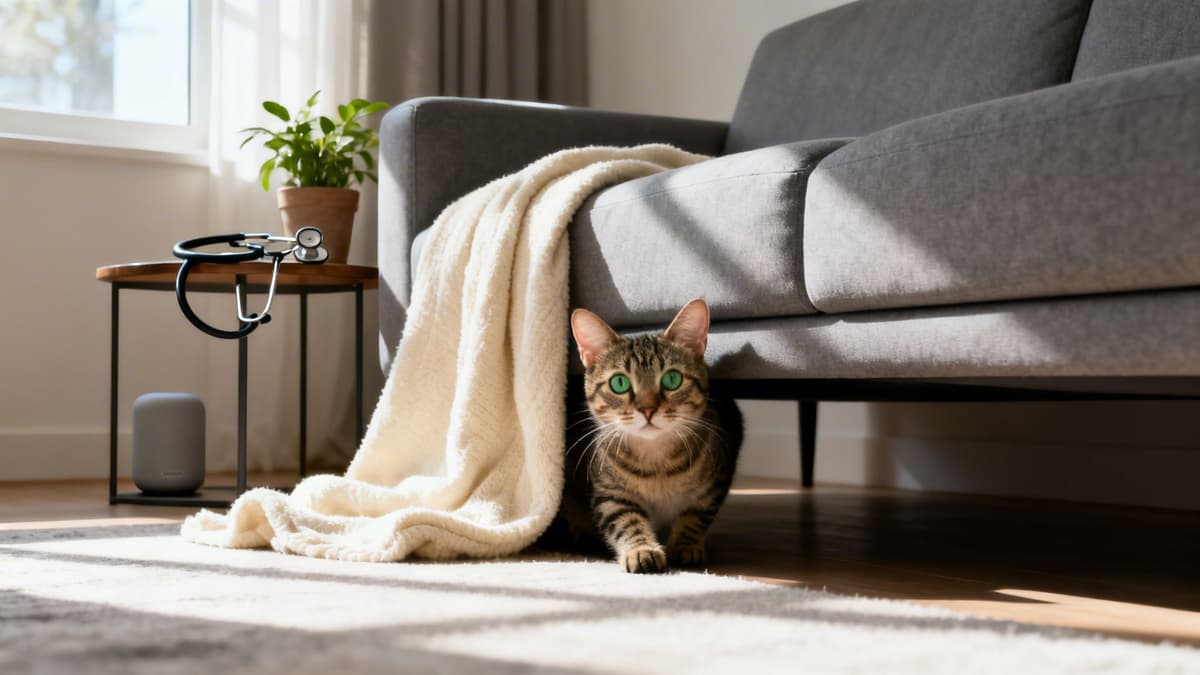
Why is my cat hiding? Here's what they're trying to tell you
After 27 years of connecting with animals as a pet psychic, the most common and worried question I hear is, "Why is my cat hiding?" I know that seeing your beloved friend vanish into the shadows is deeply unsettling, but let me explain what I've learned. This behavior is a direct message, and by understanding it, you can help your cat feel safe and secure again. The wonderful news is that you can learn to read these signs.
What is my cat really trying to say when they hide?
When a concerned pet parent calls me, the first thing I explain is that we need to become fluent in their cat’s silent language. In my experience, hiding isn't just a quirky habit; it's one of the most direct ways a cat can communicate. They’re trying to tell you something vital about their inner world, and this is the part I love most.
Think about it this way: your home is your cat’s entire kingdom. If they retreat into the shadows, it’s because something in that kingdom feels off, unsafe, or uncomfortable. Trust me, it’s almost never a sign that they don’t love you. In many cases, it’s actually the opposite.

What are the most common messages behind hiding?
In my psychic readings, I've found that nearly all hiding behavior boils down to one of four core feelings. Time and again, this is what the animals show me:
- Fear: This is a big one. It might be triggered by a sudden loud noise, a stranger visiting, or even a subtle change in the environment you haven't noticed.
- Stress: Cats are creatures of habit and thrive on routine. A new pet, a shift in your work schedule, or even rearranging the furniture can throw their world into chaos.
- Physical Pain: This is a critical one we must always rule out first. Cats are absolute masters at hiding illness, a survival instinct held over from their wild ancestors where showing weakness could be a death sentence.
- Deep-Seated Instinct: Sometimes, they simply need a quiet, dark, and secure spot to rest and recharge, just like their wild cousins would in a den.
Here’s a story from my practice
I remember a session with a woman whose sweet cat, Luna, had suddenly taken up residence under the guest room bed. Her owner was devastated, convinced she’d done something to offend her. When I connected with Luna, however, the message came through loud and clear.
Luna sent me feelings and images of a low, rumbling sound that vibrated up through the floor. The sense I got from her was, "It shakes the world."
I asked my client, "Do you have a new neighbor downstairs? Maybe someone who plays music with a lot of bass?"
Her eyes went wide. "Yes! They moved in two weeks ago. I can barely hear it, but…"
What that really means is, for Luna, that faint vibration was a terrifying, unpredictable earthquake. Once we pinpointed that specific fear, her person could take simple steps to create a new, quiet sanctuary for Luna, far away from the source of the vibration. It was incredible, within a week, Luna was back on the sofa, purring away. You can also dive into our guide on how to understand cats and their unique communication styles.
Could your cat be hiding from pain or sickness?

When a once-social cat suddenly vanishes under the bed, my first thought always goes to their physical well-being. After more than 27 years of connecting with animals, I’ve learned that pain is one of the most common, and tragically overlooked, reasons for a sudden behavior change. Cats are masters of disguise, a survival instinct passed down from their wild ancestors where showing any weakness was a death sentence. Hiding is their way of protecting themselves when they feel vulnerable. You're not alone in feeling this worry; decoding these subtle signals is a challenge for even the most devoted pet parents.
What subtle signs should you actually look for?
Your cat can't use words, but their body language and habits speak volumes. I often encourage my clients to become gentle detectives in their own homes. Here are some of the key things I've seen in animals who are hiding because they're sick or in pain.
- Litter Box Habits: Are they using the box less, or maybe way more often? Have they started going outside of it? Inappropriate urination is a huge red flag for medical issues.
- Eating and Drinking: A drop in appetite or a complete refusal to eat is always a serious sign. On the flip side, drinking excessive amounts of water can also point to underlying problems like kidney disease or diabetes.
- Grooming Changes: Is their fur looking messy, greasy, or matted? When a cat doesn't feel well, self-care is one of the first things to go.
- Reluctance to Be Touched: If your normally cuddly companion suddenly hisses, flinches, or moves away when you try to pet a certain spot, they're communicating clear boundaries. That area is likely sore.
What I tell pet parents is this: your intuition is your greatest tool. If you feel in your gut that something is off with your cat, trust that feeling. It's almost always right.
I know how incredibly stressful it is when your cat starts hiding and urinating outside the box. Dealing with the cleanup is a big part of that stress, so learning about getting rid of cat pee smell in rugs can be a practical lifesaver during this tough time.
What I'd tell a friend about this situation
I remember a powerful session with a gentleman whose cat, Oliver, had become "moody and withdrawn." His person was worried but thought maybe it was just old age. As soon as I connected with Oliver, he showed me this persistent, sharp ache in his lower back. He also gave me an image of his water bowl, along with a strong feeling of reluctance to drink.
I told his dad, "Oliver is showing me a very specific pain in his back, right near his kidneys. I have a strong feeling you need to get him to a vet right away."
The wonderful news is, he did. A vet visit and some bloodwork confirmed early-stage kidney disease. Because they caught it so early, Oliver started a special diet and medication that dramatically improved his quality of life. This is where a psychic connection can work so beautifully with veterinary medicine. I've seen firsthand how learning what animal communication is can bridge the gap in understanding our pets.
How do household changes make a cat hide?
Throughout my years of communicating with animals, one thing has become crystal clear: cats are incredibly sensitive to their surroundings. What we might brush off as a minor tweak, like moving a chair, can register as a full-blown earthquake in their world. When a client asks me, "Why is my cat suddenly hiding?" environmental disruption is one of the first things I look into. Put simply, their world revolves around predictability, and when that's gone, they feel exposed.
Why do small changes feel so big to them?
I remember a reading I did for a client named Sarah, who was worried sick about her cat, Jasper. He had abruptly taken up residence under her bed. When I tuned into Jasper, I didn’t get a sense of physical pain. What he showed me, instead, was a new sound, one that was loud, jarring, and totally unpredictable.
I asked Sarah, "Did you recently get a new smart speaker? Jasper is showing me music that blares on and off without warning, and it’s terrifying him."
Sarah was floored. "Yes! We just set one up last week. I had no idea it was bothering him so much."
In everyday terms, Jasper's once-safe home was suddenly being invaded by a loud, confusing presence he couldn't possibly understand. Hiding wasn't him being difficult; it was a perfectly logical response. I find this absolutely fascinating.
Common household stressors and how cats react
More recently in my practice, I've noticed how even small household changes deeply affect our animals. Here's a table based on what I’ve observed time and again during my readings.
| Stressor | What Your Cat Might Be Feeling | A Simple First Step |
|---|---|---|
| Loud Noises (construction, parties) | Fear of the unknown; feeling trapped by a sound they can't escape. | Create a quiet "sanctuary room" with a cozy bed and a white noise machine. |
| New People or Pets | Territorial anxiety; uncertainty about their place in the family hierarchy. | Use slow, supervised introductions. Make sure they have vertical spaces like cat trees. |
| Changes in Routine (new job, vacation) | Insecurity and abandonment fears. This is a huge trigger for cat separation anxiety. | Keep feeding and playtime schedules as consistent as possible. This is their anchor. |
| Moving to a New Home | A complete loss of their established territory. They feel disoriented and exposed. | Start them in one safe room with their familiar items before letting them explore. |
When you're dealing with big changes like a move, taking steps to minimize that overwhelming feeling of the unknown is key. Investing in some safe pet travel items can make the journey itself far less traumatic and set a better tone for their arrival.
What happens when an indoor cat escapes and hides?
There's a unique, heart-stopping panic that hits you the moment you realize your indoor cat has slipped outside. In my 27 years as an animal communicator, I've sat with hundreds of frantic pet parents in this exact scenario. The first thing I always say is this: take a deep breath. Your cat is very likely closer than you think, but they are absolutely terrified.
Why won't my cat come when I call?
So many people feel personally hurt when they're desperately calling their cat's name, only to be met with silence. By the way, it has nothing to do with them not loving you or recognizing your voice. It's a sign that their survival instinct has taken the driver's seat and is holding them frozen in place. To a predator, any sound is a dinner bell. Your cat knows this on a cellular level, so they will stay perfectly still and quiet.
A powerful story of an escaped cat
I’ll never forget a reading I did for a woman whose cat, Milo, darted out the door. She was beside herself. For two full days, she’d scoured the neighborhood, convinced he was gone forever. When I connected with Milo, the feeling that washed over me was pure terror. He showed me a picture from his own eyes: dark, scratchy leaves pressed all around him.
I told his owner, "He's showing me he's tucked into a very dense, low-to-the-ground bush. It's dark, it feels very close to your house—I think it might be in a neighbor's yard."
Armed with that insight, she got on her hands and knees and started looking *under* things. Sure enough, Milo was wedged deep inside a neighbor's overgrown shrubbery, less than ten yards from his own front door. This is actually a beautiful sign because it's a testament to how strong their will to survive is.
According to expert Kat Albrecht from the Missing Animal Response Network, when cats escape into unfamiliar territory, they instinctively go into "silent hiding mode." This is a crucial defense mechanism. You can discover more insights about their incredible survival instincts on the Missing Animal Response Network website.
What steps should you take first?
Here’s what I’ve learned about helping animals in these situations. Your first moves are critical and need to work *with* their fear, not against it.
- Search at Dawn and Dusk: These are the “magic hours.” The world is quieter, and a scared cat is most likely to feel brave enough to break cover.
- Look Low and Close: Start your search in your own yard. Check under decks, inside dense bushes, in open sheds, and beneath cars. They rarely go far.
- Use Their Scent: Put their uncleaned litter box or a favorite bed outside near the door. Their powerful sense of smell can act like a "scent highway" home.
What should you actually do when your cat is hiding?
Alright, so you have a few ideas about *why* your cat might be hiding. Now for the most important part: what do you actually do about it? After 27 years of working with animals and their very worried people, I’ve found a straightforward approach that really works. It's all about building a bridge of trust, not forcing them out of their comfort zone.
How to immediately check for safety
First things first, we need to make sure your cat is physically safe. This is the non-negotiable first step.
- Rule out being trapped: Take a gentle look in their hiding spot. Could a door have swung shut behind them? A quick check can prevent a real tragedy.
- Ensure access to essentials: Your cat needs to be able to get to their food, fresh water, and a clean litter box without crossing a scary, open space.
- Observe from a distance: Look for any clear signs of injury or illness. Any signals of physical distress mean it's time to call your vet right away.

This decision tree illustrates a key hiding behavior I see over and over in my work, especially for cats that have gotten outside. As you can see, a scared cat’s instinct isn't to bolt for miles. It’s to find the nearest possible cover and stay silent. Here's the thing, this is exactly why a calm, close-to-home search is so often the key to finding them.
How to coax a cat out without force
Now, for the golden rule: never, ever drag a cat out of their hiding spot. Doing so just shatters their sense of safety. Instead, we use patience and gentle encouragement. Here's another way to look at it: you must let them feel in control.
I remember a client, Maria, whose cat, Sasha, was terrified of her new partner. Sasha lived under the bed. I suggested a new routine. Every evening, Maria’s partner would come into the room and just sit on the floor, a good ten feet away. He wouldn't talk to the cat or even look under the bed. He’d just read a book out loud in a calm voice. After a few minutes, he’d toss a high-value treat toward the bed. He did this every single night. By day five, Sasha was peeking her head out. This is where things get deeply interesting, by day eight, she was creeping out to grab the treat. They rebuilt trust entirely on Sasha's terms.
Frequently Asked Questions
Is it normal for a cat to hide sometimes?
Yes, absolutely! It's one of the most natural things a cat can do. Happy, healthy cats often seek quiet, dark spots to nap and recharge. The real cause for concern is a sudden and prolonged change in behavior, like when a very social cat suddenly hides all day or starts skipping meals to stay hidden. That's a signal that something is wrong.
When should I call the vet about my hiding cat?
I always tell my clients to trust their gut, but there are some non-negotiable signs. Call your vet immediately if your cat's hiding is combined with not eating or drinking for over 24 hours, obvious signs of pain, trouble breathing, or straining to urinate without producing anything (which is an emergency, especially for male cats).
How can I help a newly adopted cat who is hiding?
I know that might surprise you, but this is actually a good sign! It shows your new cat has smart survival instincts. The best thing you can do is give them space. Set up a "base camp" in one quiet room with their food, water, litter box, and a cozy bed. Then, just exist in the room with them without forcing interaction. Let them get used to your calm presence, they will come out when they feel secure.

Find out what your pet is really trying to tell you
Understand the reason behind the behavior, in your pet’s own words, in a personalized reading delivered within 24-48 hours.
Get My Pet's Reading Get My Pet's Reading
Delivered within 24-48 hours · Double Reading Guarantee