A Pet Psychic's Guide To Cat Separation Anxiety
March 14, 2026
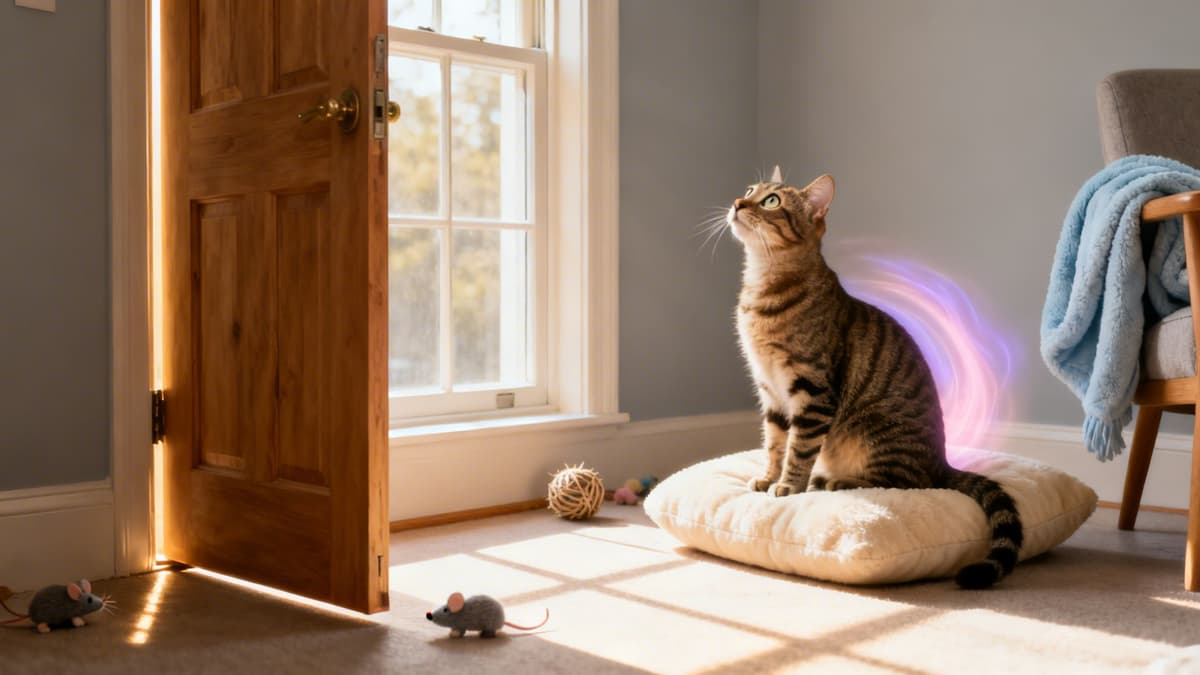
A Pet Psychic's Guide To Understanding Cat Separation Anxiety
For the past 27 years, I've been connecting with animals on a deep, spiritual level, and one of the most common issues I encounter is cat separation anxiety. Let me explain what I've learned: this isn't your cat being "bad" or defiant. It's a genuine, silent panic from a companion who feels their world is falling apart every time you leave. In this guide, I'll share what your cat is truly trying to tell you and how you can help them feel safe again.

What Is Your Cat Really Trying to Tell You?
So many loving pet parents come to me convinced their cat's actions are spiteful. Here's what I tell pet parents: when a cat pees on your pillow or shreds your clothes, it's not revenge. When I connect with these cats, what I feel isn’t anger at all. It’s pure, overwhelming fear.
What that really means is these behaviors are simply your cat's only way of screaming, "I'm terrified!" into a world they feel has abandoned them. They are desperate, instinctual attempts to cope with intense distress. Recognizing this is the first, most crucial step toward helping them heal. This is the part I love most, seeing that understanding bloom.
How can you tell the difference between anxiety and normal cat behavior?
It can be tricky. When I'm in a session, I often ask owners to walk me through what happens as they get ready to leave. Here's what I've noticed with animals: the moment the keys jingle or the shoes go on, the anxiety ramps up. The cat might become a furry shadow, start wailing, or even physically try to block the door. These aren't just personality quirks; they are clear signals of distress.
To help you see the difference, here’s a breakdown of what to look for.
| Sign of Separation Anxiety | What It Looks Like | What It's Not |
|---|---|---|
| Excessive Vocalization | Mournful, persistent yowling that starts when you leave and can continue for hours. | A quick "meow" to greet you or ask for food. |
| Destructive Behavior | Frantic scratching at doors or windows; shredding personal items like clothing or bedding. | Scratching on a designated post or occasionally swatting an item off a table. |
| Inappropriate Elimination | Urinating or defecating specifically on your bed, clothes, or other items with your strong scent. | A one-time accident or a medical issue like a UTI (always rule this out with a vet!). |
| Over-grooming | Compulsive licking that leads to bald spots or skin irritation, often on the belly or legs. | Normal, routine self-cleaning that leaves the coat healthy. |
| Clinginess or Shadowing | Hyper-attachment that appears only when you're about to leave; frantic attempts to keep you in sight. | A cat who simply enjoys being in the same room as you and naps nearby. |
Seeing these signs doesn’t mean you’ve done something wrong. The wonderful news is, it often points to the incredibly deep bond you share. Your cat isn't trying to be a problem; they’re trying to tell you they have a problem they can't solve alone.
Just last week, a client told me about her cat, Luna, who had completely shredded the vertical blinds by her front window. She asked, "Margaret, why is she doing this?" During our reading, Luna showed me this frantic energy of needing to see. She wasn't just destroying things for the sake of it; she was desperately trying to keep her person in sight for as long as possible, to make sure she wasn't gone forever.
When you stop seeing these actions as defiance and start seeing them as desperation, everything changes. Your frustration melts into compassion, and I promise you, your cat feels that shift in your energy. It’s the foundation for real healing. And you're not alone in feeling this. Research has found that more than 1 in 10 pet cats show behavioral issues when left alone.
When you start to truly understand your cat's communication, you can finally work with them on a solution instead of against their behavior.
Is It Separation Anxiety Or Something Else Entirely?
One of the first questions I always get is, "How can I be sure it's separation anxiety?" It's a great question, because so many different issues can look alike. In my 27 years of experience, I've seen just how easy it is to misinterpret our cats' signals. A cat isn't acting out to punish you; their actions are symptoms. Our job is to uncover the root cause.
Could it just be boredom?
Let's start with a common impersonator: simple boredom. I know that might surprise you, but a chronically under-stimulated cat can look a lot like an anxious one. When a bright mind has nothing to do, it will often turn to destructive behaviors.
The key difference I've seen is in the timing. A bored cat often acts out randomly, even when you're right there. A cat with separation anxiety will almost always reserve these behaviors for when you're gone or just about to leave.
What if it's a medical problem?
This one is a big deal. Before you assume a behavioral problem, you must rule out physical illness with your veterinarian. I've seen it happen time and again where a health condition masquerades as anxiety.
Here are a few common medical culprits:
- Urinary Tract Infections (UTIs): A cat suddenly urinating outside the litter box might not be "protesting." It could be a painful UTI that makes them associate the box itself with discomfort.
- Hyperthyroidism: This can cause restlessness and increased vocalization, which are easily mistaken for emotional distress.
- Pain from Arthritis: If your older cat is suddenly grumpy and reclusive, it might be due to chronic joint pain, not a newfound fear of being alone.
Getting the all-clear from your vet is always the most responsible first step.
A client, Sarah, was at her wit's end. "He pees on my pillow every time I go out, Margaret," she told me, "He must be angry!" But when I connected with her cat, Milo, I didn't feel anger. I felt a deep, overwhelming fear and a desperate need for comfort. He wasn't soiling her pillow to get back at her; he was surrounding himself with her scent because it was the only thing that made him feel safe. That one shift in perspective changed everything for them.
This is a classic, and heartbreaking, sign. Put simply, they aren't trying to make you angry. They are desperately trying to self-soothe by mixing their scent with yours, creating what I call a "cocoon of comfort" to survive until you return. Research backs this up, with one 2020 study showing that of cats who urinated inappropriately due to anxiety, a staggering 75% did so exclusively on their owner's bed. Just like Milo.
What Should You Actually Do To Help Your Anxious Cat?
Once you’ve pinpointed anxiety as the culprit, the question is, "So, what do I do now?" The great news is there are many compassionate steps you can take. In my experience, it’s about patiently rebuilding their trust and showing them they’re safe.
Helping a cat through this is a journey you take together. Believe me, seeing them finally find their peace is one of the most rewarding things you can experience. Let's walk through the steps I recommend.
How do you create a sanctuary space?
The very first thing I tell people is to create a safe haven for their cat. This isn’t a time-out spot; it’s a dedicated area where your cat can retreat and feel completely secure while you're away. Think about it this way: you're building them a bubble of comfort.
Here's what that space needs:
- Your Scent: An old t-shirt you've worn works wonders. Your scent is a powerful comfort to a lonely cat.
- Comforting Warmth: A cozy, covered bed or a low-wattage heated pet mat gives them a sense of being protected.
- Engaging Toys: Puzzle feeders are fantastic. They turn mealtime into a brain game, redirecting anxious energy.
- Calming Pheromones: Many clients have seen great results with plug-in diffusers that mimic calming maternal pheromones.
This space becomes their go-to spot for self-soothing.

This infographic lays out a clear path, from observing your cat to knowing when to get expert help.
How can you gently change their feelings about you leaving?
A huge part of a cat's anxiety comes from the triggers they associate with your departure. Our job is to break that connection. What I tell my clients is that we need to desensitize their cat to these cues. It sounds technical, but it’s simple. Pick up your keys, then just go sit on the sofa. Grab your work bag, walk to the kitchen, and then put it right back down.
By doing these actions over and over without actually leaving, you’re teaching your cat that those sounds and objects are no longer reliable predictors of abandonment. They just become boring. I know that might surprise you, but I’ve found it to be incredibly powerful.
I worked with a client whose cat, Oliver, would start drooling and hiding the second she put on her work shoes. We practiced this exact technique. For a week, she’d put her shoes on, give Oliver his favorite treat, and then immediately take them off. Before long, Oliver started associating the shoes with a delicious snack, not with being left alone. It was a total game-changer.
Why are predictable routines a cat's best friend?
At their core, cats are creatures of habit. They feel most confident when their world is predictable. Establishing consistent daily routines is incredibly grounding for them.
In everyday terms, this means:
- Scheduled Playtime: Set aside 15-20 minutes at the same time every day for focused, interactive play.
- Consistent Mealtimes: Feeding your cat at the same times each day creates reliable anchor points in their day.
- Calm Goodbyes and Hellos: This can be tough, but try not to make a big fuss when you leave or come home. A quiet departure and calm greeting sends the message that your comings and goings are normal.
This structure helps your cat learn the rhythm of the day and internalize that your return is just as certain as their dinner. By the way, while it’s a common thought, adding another pet doesn’t always solve the problem. If you're curious how this issue presents in dogs, you might find our guide on dog separation anxiety helpful, too.
How Animal Communication Can Reveal Deeper Insights

While routines and enrichment are powerful tools, sometimes they don't get to the heart of the matter. This is where my work as an animal communicator becomes so vital. A vet can address physical issues, but a reading lets us uncover the emotional why driving a cat's anxiety.
For over two decades, I've had the privilege of connecting with animals. One thing I always tell my clients is that behind every behavior is an emotion. A cat’s fear is rarely random; it's often tied to something we humans would never guess on our own.
What does a cat's anxiety actually feel like?
When I connect with a cat deep in the grips of this fear, the feeling is overwhelming. It’s a visceral, all-consuming panic that their source of safety has vanished from the universe, and might never return.
This is where things get deeply interesting, because once we understand that core feeling, we can finally begin to heal it. They aren’t just being destructive; they are desperately trying to survive an emotional storm.
What I'd Tell a Friend About Jasper's Fear
Let me share a story from a recent session. A woman came to me, heartbroken, about her cat, Jasper. She had just started a new job, but ever since, Jasper had become intensely anxious. He would yowl for hours and had stopped eating during the day.
More recently in my practice, I'm seeing this more as modern work life changes. She explained that her new demanding schedule was only temporary for a project ending in early 2026, but she was worried the damage was already done.
When I connected with Jasper, the feeling he sent me was a chilling, quiet dread. He showed me a mental image of his person walking out the door and then just… fading into nothing. In his mind, she wasn't just going to work; she was disappearing forever, every single day. He was grieving her loss over and over.
This is actually a beautiful sign because once his person understood his specific fear, she could completely change her approach. I coached her on how to send him mental pictures and feelings of her returning home safely before she even walked out the door. It made all the difference. Understanding the specific nature of your cat's separation anxiety is key. For those looking to build this kind of intuitive link, learning about different animal communication techniques can deepen your pet connection. This work is all about turning fear into understanding, and I find this absolutely fascinating.
Questions I Get Asked Most
After 27 years of connecting with animals, I’ve noticed the same questions about anxiety pop up again and again. I've been fortunate enough to help thousands of loving pet parents, so I want to tackle the most common concerns I hear. Let’s get right into it.
Will getting another cat help my anxious cat?
This is, without a doubt, one of the top questions I get. Here's the thing, the answer is almost always no. Your cat isn't just missing a companion; they are missing you. Their anxiety is deeply rooted in their specific bond with their person. Bringing another cat home usually just adds a whole new layer of stress and rivalry.
How long does it take to see improvement?
There's just no magic number. The timeline really depends on the individual cat and how consistently you can implement these calming strategies. With some cats I've worked with, their owners start noticing subtle, positive shifts within a couple of weeks. For others, it can take several months. My advice is always to celebrate the small wins. Trust me, every small step forward is a huge victory.
Why does punishment make it so much worse?
I cannot say this strongly enough: punishing a cat for anxious behavior is incredibly harmful. When you scold a cat, you aren't teaching them the behavior is wrong. You are confirming their deepest fear: that the person they rely on for safety can suddenly become scary and unpredictable. Here's another way to look at it: their entire problem stems from a fear of being unsafe. Punishment just piles more fear on top of that.
Are pet cameras a good idea for anxious cats?
Pet cameras can be fantastic for understanding anxiety, if you use them the right way. They give you a window into what’s really going on. You can see when the anxiety kicks in and what might be triggering it. That information is pure gold. Where people get into trouble is by using the two-way talk feature. Interacting through the camera's speaker can be incredibly confusing for them. My advice is to use cameras to observe and learn, not to intervene.
Frequently Asked Questions
Does my cat's anxiety mean I'm a bad owner?
Absolutely not. In fact, it’s quite the opposite. In my experience, separation anxiety is a powerful, if painful, sign of the incredible bond you and your cat share. It means they love you dearly and feel their safest when you’re right there with them. The fact that you’re here, seeking answers, proves what a caring and dedicated owner you are.
Are certain cat breeds more prone to separation anxiety?
While any cat can develop anxiety, I have noticed in my practice that some of the more social, people-focused breeds seem more susceptible. Think of the chatty Siamese, the cuddly Burmese, or the gentle Ragdoll. But truly, a cat’s individual personality and their unique bond with you play a much bigger role than their breed.
Can I use CBD oil to help my anxious cat?
This is a popular question these days, and I understand the hope behind it. While some people report positive results, this is a conversation you absolutely must have with your veterinarian first. They can help you find a pet-safe product, determine the right dose, and confirm it won’t interact with other health issues. Never give a cat a CBD product made for humans.
Sometimes, the most direct path to a solution is getting answers straight from the source. At PetPsychic.com, our animal communicators can connect with your cat to uncover the specific feelings and fears driving their anxiety. This gives you the clarity you need to truly help them heal. If you’re ready to finally understand what your cat is trying to tell you, book your personal reading today.