What Causes Separation Anxiety in Dogs? A Pet Psychic Explains
March 28, 2026
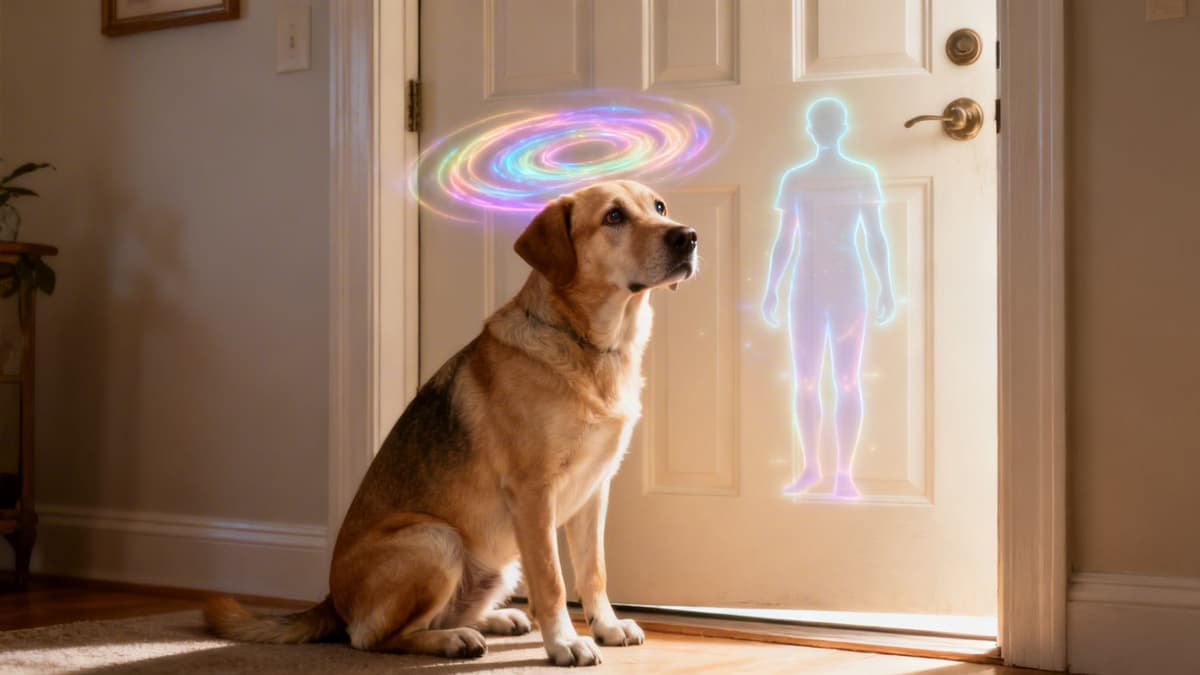
After 27 years of connecting with animals, one question comes up more than any other from worried pet parents. In my experience, the answer to what causes separation anxiety in dogs is so much deeper than simply “they miss you.” It’s often a tangled web of past experiences, deep-seated fears, and even the subtle energies your dog is picking up from you and your home. In this guide, I’ll pull back the curtain on what's really happening in your dog's heart and mind.
Why Is My Dog So Anxious When I Leave Home?
What I tell pet parents is that what we label separation anxiety is rarely a single issue. Think about it this way: it's your dog’s entire personal history bubbling to the surface the moment their biggest comfort, you, is gone. We’re going to move beyond the usual training tips to explore the energetic and emotional roots of this distress. This is the part I love most, because the cause is almost never what you think it is.
For example, a client once came to me about her sweet terrier mix, Buster, who would destroy the door frame every single time she left. She was convinced he was angry at her for leaving.
When I connected with Buster, however, he showed me a feeling of intense panic. It wasn't about her being gone at all. It was about a high-pitched noise from the neighbor's new security system that only started after she left. He wasn't trying to punish her; he was desperately trying to escape a sound that felt physically painful. What I’ve seen time and again is that our animals' actions are always a form of communication.
You're not alone in feeling this, and I want to share what animals have told me directly during our sessions so you can finally understand. Here’s what we’ll explore together:
- The energetic and emotional roots behind your dog’s distress.
- How to tell the difference between true anxiety and other common behaviors. You can also start to learn more about your dog’s body language in our guide.
- What’s really going on behind the barking, chewing, or frantic pacing.
The wonderful news is that understanding is the first real step toward peace. My job is to help you hear what your dog is trying to tell you so you can begin a true path to healing, for both of you.
What Are the Hidden Triggers Behind Your Dog's Fear?
Through thousands of animal communication sessions, I've learned something crucial: what we call "separation anxiety" is rarely just about a dog missing its person. Here's the thing: these frantic behaviors are almost always a symptom, a cry for help about a specific kind of distress.
I remember a Beagle named Charlie who would shred the window blinds every single day. His owner was at her wit's end, convinced he was being spiteful. But when I connected with Charlie, he didn't show me loneliness. He showed me a feeling of frantic, buzzing energy and a desperate need to get away from something inside the house.
It turned out, a new smart home device was emitting a high-frequency sound that was physically painful for him. His panic had nothing to do with his owner leaving. What that really means is we can't just slap the "separation anxiety" label on the problem and call it a day.
Is Your Dog Bored or Truly Panicked?
I always tell my clients that we have to become detectives first. Before we can even think about a solution, we have to uncover the specific frustration our dog is feeling. And this is where things get deeply interesting: the animals are always trying to show us the real reason. We just have to learn how to listen.
Think about it: is your dog desperately trying to get away from something inside the home, or are they frantically trying to get to you or something else outside? These are two completely different problems.
Interestingly, scientific research is finally catching up to what animal communicators have seen for years. A groundbreaking study recently identified four main forms of distress in dogs left alone: trying to escape something inside, wanting to reach something outside, reacting to noises, and pure boredom. You can read more about these findings from the AVMA.
This is why I love this work. Once we pinpoint the actual trigger, the path to a solution becomes so much clearer. The wonderful news is that your dog isn't trying to be "bad." They are simply communicating a deep-seated fear or an unmet need in the only way they know how.
This chart gives you a good visual of the core emotional states that often fuel anxiety. It's rarely one single thing, but a tangled web of past experiences, present fears, and pent-up energy.

As you can see, what looks like a simple behavior on the surface often stems from a complex mix of these deeper elements.
A Deeper Look at Common Triggers
Drawing from my 27 years of experience and thousands of readings, I’ve seen a few hidden causes come up again and again.
- Past Trauma: A dog who was abandoned, surrendered to a shelter, or rehomed multiple times often carries a deep energetic scar. Their panic when you walk out the door isn't just about you leaving for a few hours; it's a terrifying echo of being left for good.
- Environmental Stressors: Just like with Charlie the Beagle, the trigger can be something in the home. High-pitched sounds from electronics, the lingering smell of a new floor cleaner, or even the stressful energy from arguing neighbors can make your home feel unsafe the moment you're gone.
- Profound Boredom: I know that might surprise you, but for many intelligent, high-energy dogs, destructive behavior is a desperate attempt to find an outlet. They are literally going stir-crazy. Put simply, they're creating a "job" for themselves because they haven't been given one.
- Reflected Anxiety: What I'm seeing with more and more animals lately is this. Dogs are emotional sponges, and they absolutely soak up our stress. If you feel guilty, worried, or anxious about leaving, your dog absorbs that energy, which then magnifies their own unease.
Figuring out which of these is the true culprit is the key. It shifts our focus from simply trying to stop a behavior to actually healing the underlying feeling, which is where true, lasting peace is found.
How Can Your Own Energy Affect Your Dog’s Anxiety?
After 27 years of communicating with animals, I can tell you one of the most consistent truths I've uncovered: your dog is an emotional mirror, perfectly tuned into your feelings. I often tell my clients that their dogs don't just hear their words; they feel their hearts.
This connection seems to be getting stronger, or perhaps we're just getting better at noticing it. I recently worked with a client whose Golden Retriever, Luna, had started trembling and hiding every morning. Nothing in the dog's routine had changed, but the owner's job had become a source of immense stress.

Why Do Your Feelings Matter So Much?
When I connected with Luna, she didn’t show me fear of being alone. Instead, she showed me a picture of her person's frantic morning energy, that knot of worry tightening in her stomach as she rushed out the door. Luna wasn't just sad to see her owner go; she was absorbing that anxiety like a sponge.
Your dog’s anxiety can be a direct reflection of your own. Their panic isn't always about the solitude itself, but about the stressful energy that saturates the air right before you walk away.
If this sounds familiar, you’re not imagining it. So many pet parents confess they feel guilty, rushed, or anxious about leaving, and I have to remind them that their dog is feeling it right alongside them. Your dog looks to you for cues on how to react to the world. If you're projecting fear, they’ll assume there's something to be afraid of.
This is actually a beautiful sign because it's a testament to the profound bond you share. Your dog is so connected to you that your emotional states are intertwined.
The Energetic Echo Between You and Your Dog
Try to see it from their perspective. Your dog lives entirely in the present moment. In the minutes before you leave, your energy is the loudest thing in the room. They can't understand that your stress is about an upcoming meeting or bad traffic; they just feel the alarm bells going off in your nervous system and conclude there must be a real and present danger.
This isn't just an anecdotal observation; it's a growing awareness among pet owners. A recent survey revealed that 61% of owners see clear signs of distress in their dogs, like barking or pacing, as they prepare to leave. What’s more, over 35% of pet owners now believe their own anxiety directly impacts their dogs. You can explore the survey results on America's dogs and separation anxiety to see just how common this is.
From thousands of readings, I’ve learned that helping a dog with separation issues often starts with us, the humans, managing our own emotional state first.
Here’s what I’ve noticed with animals time and time again:
- Your guilt feels like a heavy, sad energy they can’t explain.
- Your frantic rushing signals that something is wrong or dangerous.
- Your worry about leaving them convinces them that being alone is, in fact, unsafe.
Put simply, if you want your dog to feel calm when you leave, you have to project calmness yourself. It is one of the most powerful and immediate changes you can make. The path to a peaceful departure begins in your own mind, and you have complete control over that. To get better at picking up on these subtle forms of communication, you can read also about how to understand your dog on a deeper level.
What I'd Tell a Friend About Healing Separation Anxiety
If a close friend came to me, their heart heavy because their dog was struggling, the very first thing I'd do is give them a huge hug. Then, I’d look them right in the eye and say, "This is not your fault, and you're not alone." So many people carry this heavy blanket of guilt over their dog's distress, and that's the first thing we need to let go of.

From there, I’d share what I’ve learned, not just from books, but from the animals themselves over my 27 years of listening to them. Here’s what I'd tell my friend, and it’s what I’m telling you now.
Reframe the Behavior From "Bad" to "Panic"
Let me explain. The biggest mental shift we have to make is to stop thinking of this as "bad behavior." Your dog isn't being spiteful by chewing the couch or scratching the door. They're having a full-blown panic attack. It’s pure terror.
I once connected with a sweet Shepherd mix named Finn who was shredding his bed every single day. His mom was convinced he was angry at her for leaving. But what Finn showed me was a feeling of such intense, overwhelming fear that the only way he could release the pressure was through frantic physical action. He wasn't mad; he was terrified.
Become a Detective of Your Own Energy
Next, I'd ask my friend to become an "energetic detective." Pay close attention to your own state of mind before you leave. Are you rushed, stressed, or already feeling guilty? Or are you calm, confident, and sending a peaceful message?
Your dog feels that difference down to their very core. If you project worry, your dog's mind translates that into, "Okay, there's definitely something to worry about!" They look to you, their leader, for clues on how to feel about a situation.
What Should You Actually Do?
When advising a friend, I always like to share practical strategies that can make a real difference, like these 10 Proven Ways to Calm an Anxious Dog. But I also have a few intuitive techniques that I've seen work wonders in my own practice.
- Create a Peaceful Departure Ritual: Instead of a big, emotional fuss, take a quiet moment. I often guide my clients to simply visualize a bubble of calm, golden light surrounding their dog. You're projecting love and safety, not anxiety.
- Always Rule Out Physical Pain: This is huge. I can't tell you how many readings I've done where a dog's "anxiety" was actually coming from discomfort, a hidden sore tooth, an upset stomach, or aching joints. A vet check-up is always a non-negotiable first step.
- Get an Intuitive Perspective: Here's where it gets really meaningful. An animal communication session lets you hear directly from your dog about what they are truly feeling and needing. Their perspective can completely change how you see the problem and often reveals root causes you never would have guessed.
Trust me, the most profound healing happens when you finally understand the "why" from your dog's own point of view. It’s an incredible gift for both of you. You can also read about how to calm your dog for more great ideas.
Questions I Get Asked Most About Anxious Dogs
In my 27 years of communicating with animals, I've sat with countless loving pet parents who are worried sick about their anxious dogs. They come to me for clarity, and it's in these conversations that we can finally start to untangle some of the most common, and often heartbreaking, misconceptions.
The question I hear more than any other is whispered with a heavy heart: "Did I cause this by spoiling my dog?" Let me be clear. The answer I get directly from the animals is a firm and consistent no. This isn't about being "spoiled." In everyday terms, this is about a deep, legitimate need for security that's gone unmet.
Will Getting Another Dog Fix the Problem?
This is another question that lands in my inbox almost weekly. It comes from a beautiful place, the hope that a new furry friend will cure the loneliness. And you know what? Sometimes it works out perfectly. The two become an inseparable, supportive pair.
But I’ve also connected with many dogs whose anxiety went through the roof when a new, especially a young and rowdy, dog entered their space. It all comes down to why your dog is anxious in the first place. If it’s truly loneliness, a calm companion can be a godsend. But if the fear is rooted in abandonment or a specific trigger in the environment, a second dog can just add another layer of chaos to an already overwhelmed mind. It’s a powerful reminder of how unique every animal's emotional world truly is.
If you're asking these questions, it already shows how deeply you care. You're not alone in this struggle. By the way, you might be surprised to learn that a major study found approximately 72.5% of dogs exhibit at least one anxiety-related behavior. It's a massive issue, and you're doing the right thing by trying to understand it. You can discover more insights in the full study on canine temperaments.
But Does My Dog Know I’ll Be Back?
This question comes from such a place of love. And the answer is, on a certain level, yes. Your dog understands your routines. They see you grab your keys and know what it means.
The problem is, their primitive panic response can completely hijack that knowledge. It's a lot like a person with a crippling fear of flying. They can read all the safety statistics and know, intellectually, that it’s the safest way to travel. But once the cabin door closes and the engines roar, their body’s terror response takes over. Your dog is going through the same thing: an emotional flood that washes away all logic and routine.
Their emotional brain is in the driver's seat, not their logical one. Their body is screaming "DANGER!" even if their mind knows you always come home.
What Is the One Thing I Can Do Right Now?
When a client is desperate for immediate, actionable advice, my answer is always the same. The single most powerful thing you can change, starting today, is your departure.
Stop the long, drawn-out, emotional goodbyes. Instead, make leaving a calm, brief, and completely boring event. More and more, the animals I connect with are practically begging for this stability from their people. Your calm, confident energy is the most valuable gift you can give your anxious dog in that moment. It sends a clear message: "Everything is okay. This is normal. You are safe." You are setting the energetic tone for their entire time alone.
Frequently Asked Questions
Can dog separation anxiety be cured completely?
I’ve found it’s helpful to think of "curing" anxiety not as fixing a problem, but as helping a dog transform deep-seated fear into a feeling of genuine safety. I have had the privilege of seeing countless dogs learn to feel perfectly calm and peaceful when left alone, especially once their human companion understands the true root of their panic. It’s a journey of rebuilding trust and addressing their specific, personal fears. Profound, lasting change is absolutely possible, and the bond you forge through that healing process is one of the most beautiful things I get to witness in my work.
Does my dog's breed make them more prone to anxiety?
This question comes up all the time, especially from people with so-called "velcro dogs." While certain breeds might be genetically wired to be more sensitive or people-oriented, my 27 years of experience have shown me something different. Any dog, regardless of breed or mix, can develop separation anxiety. I've consistently seen that a dog's anxiety is almost always tied more to their unique life story, their individual spirit, and the energetic connection they have with you. Past trauma or a sudden change in their environment often plays a much bigger role than their breed ever will.
Is crate training good or bad for a dog with separation anxiety?
There is no simple yes or no here; the answer is incredibly personal to each dog. What I tell pet parents is that what matters most is how the animal *feels* about the crate, which is something I often help clients understand during our sessions. For some dogs I've connected with, a crate truly is a safe, cozy den where the world feels less overwhelming. For others, however, a crate can feel like a cage, amplifying their panic tenfold, especially for dogs with a history of confinement or trauma. A good [sofa protector for pets](https://thesofacovercrafter.co.uk/blogs/sofa-cover-ideas/sofa-protector-for-pets) can be a lifesaver for your furniture while you work on the root cause.
At PetPsychic.com, we help you finally hear what your pet is trying to tell you. If you’re struggling to find answers for your dog's anxiety, a reading can bring the clarity and peace of mind you've been looking for. Discover what your pet wants you to know.

Find out what your pet is really trying to tell you
Understand the reason behind the behavior, in your pet’s own words, in a personalized reading delivered within 24-48 hours.
Get My Pet's Reading Get My Pet's Reading
Delivered within 24-48 hours · Double Reading Guarantee