A Pet Psychic's Complete Dog Body Language Guide
March 18, 2026
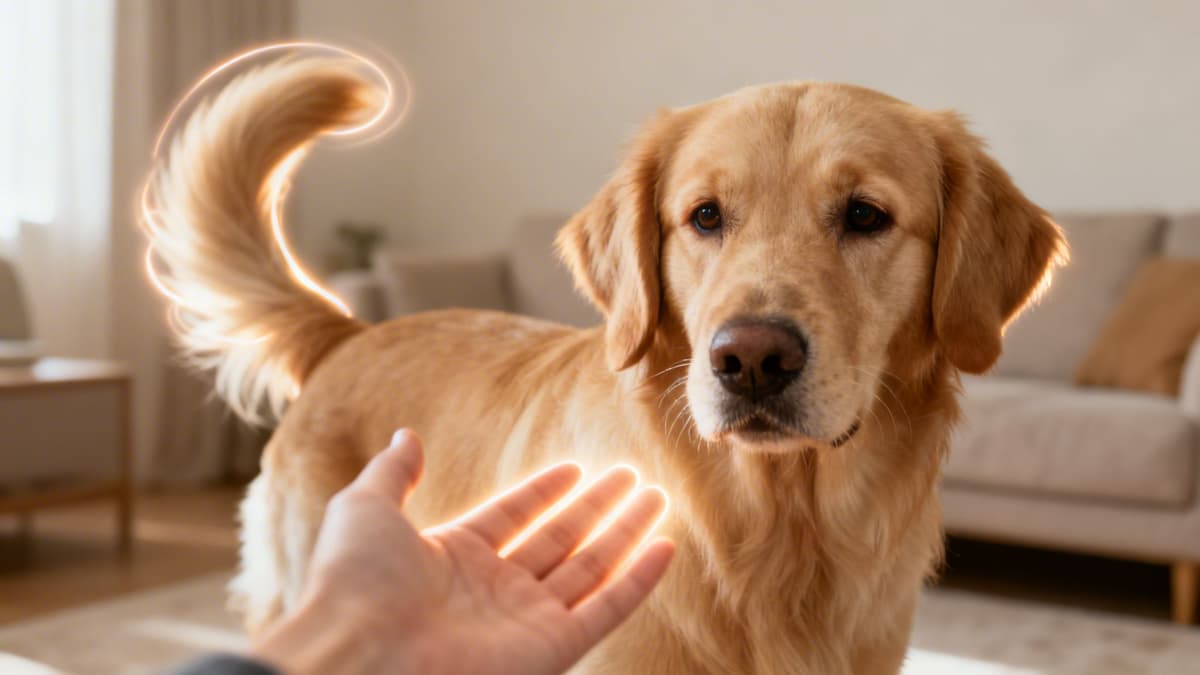
A Pet Psychic's Complete Dog Body Language Guide
After 27 years of connecting with thousands of animals as a pet psychic, one truth has become crystal clear: your dog is always talking to you. This dog body language guide is the decoder ring I give my clients, the key every pet parent needs to finally start listening. In my experience, once you learn their language, you unlock a level of connection you never thought possible.
Why Is Understanding Your Dog's Language So Important?
In my work, I've seen firsthand that learning to read your dog’s signals is about so much more than just avoiding a growl or knowing when they want a treat. What I tell pet parents is that this is about truly seeing the world through their eyes. This shift in perspective is the secret to a genuinely deep connection, one that transforms your relationship from owner and pet to one of true, mutual understanding. I find this absolutely fascinating.
I remember a client who came to me a few years ago, completely frustrated with her wonderful Golden Retriever, Max. She described him as ‘stubborn’ on their walks. He’d suddenly plant his feet, refuse to move, and she was at her wit's end, thinking he was just being defiant.
What Was Really Happening With Max?
But when I tuned in to Max, the story he told me wasn't about defiance at all. Let me explain. He was reliving profound fear. He sent me a vivid image of a huge, black garbage truck that had backfired with a deafening bang right next to him on a walk. His owner saw stubbornness; Max was reliving a terrifying moment, frozen in fear that the "monster" would reappear.
This is where it gets really meaningful.
Once I explained the root of his behavior to his owner, everything changed. Here's what she did:
- She started choosing quieter streets for their walks, completely avoiding trash day.
- She learned to spot his subtle anxiety cues, like a tucked tail and wide, whale-like eyes.
- Instead of yanking on the leash in frustration, she'd offer a comforting word and simply change direction.
Their walks went from a daily battle of wills to a peaceful, cooperative journey. Understanding your dog's quiet signals is absolutely essential for a happy life together and is critical for their safety. For an even deeper look at these signals on the go, this is a great resource on how to read dog body language for safer, happier walks.
The wonderful news is anyone can learn to do this. You don't need to be psychic; you just need to be willing to watch, listen, and learn. Seeing pet parents unlock this new level of connection is my favorite part of what I do. Trust me, it changes everything.
This guide will give you the tools to decode your dog’s needs, fears, and joys. Think about it this way, you're learning their native language. To dig even deeper into this concept, you can also explore our article explaining what animal communication truly is and how it all works.
How Do I Read My Dog's Tail, Ears, and Eyes?
After 27 years of connecting with animals, I can tell you the best place to start is with the "big three": the tail, ears, and eyes. Here's what I've noticed with animals, these are a constant broadcast of your dog's inner world. A proper guide to canine communication has to go way beyond the old cliché that a wagging tail always means a happy dog.
It's so much more nuanced than that. This is the part I love most, because once you learn to see the details, it's like a whole new world opens up.
What Can a Dog's Tail Really Tell Me?
Let’s start with that wag. The best way to think of a tail is as an emotional barometer. The height of the tail tells you about your dog's confidence level, while the speed of the wag clues you into their level of arousal or excitement.
- A high, stiff, fast wag isn't always pure joy. From what I’ve seen in my practice, this is often a sign of high alert or even a challenge to another dog. What that really means is a dog is saying, "I'm on edge and figuring out what to do next."
- A loose, full-body, "helicopter" wag that makes their whole backend wiggle? That's the real deal. This is pure, unadulterated happiness, showing a complete lack of tension. This is actually a beautiful sign because it shows total ease.
- A low, slow, tentative wag often signals nervousness or a desire to appease. Put simply, it’s like they're whispering, "I'm not sure about this, but I come in peace."
I remember a reading I did for a shy rescue dog named Luna. Her new mom was worried because Luna never seemed truly happy. During our session, I watched Luna offer just a few tiny, low wags. I explained, "That little wag is Luna's way of saying, 'I want to trust you, but I'm still so scared.' For her, that's a huge step." That tiny bit of insight changed everything for them.
This concept map shows just how interconnected understanding, trust, and happiness are when you learn to read these signals.

As the image shows, the path to a happy dog is paved with your understanding, which in turn builds their trust in you.
Are My Dog's Ears Broadcasting Their Feelings?
A dog’s ears are like a pair of satellite dishes, constantly swiveling to catch sounds and broadcast feelings. Where the ears point, the attention goes. Here's the thing, even though breeds have different ear shapes, the muscles at the base of the ear are incredibly expressive on any dog.
It’s the subtle shifts that owners often miss. Ears pricked straight up and forward signal intense focus or curiosity. If they're slightly back and relaxed, you've got a calm, contented dog. But ears pinned flat against the head are a universal sign of fear or deep anxiety. The dog is trying to make themselves look smaller and non-threatening.
What Truth Can I Find in Their Eyes?
Finally, let's look at the eyes. A dog’s gaze can be soft and relaxed or hard and fixed, and the difference is everything. A soft gaze, often with slightly squinted eyes, means they are completely at ease. I know that might surprise you, but that squint is a sign of contentment. A hard, direct stare, on the other hand, is a warning.
There’s a critical signal I always teach people called “whale eye.” This is when a dog shows the whites of their eyes in a distinct C-shape. They might be looking at something, but their head is turned slightly away, and that flash of white is a dead giveaway that they are feeling stressed or anxious. Ignoring this can, unfortunately, lead to a snap or a growl.
Here's what truly amazes me, none of these signals are random. Research has confirmed that even a tail's wag direction can indicate emotion, and a 2018 study predicted a dog's intent with 82% accuracy just based on the speed of the wag. It also found that fearful dogs show a combination of signals, like lip licking and a tucked tail, in about 65% of stressful situations. You can read the fascinating research on dog communication signals to learn more.
What Your Dog's Posture and Mouth Reveal
If you've been focusing only on your dog's tail wags and ear flicks, you're just getting the headlines. The real story, the rich, important details, is told through their overall posture and what they’re doing with their mouth. I always tell owners to take a mental step back and look at their dog’s entire silhouette. Trust me, it's one of the most important things you can do.

Think about it this way: your dog's body doesn't lie. Their posture is one of the most honest forms of communication they have, and understanding it is the foundation of any good resource for interpreting canine signals.
How Can I Spot an Invitation to Play?
One of the most joyful signals you can see is the classic play bow. This is when a dog drops their chest to the ground but keeps their rump high in the air, often with a wildly wagging tail. It’s a universal, crystal-clear message that says, "Everything I do from this point on is just for fun!"
What I'm seeing with more and more animals lately is how this exact signal is used by dogs of all breeds and sizes. It's a built-in way to show peaceful intentions right before a good, rowdy romp. It’s the posture you want to see at the dog park.
I once had a client call me, frantic about her two dogs, a young Lab and an older terrier mix. "Margaret, I can't tell if they're playing or fighting," she said. "It looks so rough, and I'm terrified someone will get hurt."
I asked her to describe their body shapes. "When they start, does the Lab dip his front end down and wag his tail like crazy?"
"Yes, every single time!" she replied.
"And the terrier? Is her body bouncy and loose, or is it stiff?"
"She's very bouncy!"
"That's your answer," I explained. "The bow is the invitation, and the bounciness is her happy acceptance. They're having a wonderful, healthy conversation. The moment that bounciness turns to stiffness is when you need to step in." Helping owners see that joyful dialogue they were missing is the best part of my job.
Is It a Smile or a Warning?
A dog’s mouth is just as expressive as their posture, but it's also where I see the most confusion. A common mistake is assuming any open mouth is a happy one. Over the years, I've learned to spot the subtle but crucial differences.
- A relaxed, open mouth with a lolling tongue and soft corners is a sign of contentment. This is your classic "happy dog" look.
- A tense, closed mouth, often paired with a hard stare, points to stress, fear, or high alert. The dog is assessing the situation and is definitely not relaxed.
- A quick lip lick or a yawn (when they aren't actually tired) is what we call a calming signal. Your dog is essentially saying, "I'm feeling a bit stressed here," or "I'm not a threat."
Here's another way to look at it, these subtle mouth movements are your dog’s attempt to de-escalate a situation, either for themselves or for another dog or person. These are the whispers of discomfort, and it’s our job to listen to them before they feel the need to shout.
The difference between a hard body and a soft body is everything. A stiff, rigid posture paired with a hard stare and a closed mouth is an unmistakable warning. It shows a dog gathering themself, preparing for what they perceive as a threat.
In contrast, a soft, curved, wiggly body indicates a dog who is at ease. That looseness is a beautiful thing to see, it means they feel safe and secure in their world.
Are You Misreading These Common Dog Signals?
This is where so many of us get it wrong, and where a little knowledge can make a world of difference. I can’t tell you how many conflicts I’ve seen in my 27 years of experience that stem from simple misunderstandings, a human reading the exact opposite of what their dog was trying to say. We're going to break down some of the most commonly misread signals right now.

You're not alone in feeling this confusion. But once you know what to look for, these signals become crystal clear. It’s like learning a few key phrases that suddenly unlock an entire language.
What Does That Belly Rub Pose Really Mean?
A dog rolling onto its back is probably the most misunderstood posture out there. Most people see this and immediately go in for a belly rub. I know that might surprise you, but this pose can actually be a sign of extreme fear or appeasement, not an open invitation for a tummy scratch.
In this context, the dog is making itself as vulnerable as possible to say, "I am not a threat, please don't hurt me." When you loom over them to pet them, you can actually intensify their fear.
So, how can you tell the difference?
- Look at the body: Is it stiff and frozen, or is it loose and wiggly?
- Check the mouth and ears: Is the mouth tense and closed with ears pinned back, or is it soft and open?
- Observe the tail: Is it tucked tightly between the legs, or is it wagging loosely?
A relaxed, wiggly dog showing its belly is probably asking for that rub. A tense, frozen dog is asking for space.
The Misunderstood Yawn and the High Tail
I've touched on this already, but it's so important it’s worth repeating. A yawn isn't always a sign of a sleepy pup. In everyday terms, most of the yawns you see from your dog during the day are major calming signals. They're trying to de-stress themselves or signal to another dog (or person) that they come in peace.
Another common misinterpretation I see is the high, stiff tail wag. It can look like pure excitement, but when that wag is fast and rigid, it's a sign of high arousal that can precede a lunge or even a bite. It means the dog is on edge, not necessarily happy. Sometimes, these signals are the only clue you have, which is why it's crucial to understand why your dog is acting weird.
The jump from fear to aggression can happen frighteningly fast when these quiet pleas are ignored. Research shows that a huge percentage of fearful dogs, around 70%, show clear calming signals like lip licking, yawning, and flattened ears. Tragically, when people miss these whispers of anxiety, it can lead to a bite in as many as 25% of cases. You can explore how shelter experts read these cues and see the data on canine fear signals.
A Case of Mistaken Aggression
I once worked with a client, Sarah, who was convinced her dog, Buster, was "unpredictably aggressive." The trigger was always new people entering her home. Sarah described how Buster would freeze, go completely still, and stare intently at the guest. She was terrified it was a prelude to an attack.
"He just locks on to them," she told me, her voice filled with worry. "His body gets so rigid, and he just stares."
I explained, "Sarah, what you're seeing isn't aggression. That's a 'shutdown' state. Buster is so overwhelmed with fear that he's completely frozen. He's not planning an attack; he's begging the 'threat' to just go away."
This is a critical distinction. It often leads people to worry about aggression when the real problem is deep-seated fear. We worked on giving Buster a safe, cozy spot far away from the front door. The "aggressive" staring stopped completely. He just needed to feel secure. By the way, this is more common than you might think.
What I'd Tell a Friend About Their Dog's Language
If you and I were sitting down for a coffee and you asked for my honest-to-goodness advice, this is what I'd say. After 27 years of talking to animals for a living, I can tell you the single biggest breakthrough you can have is to stop trying to "train" your dog and start truly listening to them. It’s the most profound truth I know.
When people ask me where to begin, I always come back to three core ideas. First, context is everything. Think about it: a happy, panting mouth at the dog park is a world away from a tense, closed mouth at the vet's office. The exact same signal can mean completely different things depending on what's going on around them.
Second, every single dog is an individual. A tail tucked against a chilly winter wind is not the same as a tail tucked in fear after a truck backfires. You have to get to know your dog's personal history, their fears, and their unique little quirks.
And finally, this one is huge: your energy matters most. Dogs are masters at reading our emotions. If you're feeling anxious and tense, your dog will pick up on it and mirror that energy right back. Learning how to manage your own state of mind is one of the best gifts you can ever give them. We actually have a whole guide on how to calm a dog that offers some great places to start with this.
A Lesson from My Own Dog
I learned this lesson in a way I'll never forget from my own dog years ago, a wonderful mutt named Finn. He was a champion of subtle communication. One night, he kept nudging my hand and looking toward the back door with these soft, gentle eyes, it was totally out of character for him.
Naturally, I went through the usual checklist. Water bowl? Full. Dinner? Already eaten. But he just came right back, nudging me again with that same look.
Finally, I just gave in. I sat on the floor with him, quieted my own mind, and simply watched. His body was relaxed, and his tail was giving a slow, soft wag. He wasn't anxious at all; he was just incredibly insistent. I followed his gaze out the back door and saw a tiny wisp of smoke curling up from under our neighbor's deck. It turned out to be a smoldering grill fire they hadn't even noticed.
That experience taught me more than any book ever could. It's about quiet observation. Your dog is sending you these messages all the time. Your job is to create the space to receive them.
Why Their Body Tells the Real Story
This is where things get deeply interesting. Dogs live in their bodies in a way we don't. In fact, research shows that when trying to figure out what's going on, dogs focus on bodily cues 74% of the time and only look at faces about 15% of the time. You can see the study on canine communication here to get a sense of just how body-focused they are.
Failing to see these signals is a major reason why an estimated 4.5 million dog bites happen in the U.S. each year, with a staggering number of them requiring medical attention.
But here’s the beautiful part: their communication is honest. A dog doesn’t know how to lie with their posture. When you learn to listen with your eyes, you open up a pure, direct line to their heart.
Frequently Asked Questions
My Dog Wags Its Tail but Then Growls What Does That Mean
I get asked this one all the time, and it’s a perfect example of a mixed signal. That tail wag doesn’t always mean "happy," it really just signals a high state of emotional energy and a willingness to engage. When you get a wag paired with a growl, your dog is essentially saying, "Part of me wants to connect, but another part of me is feeling very stressed and uncomfortable." It’s a sign of internal conflict. The best thing you can do is calmly and immediately create more space between your dog and whatever is causing that stress.
Is Yawning Always a Sign of Stress in Dogs
Not always, but it's a signal you should definitely pay attention to. Of course, dogs yawn when they're tired, just like us. The real clue comes from the context. Through thousands of sessions, I've seen that a yawn happening outside of a sleepy moment, like when a guest arrives or during a tricky training exercise, is almost always a calming signal. It’s your dog's attempt to diffuse a tense situation or release their own inner anxiety. The *when* is everything; it will tell you what’s really going on in their head.
How Can I Tell the Difference Between Play and a Real Fight
This is such a critical skill for every dog owner. What I always tell people is to look for bounciness and reciprocity. Good, healthy play is often inefficient and silly. You'll see loose, wiggly bodies, play bows, and lots of turn-taking where dogs switch who is chasing and who is being chased. A real fight, on the other hand, becomes stiff and focused. The bodies get rigid, mouths close, you'll see hard stares, and one dog will relentlessly pursue the other. If it looks tense to you, it is, and it's always smart to step in and give them a break.
How does a pet psychic help me understand my dog better?
This is my favorite question, because this is where the real magic happens. A guide like this is fantastic for understanding the *what*, what your dog is communicating with their body. An intuitive reading with an animal communicator helps you uncover the *why*. For example, you might see your dog's ears are pinned back and know it signals fear. A reading can go deeper, revealing the source of that fear, whether it’s a painful memory from their puppyhood or anxiety they're picking up from you. After more than 27 years of experience, I've seen firsthand how understanding the emotion *behind* the behavior is the key to truly solving problems and building an unbreakable bond.
Who is this dog body language guide really for?
This guide is for any pet parent who has ever looked at their dog and thought, "I wish I knew what you were thinking." It's for the new puppy owner who wants to start their journey on the right foot, and it’s for the seasoned dog lover who wants to deepen a lifelong bond. In my experience, it’s for anyone who believes their dog is more than just a pet, but a family member with a rich inner world deserving of being understood.

Find out what your pet is really trying to tell you
Understand the reason behind the behavior, in your pet’s own words, in a personalized reading delivered within 24-48 hours.
Get My Pet's Reading Get My Pet's Reading
Delivered within 24-48 hours · Double Reading Guarantee