Saying Goodbye to Your Dog: A Pet Psychic's Guide to Peaceful Farewells
March 20, 2026
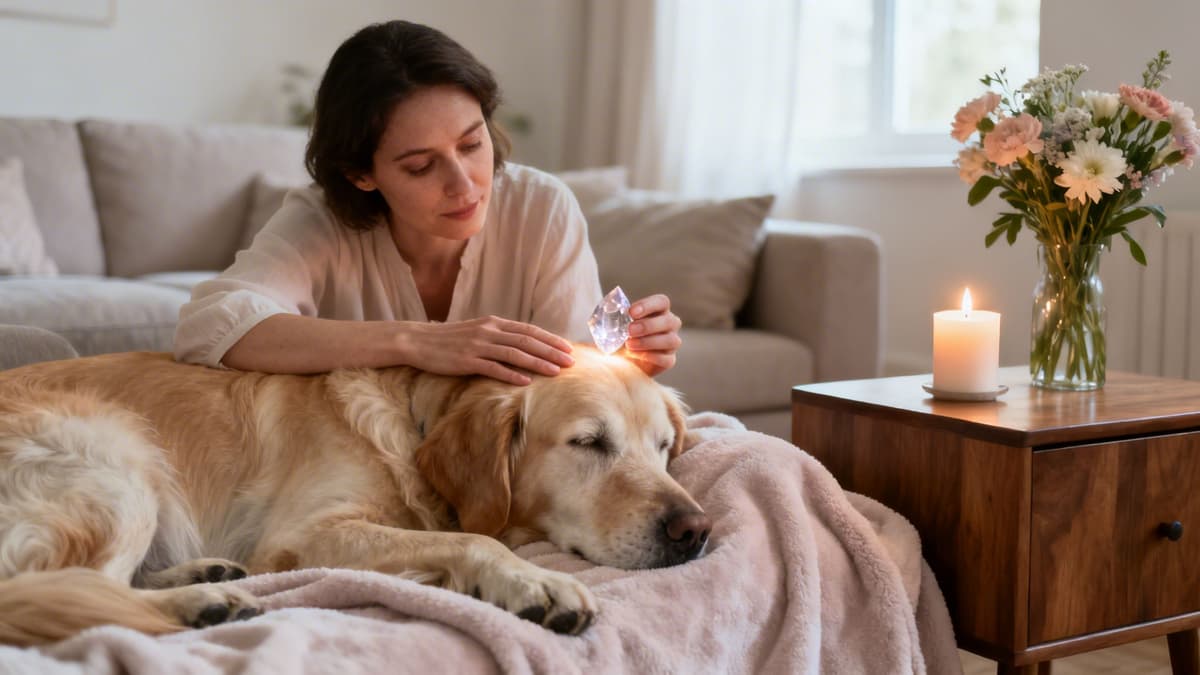
After 27 years of connecting with animals on a spiritual level, I've found the most heart-wrenching question I hear is, “How will I know when it’s time for saying goodbye to my dog?” This decision is the final, greatest act of love we can offer them, but the uncertainty is agonizing. In my experience, your pet is trying to tell you what they need, and my hope is to help you hear their messages so you can find peace in your choice.
How Do You Know When It’s Time to Say Goodbye?
For more than two decades, I’ve sat with thousands of pet parents, holding their hands as they wrestled with this very question. What I always tell them is this: your dog will let you know.
I promise you, they do. The challenge isn’t their silence. The real struggle is that our own grief and fear can make it so hard to hear their quiet messages. My work as a pet psychic is to help translate. Here's what I've noticed with animals. They communicate their readiness in ways that go far beyond a vet’s chart. They show us through subtle shifts in their energy, their spirit, and the things that bring them joy.
Are They Signs of Detachment or Just a Bad Day?
I remember a client who came to me, completely heartbroken over her 14-year-old Golden Retriever, Max. "He won't play fetch anymore, Margaret," she said through tears. "It was his favorite thing. Is he in too much pain?"
When I connected with Max, I didn't feel overwhelming physical pain. What he showed me was a sense of peaceful release. From my experience, this is a very common signal. He was letting me know that his spirit was gently detaching from his physical body, preparing for whatever came next. He wasn't sad about skipping fetch; he was simply done with that part of his life. His soul's desire to stay was fading. This is the part I love most, revealing the peace that so often lies just beneath our own fear.
So how do you tell the difference between a bad day and a true readiness to go? Look for consistent patterns.
- Loss of Joy: It's not just about refusing one activity. It’s a consistent disinterest in all the things that once lit them up, like greeting you at the door, their favorite treats, or a ride in the car.
- Social Withdrawal: An animal who once loved being in the middle of everything might start seeking out quiet corners to rest, away from the family.
- The Look in Their Eyes: This is a big one. I’ve seen it time and time again. Their eyes change. They can look distant, vacant, or like they're looking through you instead of at you. It’s a powerful sign their spirit is pulling away.
What Should You Actually Do to Listen With Your Heart?
Your intuition is the most powerful tool you have. You know your dog better than anyone on this planet. What is your gut telling you? We often second-guess ourselves because the decision feels too immense to bear alone.
Think about it this way: your deep, loving bond is a direct line of communication. When you quiet your mind and just sit with your dog, what do you feel? Does their energy feel like they're fighting to stay, or does it feel like they're peacefully letting go?
You're not alone in feeling this. The emotional weight of this decision is immense, and it’s a burden shared by countless loving pet owners. Learning how to say goodbye to someone you love is a universal experience, and the process shares many emotional parallels with losing a cherished pet.
This journey is deeply personal. There's no single right answer. But by learning to recognize both the physical signs and the more subtle, energetic ones, you can move forward not with doubt, but with the quiet confidence that you are honoring your best friend’s final wish. If you're noticing some of these shifts, you might find our guide on the physical and behavioral signs a dog is dying helpful.
Once you feel in your heart that the time is near, the question that always follows is, "What do I actually do now?" I want to walk you through how to create a truly loving and peaceful farewell. Planning this final act is a profound expression of your love, and believe me, animals are incredibly sensitive to our intentions. A plan made with love can bring them tremendous peace.
For over 27 years, I’ve been connecting with animals during this sacred time. I've seen firsthand how our stress affects them, but I've also witnessed how deeply they feel our loving preparation. The beautiful part is that you have choices, and you can create a transition that feels right for both of you.
The decision tree below can help reinforce the core question of quality of life we’ve been exploring.

It’s a simple visual, but it really boils it down: when your dog’s good days are gone, a compassionate conversation with your vet is the next loving step.
Which Final Transition Path Is Best for Your Dog?
When it comes to the final moments, there are generally two main paths people consider: compassionate euthanasia and pet hospice care that supports a natural passing. Each path holds a very different energy for both you and your dog.
In my practice, I’m finding that an overwhelming number of animals I connect with show a clear preference for passing in the comfort and familiarity of their own home. It’s where their favorite bed is, where the familiar smells are, and most importantly, where their family can be present and relaxed. A vet clinic, no matter how compassionate the staff, often carries an energy of anxiety and past painful procedures for many animals. These days, pet owners are telling me that providing a peaceful environment is their top priority.
This table breaks down the different options to help you decide what feels best for your unique situation.
| Transition Option | What Your Dog May Experience (Energetically) | What You Can Do to Prepare |
|---|---|---|
| In-Clinic Euthanasia | Potential stress from the car ride and unfamiliar environment. The clinical setting can hold energy of fear from past visits. | Talk to the clinic beforehand to arrange for a quiet room and pay in advance. Bring their favorite blanket and a high-value treat. |
| In-Home Euthanasia | A sense of peace, familiarity, and security. They are surrounded by their own scent, their favorite things, and their family in a relaxed state. | Create a sacred space in their favorite spot. Play soft music, dim the lights, and have family members present who can hold a calm energy. |
| Natural Passing (Hospice) | A gradual release, often feeling a sense of control and timing. The process can be gentle if pain is well-managed. | Work closely with a hospice veterinarian to ensure comfort. Focus on creating a calm, quiet, and loving environment for their final days or hours. |
Ultimately, honoring your dog’s comfort and minimizing their stress is one of the greatest final gifts you can give them. If you have the option, a peaceful passing at home often aligns best with their spirit's desire for a gentle release.
How Can You Create a 'Bucket List' of Final Joys?
The days leading up to goodbye don’t have to be entirely about sadness. They can also be a celebration of a beautiful life well-lived. It’s fascinating, but in my experience, many dogs truly seem to understand and appreciate these final gestures of love.
I recently had a session with a wonderful client, Sarah, who was preparing to say goodbye to her 15-year-old terrier, Pip. She asked me, "What can I do for him? I just want his last days to be special."
When I connected with Pip, what he showed me was so simple and pure. He wanted one last car ride with the windows cracked so he could feel the wind on his face. He also showed me the image of a small, savory piece of steak.
Sarah created a little "bucket list" for Pip based on that. They took that final car ride, and he got his special steak. She told me later that watching him enjoy those simple pleasures brought her a sense of peace she didn’t think was possible. These small acts fill the final days with active love, not just passive waiting.
What Is the Best Way to Prepare Your Home and Family?
Preparing your home and your family, especially children, is a crucial part of the plan. Your calm energy is the anchor your dog needs to feel safe. You can find more tips on how to keep your dog calm and comfortable during this sensitive time.
Start by creating a sacred space in your home.
- Choose a quiet room or a favorite spot in the yard.
- Lay down their softest bed or favorite blankets.
- Minimize loud noises and limit visitors to keep the energy peaceful and centered on them.
When talking to children, I’ve found that honesty and simplicity are always the best approach. You can explain that your dog's body is very old and tired and that it's time for their spirit to be free from pain. Trust me, children are often more resilient and understanding than we give them credit for.
What I'd Tell a Friend About the Final Moments

If you were my friend, calling me in tears about saying goodbye to your dog, this is the heart-to-heart advice I’d give. After 27 years of guiding people through this, I can tell you with certainty that these final moments are sacred. Your calm, loving presence is the most important gift you can offer them.
I need you to really hear this: your dog feels your love more than anything else in that room. That love is the energy they are tuned into, and it's what helps their spirit make the journey peacefully.
What to Actually Do in the Moment
Whether you're at the vet's office or in the quiet of your own home, the "what to do" is simpler than you might think. Your main job is to be an anchor of love and calm. I’ve seen it for years with animals, they mirror our energy.
So, I want you to focus on these simple, powerful actions.
- Touch Them Lovingly: Keep your hands on them. Stroke their fur, hold their paw, or gently rub their head in that spot they’ve always loved. Your physical connection is a grounding force.
- Speak Softly: Tell them how much you love them. Thank them for all the joy they brought you. It’s okay if your voice shakes, they hear the love behind every word.
- Breathe Deeply: Try to take slow, deep breaths. This not only helps you stay centered but also sends a powerful signal of peace to your dog, who is so sensitive to our physical state.
I know that might surprise you, but your own breath can be one of the most effective tools for creating a tranquil space for them to pass.
Your primary role isn't to be "strong" by holding back tears. It’s to be a strong, steady source of loving and peaceful energy for them to lean on as they transition.
A Story of What They Truly Feel
I want to share a story from a session that has always stayed with me. A client was just overcome with guilt about the upcoming euthanasia for her sweet dog, Luna. She kept asking, "Will she be scared of the needle? Will she be terrified at the vet's office?"
When I connected with Luna, I felt her awareness of what was coming, but I didn't feel fear. This is something I find absolutely fascinating in my work. Instead, she showed me an image of herself just soaking in her human’s energy like sunshine.
She communicated to me, "The little poke is just a moment. My person's love is forever. That is what I am focused on." Put simply, Luna wasn't worried about the clinical details. She was absorbing the lifetime of love being poured into her in those final minutes.
What Happens Energetically Right After They Pass?
Here's where it gets really meaningful. In my experience, when a dog’s spirit leaves its body, it doesn't just vanish. I've found that many dogs linger in spirit for a short while, often to comfort their humans.
It's the part I love most, actually. They see your grief, and their first instinct is often to nuzzle you in spirit, to let you know they are okay and that the love is still there. Many people report feeling a sudden warmth, a faint brush against their leg, or just an overwhelming sense of peace right after.
This is actually a beautiful sign because it is their spirit’s first message from the other side. As you prepare for this moment, or navigate the sadness that follows, having resources to help process these huge emotions is invaluable. For families, a grief book to help children tackle difficult emotions can offer a gentle way to start these conversations.
Your tears are not a sign of weakness; they are a testament to the enormous love you shared. Let them flow. Your love is the bridge they cross over on, and your grief is just love with nowhere left to go.
Will My Dog Send Me Signs After They Pass?
After a beloved dog crosses over, the first question almost every single client asks me is, "Will they send me a sign, Margaret?" After more than two decades of this work, my answer is always a heartfelt and absolute yes.
This is the part of my work I cherish most. That final, painful goodbye isn't an ending. It's really the start of a whole new kind of conversation, one that’s free from the limits of a physical body. If you’re searching for that connection, please know you’re not alone. It’s a completely natural part of the grieving process.
How Do Dogs Communicate from the Other Side?
One of the first things to understand is that signs from our pets in spirit are rarely big, dramatic events. They are usually quiet, deeply personal, and tailored just for you. In my 27 years as a pet psychic, I’ve seen these beautiful messages show up in a few consistent ways.
Here are the most common signs I see:
- Dream Visits: These are not your average dreams. They feel incredibly lucid and real, and you'll often wake up with a profound sense of peace, as if you just spent time with them.
- Familiar Smells: You might be sitting in the living room and suddenly catch a whiff of their specific scent, that dusty-paw or warm-fur smell, when there’s no possible explanation for it. It’s a simple, powerful way they announce their presence.
- Meaningful Objects: They often guide our attention to things they know will make us think of them. Finding a particular type of feather on your daily walk, a perfectly heart-shaped rock, or a shiny coin in an odd spot are all common "hellos" from the other side.
- Flickering Lights & Electronics: It’s becoming more and more common for spirits to manipulate energy, which is much easier for them without a physical form. A light that flickers when you mention their name or a TV that turns on unexpectedly can be a direct sign.
A Story of a Dog and a Smart Speaker
I remember working with a client, Janice, who was just shattered by the loss of her sweet Beagle, Buster. She felt completely adrift. A few weeks after he passed, her smart speaker started playing an old country song at random times during the day.
She told me, "Margaret, it’s the song I used to sing to him when he was a puppy. It just turns on by itself. Am I going crazy?"
After I connected with Buster's spirit, the message was crystal clear. He was absolutely the one playing the song. Here's what truly amazes me. He was using something modern to bring her a piece of their shared past, to show her that his spirit was still vibrant, present, and very much a part of her life.
This is such a beautiful example of a modern sign. It shows their spirit is strong and still deeply connected to you. It's never a haunting; it's a "hello" from the heart.
How Can You Be More Open to Receiving Signs?
The single most important thing you can do is simply be open. Grief can build walls around our hearts, making it tough to notice these subtle, gentle messages. My best advice? Talk to your dog. Speak to them out loud as if they’re right there in the room with you, because their spirit truly is.
Tell them you’re ready and willing to see, hear, or feel whatever they want to send. Then, let go of any expectations about what a sign "should" look or feel like. When you create that open, loving space, you clear the channel for their love to flow through.
This ongoing connection is a powerful part of healing. If you’re interested in exploring this further, you can learn more about pet afterlife communication and how it brings comfort and closure in our detailed guide. This is where things get deeply interesting.
What Happens After a Dog Passes Away?

The quiet that follows saying goodbye to a beloved pet is a heavy one. After pouring so much love and energy into their final days and moments, that sudden stillness can feel jarring. In my 27 years of working with grieving pet parents, I’ve seen firsthand how having a gentle plan for what comes next can be a true comfort.
These aren't just tasks to check off a list. Here's another way to look at it: each decision is another act of love, a way to continue honoring the beautiful life you shared together. You are not alone in this, and these next steps are a very real part of the healing process.
What Should You Actually Do Immediately After?
In the first hours after your dog has passed, the most important thing you can do is give yourself grace. There’s no rush. Take some time to sit with them, to say your final words, and to simply let the reality of the moment settle in.
When you feel ready, you’ll need to think about aftercare. This is a deeply personal choice, and I always tell people to choose what feels most aligned with their heart and their beliefs.
- Cremation: This is the most common path families take. You can choose a private cremation, where you receive your dog's ashes back, or a communal one.
- Burial: If you have the space and local laws allow it, a home burial can be a beautiful way to keep your dog's resting place close.
- Aquamation: This is a gentler, water-based alternative to flame cremation that's becoming more widely available.
Lately, I've noticed a real shift toward more personalized and compassionate end-of-life care. This is a good thing. More recently in my practice, people want options that feel less clinical. If you're interested, you can discover more insights about these compassionate care trends and see how many others are making similar, loving choices.
How Can You Create a Meaningful Memorial?
A memorial is more than just an object; it's a physical touchstone for your love and your grief. It can be a place to visit, a ritual to perform, a way to keep their memory tangible and alive in your daily life.
I once worked with a family who was devastated after losing their German Shepherd, Duke. They decided to bury him in their backyard beneath his favorite shady tree. The next weekend, they all went to a nursery together. The kids picked out colorful flowers, and they spent the afternoon creating a beautiful little memorial garden. Duke's mom told me, "It's not a place of sadness, Margaret. It's a place of peace. We go there to talk to him." What that really means is they turned a place of loss into a space of continuing love.
Here are a few other ideas I've seen bring real comfort over the years:
- Create a Photo Album or Scrapbook: Gather your favorite photos and mementos in one place.
- Light a Candle: A small ritual of lighting a candle for them each evening can be incredibly centering.
- Write Them a Letter: Pour your heart out. Tell your dog everything you miss and everything you're grateful for.
- Commission a Portrait: Having a piece of art created can be a beautiful, lasting tribute.
What About Other Pets in the House?
It's so important to remember that our other pets grieve, too. They might not understand death in the same way we do, but they absolutely feel the absence of their friend. I’ve seen this many times, they often show their grief through changes in behavior.
Your other pets might seem lethargic, lose their appetite, or wander the house looking for their companion. The best thing you can do is give them your love and support as they navigate this loss.
Be extra patient and loving. Stick to their routines as much as possible to provide a sense of stability, and offer plenty of quiet cuddles and reassurance.
Your surviving pets also feel your grief. By allowing yourself to heal and process, you create a healing space for them, too. These small acts of remembrance and care truly are a powerful part of the journey for every member of your family.
Questions I Get Asked Most
After 27 years of bridging the gap between animals and their people, I've noticed the same questions surface time and time again. These aren't just curiosities; they are the deep, painful worries that keep loving pet parents awake at night long after their final goodbye.
My goal here is to share the answers I've received directly from the animals themselves. This isn't theory. This is what I’ve learned from sitting with thousands of grieving families and the spirits of their beloved companions.
"Will My Dog Ever Forgive Me for This?"
This is, by far, the most heart-wrenching question I hear. So please, read this next part carefully. In all my years doing this work, not one single animal has ever expressed anger or blame for the decision of euthanasia when it was made out of love.
Animals simply don't see death with the same fear and finality we do. What they feel is the relief, the release from a body that was failing them, causing them pain, or making them confused. They don’t see your final act of love as a betrayal. They see it as the ultimate mercy.
Let me explain with a story from a reading with a woman who was drowning in guilt over her elderly cat, Jasper. When I connected with his spirit, he showed me the most profound image: he showed me his person holding a key, unlocking the heavy, rusted cage he was trapped inside. That’s what her decision meant to him. It was his freedom.
They don’t need your forgiveness because, from their perspective, you’ve done nothing wrong. You have only loved them completely.
"Where Do They Go? Will I Ever See Them Again?"
Ah, the big, beautiful mystery. What I’ve been shown by animals countless times is that their spirit, their consciousness, their love, carries on. It’s not an ending. Think of their physical body as just a temporary vessel for their magnificent, vibrant soul.
They go to a place of pure peace. The way they describe it to me, it’s a place with no pain, no fear, and no sickness. It’s just joyful, loving energy.
And yes, you will absolutely see them again. The bond you share is woven from love, and love is energy. Energy can't be destroyed; it only changes form.
The wonderful news is that your connection is eternal. When it's your time to cross over, the souls you've loved will be there to greet you. I've had this confirmed in so many readings that it's a truth I hold without a single doubt.
"Is It a Betrayal to Get Another Dog?"
It's natural to feel like opening your heart to a new animal would somehow diminish the love you have for the one who passed. But what I’ve found is fascinating, and often surprising to my clients. Your companion in spirit almost always encourages you to love again.
They see your grief, they see your empty lap, and they want you to experience that unique joy all over again.
A client once asked me this exact question, terrified her dog, Bailey, would feel replaced. When I tuned in to Bailey, he was so clear. He showed me his human’s heart as a house with many windows. He told me, “My window will always be my window. Getting a new friend just opens another one. It doesn’t ever close mine.”
Loving another animal doesn't erase the past. Here's the thing, many animals in spirit will even play a part in guiding the perfect new companion your way. It’s often their final, beautiful gift to you.
If you're seeking more clarity or feel a pull to connect directly with a pet who has crossed over, the team at PetPsychic.com is here to help. Our gifted animal communicators can translate the messages your companion is waiting to share, bringing the peace and closure that only comes from true understanding. Find the answers your heart is searching for by booking a reading today.
Frequently Asked Questions
What is the kindest way to say goodbye to a dog?
In my experience, the kindest way is one that prioritizes your dog's comfort and minimizes their stress. For many animals, this means in-home euthanasia, where they are in a familiar, peaceful environment surrounded by their family. The most important thing is to be present, calm, and loving, as your dog will feed off your energy during their transition. Making the decision out of love is the ultimate act of kindness.
Should I be with my dog during euthanasia?
From a spiritual perspective, yes, absolutely. In my 27 years of connecting with animals, I have learned they look for their humans in their final moments. Your presence is a profound comfort to them. They feel your love, hear your voice, and are soothed by your touch. Being there is the final, most important gift you can give them, providing a bridge of love for their spirit to cross peacefully.
Do dogs know they are being put to sleep?
Animals have a deep, instinctual understanding of life cycles. I've found that they know when their body is failing and are often ready for a release from pain or discomfort. They might not understand the clinical procedure, but they feel your intention. When the decision is made with love and mercy, they experience it as help and relief, not as a frightening event.

Hear from a pet who has crossed over
A personalized reading can bring through a loving message from your pet, and the peace of knowing they are at rest.
Get a Reading Get a Reading
Delivered within 24-48 hours · Double Reading Guarantee