Experience a pets eye view: Understand Your Pet's World Like Never Before
April 10, 2026
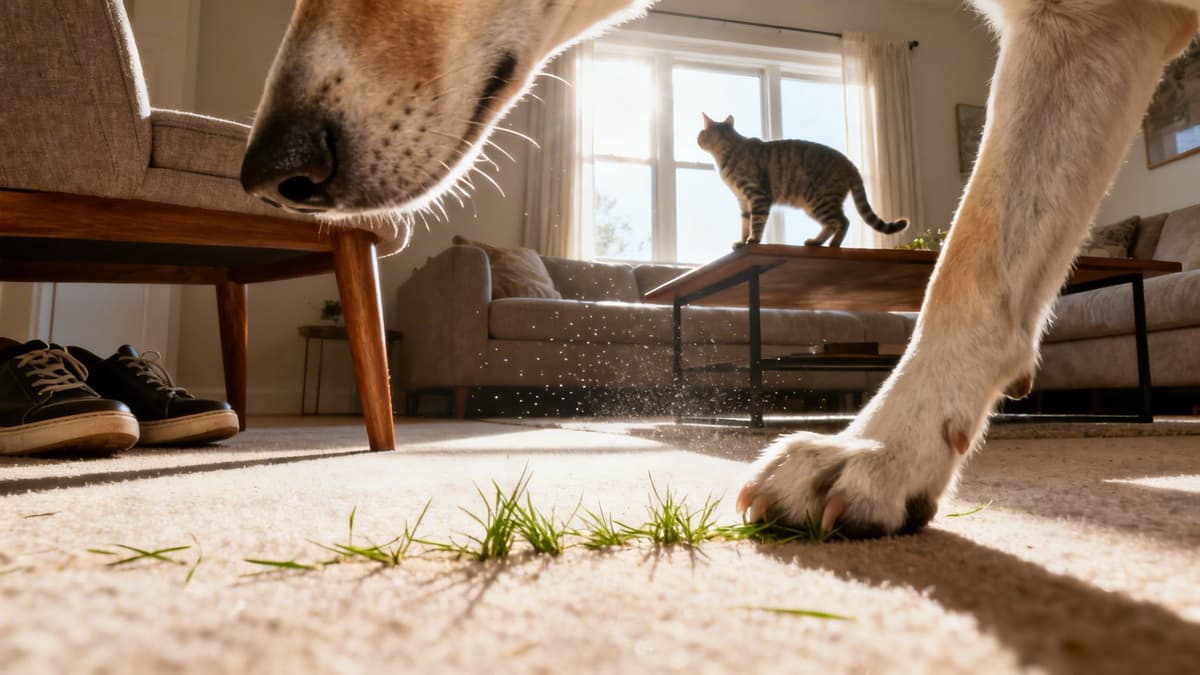
What Is a Pets Eye View? A Pet Psychic's Guide to Their World
After 27 years of communicating directly with animals, I've found that understanding a pets eye view is the most important gift you can give your companion. It’s not just about what they see with their eyes. Let me explain. It’s about feeling their world, a reality rich with scents, energies, and present-moment sensations that we humans often miss completely. This guide will show you how to start seeing things from their amazing perspective.
Why Is Seeing from Their Perspective So Important?
Whenever a client comes to me because their dog is suddenly terrified of the hallway or their cat has started shredding a new chair, the answer is almost always hidden in how that animal perceives the world. For over two decades, I’ve been teaching pet parents how to tune into this reality. The wonderful news is, once you grasp their language, you can solve so many confusing behaviors and build a bond deeper than you ever imagined.
This simple diagram really gets to the heart of the difference between how you and your pet process life.

Our human experience is so often filtered through logical analysis and planning for the future. Our pets, on the other hand, live almost entirely in a world of immediate instincts and present-moment feelings.
To truly understand how different their world is from ours, let's compare some key areas of perception. The table below breaks down the fundamental ways your pet's experience contrasts with your own.
How Does Your Pet Experience the World vs. How You Do?
| Area of Perception | A Human's Point of View | Your Pet's Eye View |
|---|---|---|
| Primary Sense | Sight. We rely on what we see to make judgments and navigate the world. | Smell (dogs) & Hearing (cats). Scent tells a story, and sound alerts to opportunity or danger. |
| Time Focus | Future & Past. We plan, remember, regret, and anticipate. | The Present. Their focus is on what is happening right now. |
| Emotional Filter | Complex Analysis. We analyze feelings, assign blame, and rationalize emotions. | Pure Instinct. They feel and react to energy (fear, safety, excitement) without judgment. |
| Communication | Verbal. We rely on words and complex language to convey meaning. | Body Language & Energy. A tail flick, ear twitch, or the tension in the room speaks volumes. |
This table isn't just a list of differences, it's a cheat sheet for empathy. The next time you're frustrated with your pet's behavior, glance back at this. Are you thinking like a human, or are you trying to feel like they do?
What Is Their World Really Like?
What I tell pet parents is to stop thinking like a human and start feeling like an animal. Their reality is built on a completely different foundation. Put simply, it’s a world of pure sensation.
Here’s a glimpse into what that world is like:
- A World of Scent: Your dog doesn’t just smell the delicious steak you’re cooking. They smell the faint trace of the mail carrier from two hours ago, the scent of anxiety on your visiting friend, and the path a squirrel took across the yard yesterday. In my experience, scent isn’t just a sense, it’s their version of the daily news.
- A Focus on Energy: Animals are masters at reading energy. They can feel the unspoken tension in a room long before a single word is spoken. They are constantly reacting to our emotional state, not just our words or actions. Here's the thing, your stress is a tangible thing to them.
- Living in the Now: Your cat isn’t stewing over the fact that you were late with breakfast yesterday. Your dog isn't worrying about your work deadline tomorrow. Their entire universe is centered on what is happening in this exact moment: a feeling of safety, a pang of hunger, or the pure joy of your arrival. This is where their magic, and our greatest lessons, lie.
How Do Dogs and Cats Experience the World Differently?

One of the first things I tell clients is that a dog’s world is nothing like a cat’s. Trying to understand a cat with dog logic is like trying to read a map written in a language you’ve never seen. Here's what I've noticed with animals, their fundamental differences explain almost all of their most mysterious behaviors.
Their entire sensory world and what drives them are wired in completely opposite ways. Once you really get that, their actions suddenly start making a whole lot of sense.
What Is the World Like for a Dog?
For a dog, life is one giant adventure of smells. Think about it this way: their nose is their version of the internet, constantly feeding them data about who’s been by, what they were feeling, and where they went next. I've found their world is basically a living history book written entirely in scent. This is the part I love most!
I remember a client’s Golden Retriever, Max, who suddenly became terrified of their living room. The family was completely baffled. A client told me, "Margaret, he just stares at the wall and shakes." When I connected with him, Max showed me this powerful, scary scent memory. It turns out he could smell the faint odor of a mouse that had died in the walls weeks earlier, something his humans couldn't detect at all. His "scary monster" was real, it was just invisible to them.
Dogs are also deeply social, pack-oriented creatures. So much of their focus revolves around relationships and feeling secure within their family group.
What dogs often process:
- "Who was here before me?"
- "Am I making my person happy?"
- "Is everyone in my family safe?"
This social wiring is exactly why they are so tuned in to our emotions and daily routines. When your schedule is predictable, it helps them feel secure in their place within the pack.
How Is a Cat's World Different?
For cats, it's a completely different story. Their world is all about territory, safety, and vertical space. As natural solitary hunters, their entire perspective is built on self-preservation and having total control over their environment. A cat’s primary question is almost always, "Is this space safe, and is it mine?"
A client once told me, "Margaret, my cat, Oliver, just sits and stares at the wall. Is he seeing a ghost?"
I tuned in to Oliver, and he immediately showed me the incredibly faint sound of mice skittering behind the drywall. He wasn't seeing a spirit, he was listening to potential prey that had invaded his territory. His hunter instinct was on full alert. I find this absolutely fascinating. If you want to learn more about these subtle cues, you might find our guide to understanding cat body language helpful.
Cats need high perches to observe their domain. They feel safest when they can see everything without being seen themselves. This is why something as simple as a new piece of furniture can cause so much anxiety. It’s a major, unauthorized change to their sacred map of the world.
What Do Common Behaviors Look Like from Their Side?
So often, what we see as "bad behavior" is anything but. From where I sit, it's almost always a pet's perfectly logical response to a situation, just seen through their own unique lens. This single shift in perspective changes everything. It helps us see their true motivations, which are rarely about being naughty or spiteful.

Think about the classic case I hear constantly: the dog who goes ballistic barking at the mail carrier every day. To us, it’s a frustrating, noisy habit. But from the dog’s point of view? He’s bravely defending his home from a daily intruder.
And in his mind, his strategy works perfectly. Every single day, he barks, and every single day, that intruder leaves. It's a textbook success story for him!
Is It Spite or Communication?
This is a question that comes up a lot, especially with cats. I remember a client who called me, completely at her wit's end with her cat, Luna. Luna had started shredding their brand-new, very expensive sofa, and her person was convinced it was pure, calculated spite.
When I tuned in to Luna, I didn’t feel anger. I felt a wave of overwhelming anxiety. She showed me a powerful, unpleasant chemical smell wafting off the new sofa. To her, this strange object was a major violation of her safe territory. She was desperately trying to cover the offensive odor with her own scent to reclaim her space and feel secure again. What that really means is the scratching wasn't destruction, it was a cry for help.
Why Our Emotions Are Their Reality
Our animals are incredibly tuned in to our emotional states. They don't just notice when we're stressed, they often absorb that energy as their own. From your pet’s point of view, our tension hangs in the air like a thick fog. In fact, research increasingly shows how deeply pets mirror our emotions, with many cases of dog anxiety being linked directly to their owner's stress levels. You can read more about these findings on pet and owner emotional connection.
What I tell pet parents is this: your emotional state is a core part of your pet's environment. When you're anxious, they feel that instability, and it can directly trigger behaviors like excessive barking, hiding, or clinginess.
This is where things get deeply interesting. Once you learn to decode these behaviors, you stop seeing your pet as a problem to be fixed. Instead, you start seeing a friend who is trying their very best to tell you what they need in the only language they have. For more help with specific cues, I encourage you to check out our guide on dog body language. It can be a real eye-opener.
What I'd Tell a Friend About Their Pet's Feelings
If a friend pulled me aside, their voice tight with worry about their pet, this is exactly what I’d say. Before we get into anything else, trust your gut. You live with your animal day in and day out. You know their quirks, their joys, their little anxieties better than anyone on the planet, and that intuition is the most valuable tool you have.
More recently in my practice, I've seen just how deeply our own stress affects our animals. They are, for lack of a better word, emotional sponges. It's not just that they notice when we're upset, they often absorb those feelings as their own.
So, the first thing I’d ask my friend is to take a quiet, honest look at what’s been going on in their own life. A new, high-pressure job? A silent tension hanging in the air at home? That energy doesn't just vanish. Your pet is living in it, breathing it in, just as much as you are. A calm human is the anchor for a calm pet.
Are They Mirroring Your Emotions?
I remember a client, Sarah, who came to me completely beside herself. Her sweet little dog, Buster, had suddenly started hiding under the table and trembling for no apparent reason. The vets had given him a clean bill of health, which only made it more confusing.
"Margaret, I'm so worried," she told me. "He's never been like this before."
After listening, I gently asked, "Sarah, what’s been going on with you?" There was a long pause. She then admitted she was in a really tough spot financially and had been carrying around this constant, heavy feeling of anxiety. Buster wasn't sick, he was acting as a perfect mirror, reflecting Sarah's fear right back at her. This is a dynamic I've seen play out in my practice for nearly three decades.
This is actually a beautiful sign because it shows the profound bond you share. Your pet is so tuned in to you that your emotional state is a core part of their environment. Here's another way to look at it: when the air gets chilly, you put on a sweater. When your emotional weather turns stormy, your pet feels it and changes their behavior accordingly.
What Should You Actually Do?
The best part of understanding this is that you hold the key to changing the emotional climate in your home. This isn't about faking happiness or pretending you're not stressed. It’s about consciously creating small pockets of genuine calm.
I always suggest pet parents try a few simple things to start:
- Practice Mindful Petting: The next time you sit down to pet them, put your phone away. I mean, really put it away. Focus everything on the feel of their fur under your hand, the rhythm of their breathing, and just send them quiet, loving energy.
- Use a Calm Voice: Your pet picks up on the frequency and tone of your voice all day long, even when you aren't speaking directly to them. Your conversations with others, the sighs of frustration, all contribute to the soundtrack of their world.
- Create Predictable Routines: When an animal is feeling your stress, the world can seem chaotic. A solid, predictable schedule for meals, walks, and playtime becomes an incredibly powerful anchor. It’s a way of telling them, "No matter what, this we can count on."
How Can You Start Seeing the World Through Your Pet's Eyes?
The amazing thing is, you don’t need to be a psychic to start understanding your pet's world. From all my years of experience, I can tell you it really boils down to two simple things: quiet observation and deep empathy.
It’s no secret that the bond we share with our animals is stronger than ever. These days, pet owners are telling me their pets feel like true members of the family. The data backs this up, showing that 97% of owners now view their pets this way, which has fueled everything from pet-friendly tech to gourmet food. You can discover more insights about the modern pet care industry to see just how much this relationship has evolved.
The Ten-Minute Tune-In
I always encourage pet parents to start with a simple exercise I call the "Ten-Minute Tune-In." It costs nothing but a little of your time, and honestly, it’s one of the most powerful things you can do to deepen your connection.
Here’s all you have to do:
- First, find a moment in your day when things are calm and you won’t be interrupted.
- Get down on the floor, at their level. This simple act physically puts you into their world, on their terms.
- Now, for ten minutes, just watch. Don’t talk, don't direct, don't even try to guess what they're thinking.
- Simply notice where their gaze lingers. What sounds make their ears twitch? Which smells are they investigating with their nose?
This small act of quiet, loving attention is the absolute first step toward seeing things from their point of view. It’s my favorite place for people to start.
Creating a Sensory-Friendly Home
Once you start tuning in and observing, you can begin making small, meaningful adjustments to your home that honor their unique sensory needs. Think of it as curating their environment to lower stress and boost their comfort.
What you’re really doing is shifting from a human-centric house to a shared space that respects everyone's reality. I've found this simple mindset shift can resolve so many "mystery" behaviors.
I know that might surprise you, but I’ve seen it work countless times. For instance, choosing the right dog-friendly grass for the yard can make a world of difference for a sensitive pup.
A few other ideas I often suggest are creating a "scent-scape" with calming, pet-safe essential oils or providing more vertical climbing spaces for a cat to observe their territory safely. Even playtime becomes a tool, allowing you to see their natural instincts in action. Trust me, these little changes can lead to huge breakthroughs.
If you’re interested in taking this connection even further, you might enjoy our guide on how to talk to animals.

Questions I Get Asked Most
After 27 years of talking with animals, you start to see the same beautiful, heartfelt questions come up again and again. People love their pets so deeply and just want to bridge that communication gap. You're not alone in feeling this.
Here are some of the most common things people ask when they come to me for a reading.
Frequently Asked Questions
How do I know it's my intuition and not just my imagination?
In my experience, imagination feels like you are actively creating a story, while intuition feels like information that simply arrives. It's often a sudden image, feeling, or "knowing" that pops into your head without effort. Pay attention to those gut feelings you get about your animal; they are almost always your intuition speaking to you, and it's your most reliable guide.
Is my pet's problem medical or behavioral?
It can often be both, which is why I always tell clients to start with a trip to the veterinarian to rule out any physical causes first. For example, a cat suddenly avoiding the litter box could have a painful urinary tract infection. The physical pain creates the behavioral change. A vet addresses the body, and my work can help address any lingering fear or anxiety connected to the experience.
Can you really connect with pets who have passed on?
I handle this question with the utmost care, and my answer is a heartfelt and absolute yes. The powerful bond of love we share with our animals is pure energy, and that energy doesn't just vanish when they leave their physical form. Pets who have crossed over often communicate with stunning clarity, bringing messages of peace and love to let their person know they are okay.

Curious what your pet is thinking?
Get a personal, intuitive reading from a gifted animal communicator, delivered to your inbox within 24-48 hours.
Get a Pet Psychic Reading Get a Pet Psychic Reading
Delivered within 24-48 hours · Double Reading Guarantee