A Pet Psychic's Cat Body Language Guide
March 18, 2026
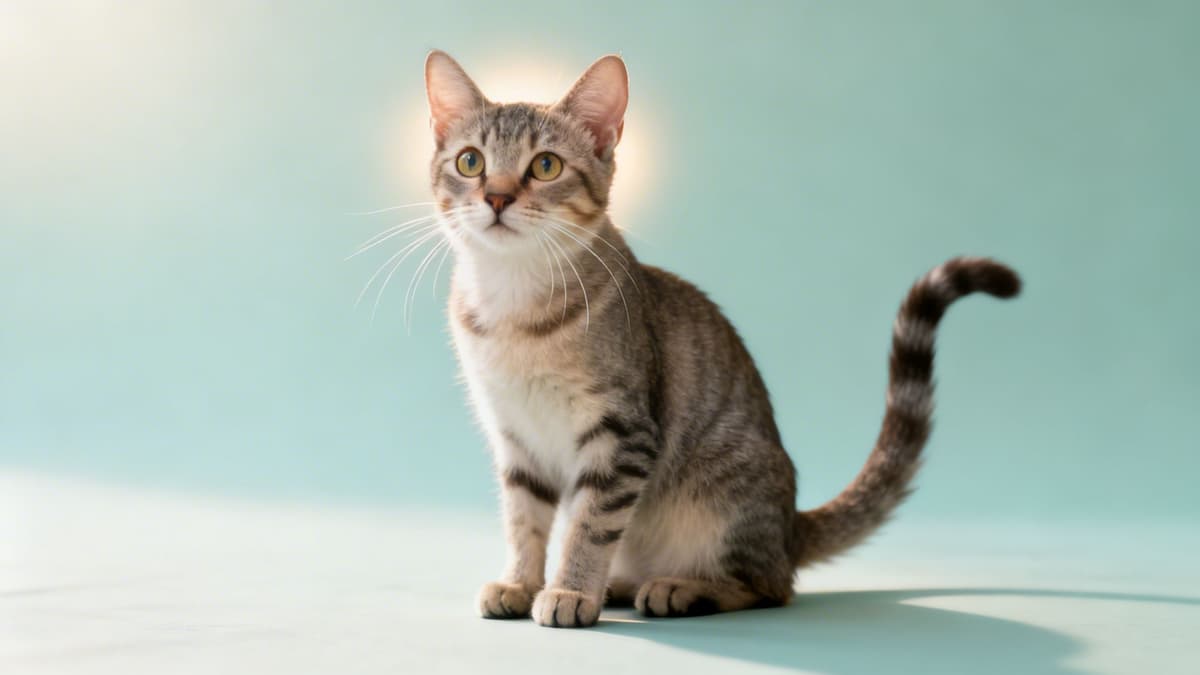
A Pet Psychic's Guide to Cat Body Language
After 27 years of working as a pet psychic, I can tell you that feeling you have that your cat is trying to tell you something important? You're not imagining it. This cat body language guide is born from decades of listening to what animals are really thinking, and I've found their messages are clearer than you'd believe. My goal here is to help you translate their world of silent signals into a language you can finally understand, building a bond based on real trust and communication.
Why Is Understanding Your Cat So Hard?
So many loving cat parents come to me feeling frustrated, sometimes even a little helpless. They know their cat is communicating, but the message just isn't getting through. If that sounds familiar, you're not alone in feeling this.

The wonderful news is: learning their language is completely achievable. Trust me, it's not about being a bad pet parent. It’s simply about learning a different dialect, one that's spoken in tail flicks, ear twitches, and the intensity of a long, silent stare.
Is the Disconnect Real?
It might not feel like it, but this communication gap is incredibly common. In my experience, science is finally starting to catch up with what I’ve witnessed in my practice for decades.
For example, a 2023 study confirmed just how much we miss. It found that nearly half of owners (48.7%) couldn’t spot subtle signs of a cat’s discomfort, like a tense body or slightly shifted whiskers. Even with a signal as loud and clear as a hiss, roughly one in four people still misunderstood what their cat was saying.
What I Hear From Pet Parents All the Time
I remember a call with a client, Sarah, who was worried sick about her cat, Milo. She told me he would suddenly start hissing during what she thought were fun play sessions with his favorite wand toy.
"I just don't get it," she told me, her voice full of concern. "One minute he’s pouncing and having a blast, the next he’s angry. What am I doing wrong?"
When I tuned in to Milo, he showed me a wave of overstimulation. The game was fun, but it was becoming too intense, too fast. His hiss wasn’t anger. It was a desperate plea: “Please, stop. I’m overwhelmed.”
Put simply, Milo had been sending smaller signals for minutes (a tail twitching erratically, his eyes growing wider) but Sarah, like so many of us, was only hearing him when he "shouted." The hiss was his last resort.
Once Sarah learned to spot those quieter, earlier requests, their entire dynamic changed. She started pausing the game the moment his tail started flicking, giving him a chance to breathe. The hissing stopped. Just like that. Their bond became so much deeper because Milo finally felt heard.
Learning to decode these messages is a beautiful part of understanding the human-animal connection. It's a journey that honors our cats as the complex, feeling individuals they are. By learning their language, you aren't just managing behavior; you're building a true relationship.
What Are Your Cat's Facial Expressions Really Saying?
Cats are absolute masters of the micro-expression. Their faces are so much more expressive than most people give them credit for, and after 27 years of connecting with animals, I can tell you that the tiniest twitch of a whisker or the softest blink holds an entire world of meaning. It’s like they're on a silent, constant broadcast, telling us exactly how they feel.

Learning to read a cat's face is like getting a superpower. Seriously. You go from guessing what they want to truly knowing, and that shift changes a relationship for the better. This is where things get deeply interesting, because so many of their most important messages are delivered right there.
Are You Missing More Than the Slow Blink?
Almost every cat person knows about the “slow blink,” and yes, it’s a wonderful sign of trust and affection. But that’s just the first letter in a huge and complex alphabet. I’ve found that an animal's true feelings are often hiding in the signals we tend to overlook.
And it’s not just my intuition saying this, the science is finally catching up. A 2023 study actually recorded 276 unique facial expressions in cats by observing how they combined 26 different facial movements. The best part? A full 45% of these expressions were friendly, proving just how much they’re trying to connect with us. You can read the full research about these feline expressions to see just how nuanced their communication really is.
A Case of Mistaken Identity
Let me tell you about a recent session I had. A client came to me about her cat, Jasper, and sent a photo of him with what she called his cute "smirk": one side of his lip was pulled up just a little.
"He does it all the time," she explained. "I think he's smiling!"
But when I connected with Jasper, the feeling wasn't happiness. It was a dull, nagging ache on that same side of his mouth. His "smirk" wasn't a smile at all; he was tensing his facial muscles to deal with dental pain. I gently suggested a vet visit to check his teeth. She called me a week later, completely floored and so grateful. The vet had found a painful, infected tooth right where Jasper had been "smirking."
This is a perfect example of why context is everything. What that really means is Jasper’s owner saw a cute quirk, but he was sending a clear signal of distress. Once we learn their language, we can finally respond to what they truly need.
How Do You Decode Key Facial Cues?
Let's break down some of the most important facial signals I point out to pet parents. Think of their whiskers, eyes, and mouth as an emotional dashboard.
- Whisker Position: When whiskers are relaxed and fanning out to the side, your cat is calm and content. Whiskers pulled flat against their cheeks signal fear or anxiety. And if they're pushed forward and spread wide, your cat is curious and locked onto something interesting.
- Pupil Size: Light obviously plays a big role here, but their pupils are also a window to their emotions. In normal lighting, pinprick pupils can mean a cat is agitated or angry. On the other hand, wide, dilated pupils can signal fear, excitement, or even surprise.
- Lip and Mouth Tension: A relaxed, closed mouth is a great sign. A tightly drawn-back mouth or a subtle snarl that shows just the tip of their teeth is a clear warning to give them space.
When you start noticing these combinations, you stop seeing random twitches and start seeing a rich, detailed conversation. This is the part I love most, watching people finally understand the complex and loving messages their cats have been sending them all along.
How to Read Your Cat's Tail Like a Story
After 27 years of speaking with animals, I can tell you that a cat's tail is one of the most honest parts of its body. It's a living, breathing emotional barometer, broadcasting everything from pure bliss to deep-seated fear. What I tell pet parents is to stop guessing and start observing with intention. Think about it this way: you're learning to read a story that’s always being told, right there in your living room.
A cat’s tail is rarely still without reason. Every single movement, from a high, proud flagpole to a low, nervous tuck, is a word in a sentence. Learning this vocabulary is like unlocking a huge part of your cat’s daily conversation. This is actually a beautiful sign because their tail gives us so much information.
What Does an Upright Tail Mean?
The classic "happy cat" signal most people recognize is the straight-up tail, often with a little question mark-like hook at the very tip. This is a clear, confident greeting. It’s your cat’s way of saying, “I’m so glad you’re here! I feel friendly and safe.”
But there’s a nuance here that I've seen countless times in my readings. If that upright tail starts to quiver or vibrate, the excitement has just been kicked up a notch. In everyday terms, this is an expression of pure, concentrated joy. You'll often see this right when you walk in the door after being away or just before you open their favorite can of food.
What Does a Low or Thrashing Tail Mean?
Now, let's talk about the other end of the emotional spectrum. When a cat’s tail is held low or tucked tightly between its legs, it's a sure sign of fear, insecurity, or submission. Your cat is trying to make themselves smaller and appear less threatening because something in their environment feels very wrong to them.
On the other hand, a tail that is lashing back and forth or thumping hard on the ground is a clear warning of irritation or anger. It might seem like just a twitch, but look closer. The faster and harder the thump, the more annoyed your cat is getting. This is their way of asking, or demanding, that you stop whatever you're doing.
This handy visual guide can help you quickly translate these common tail signals.

As you can see, the tail's position and speed are direct windows into your cat's feelings of happiness, fear, or agitation.
A Quick-Glance Guide to Tail Talk
To help you decode these messages in the moment, I’ve put together a simple reference chart. It covers the most common tail positions and what they’re likely telling you.
Cat Tail Language Quick Reference Chart
| Tail Position | What It Means | My Psychic Advice |
|---|---|---|
| High, Straight Up | Happy, confident, friendly greeting. | Offer a gentle greeting back. This is a perfect time for positive interaction. |
| High, Quivering | Extreme excitement and happiness. | Your cat is overjoyed to see you! Acknowledge their enthusiasm. |
| Curved like a Question Mark | Playful, curious, and feeling friendly. | A great time to engage them with a favorite toy. They're open to fun. |
| Low or Tucked Under | Fear, anxiety, or submission. | Do not approach. Instead, create space and try to identify the source of stress. |
| Thrashing or Thumping | Annoyance, irritation, or anger. | This is a clear "stop" signal. Respect their boundary and back off. |
| Puffed Up (Halloween Cat) | Intense fear or aggression; trying to look bigger. | Give them a wide berth. The cat feels extremely threatened and may lash out. |
| Slow, Gentle Swish | Focused, concentrating, often during hunting or play. | Let them focus. They are "in the zone" and likely stalking a toy or a bug. |
This chart is a great starting point, but always remember to look at the whole cat and the situation to get the full story.
A Case of Misinterpreted Invitations
Let me share a story from a client session that shows just how specific this language can be. A woman named Jenna called me, heartbroken because her two cats, Leo and Milo, who had been best friends for years, were suddenly fighting.
When I connected with Leo, he showed me a clear image of his tail held high, but with the very tip making a sharp, fast flicking motion. Jenna confirmed she'd seen this but had assumed it was just part of his normal "happy tail" greeting.
But that tiny, sharp flick wasn't pure happiness. From Leo’s perspective, he was feeling playful but also a bit wound up and frustrated. He was sending Milo an intense energetic invitation to a game of chase, but Milo, who was getting older, was reading that frustrated energy as aggression.
Once I translated this for Jenna, she started redirecting Leo's energy with a wand toy whenever she saw that specific tail flick. The tension between the two cats dissolved almost overnight. Here's what truly amazes me: helping people see the specific "words" in the sentences their cats are speaking changes everything. By learning what these signals mean, you can prevent misunderstandings before they even start. If you want to dive even deeper, you can learn more about what cat tail positions mean in all sorts of different situations.
How Can I Put All The Body Language Clues Together?
After 27 years of helping people listen to their animals, I’ve found that the biggest breakthrough always comes from the same place. It's the moment they realize it's never about just one thing. It's not just the tail, or the ears, or a single meow. It’s about seeing the whole symphony of signals at once.

A purr doesn’t automatically equal happiness, and a flicking tail isn't just a random twitch. Here's what I've noticed with animals: every signal adds a crucial layer of meaning to the others. Learning to combine them is how you move from guessing what your cat wants to truly understanding what they're saying.
Why The Whole Picture Matters
Here's another way to look at it: if a person is smiling at you but has their arms crossed tightly and their shoulders are up by their ears, you instinctively know something is off. That smile doesn't match the rest of their body. Cats are exactly the same. They communicate with their entire being.
This is where it gets really meaningful. Once you start looking for these signal combinations, you'll begin to see patterns everywhere. It's when pet parents have those "aha!" moments that completely change their relationship with their cat.
A Story of a Misunderstood Purr
Let me tell you about a client I had recently. Her cat, Luna, would purr loudly whenever their new puppy came near. The owner was so happy, thinking Luna was already warming up to the pup. "She purrs so much around him!" she told me, sounding incredibly relieved.
But when I tuned in to Luna, the feeling wasn't friendship, it was pure anxiety. I asked the owner to describe what the rest of Luna's body was doing during these purring sessions. She paused for a moment. "Well," she said, "now that you mention it, her ears are usually flat against her head, like 'airplane ears,' and her body is very low to the ground."
That was the key. Luna wasn't purring from contentment. She was purring to self-soothe her own stress. The flat ears and tense, low posture completely changed the meaning of that purr. I know that might surprise you, but it's very common.
Once we understood this, the owner created a safe, puppy-free zone for Luna to retreat to. The anxious purring around the dog stopped. Instead, Luna started purring on her own terms, when she was genuinely relaxed and happy in her safe space. Reading the whole-body context unlocked the truth of the situation.
How to Connect The Dots Yourself
So, what should you actually do to start putting these clues together? It all comes down to observation. When you spot one signal, make it a habit to actively look for at least two others.
Here are a few classic combinations I see all the time in my practice:
- Relaxed & Happy: Look for a gently swishing tail, soft eyes (maybe even a slow blink), and forward-facing, relaxed ears. Their body will be loose and at ease, perhaps in a classic "cat loaf" or stretched out comfortably.
- Playful & Excited: This often comes with a tail held high in a "question mark" shape, slightly widened pupils, and whiskers pointing forward. You might also hear chirps or trills as they get ready to pounce.
- Anxious & Fearful: The tell-tale signs are big, dilated pupils, ears flattened sideways or pinned back, and a low, crouched posture. The tail is a big giveaway here. It might be tucked completely under or twitching nervously at the very tip.
- Irritated & Overstimulated: If you see a tail that's thumping hard or lashing back and forth, pay attention. Combine that with narrowed pupils, ears turned back, and maybe even twitching skin, and you've got a clear "back off now" signal. A low growl often confirms it.
Learning to spot these combinations is a fundamental step in developing your own intuition. For anyone wanting to take this further, I often suggest exploring other animal communication techniques to deepen your pet connection.
Trust me, once you start seeing the whole picture, you’ll never look at your cat the same way again. You’ll be having a real conversation.
What I'd Tell a Friend
If you and I were grabbing coffee and you asked for my single most important piece of cat advice, here’s what I’d share. After 27 years of working with animals and their people, I’ve heard the same worries over and over. Here's the thing: the biggest breakthroughs almost always come from tiny shifts in how we see things.
The first thing to get is this: your cat is always communicating. They aren't trying to be "bad" or spiteful when they scratch up the sofa or start knocking things off your desk. I always tell my clients that these are just messages you haven't learned to translate yet.
What is the Most Common Mistake You See?
The biggest, most common mistake I see even the most devoted cat parents make is assuming their cat knows their intentions are good. We scoop them up for a big hug because we love them, or we pick them up to move them out of our way. But think about it from their point of view. Being suddenly grabbed and lifted into the air by a giant can be downright terrifying, no matter how much that giant loves you.
It really just boils down to consent. We forget that they are individuals with their own sense of security and their own boundaries.
A Lesson in Listening From My Own Soul-Cat
I learned this lesson the hard way from one of my own soul-cats, a gorgeous Siamese named Indigo who passed away years ago. She absolutely hated being picked up. For the longest time, I did it anyway, telling myself she was just being fussy.
One day, I finally just stopped and watched her. I saw the subtle way her body would go rigid, the way her ears would pin back ever so slightly. She wasn't being fussy; she was terrified. She was telling me, "I feel unsafe when my feet aren't on the ground." That day, I promised her I'd always crouch down to her level instead. Our entire relationship changed because she finally knew I was actually listening.
What I'd tell a friend is this: honor their personality and their boundaries, even if they don't make sense to you. Your relationship will blossom in ways you can't even imagine.
How Can I Create a Calmer Home?
More recently in my practice, I'm seeing a huge spike in anxiety among cats, and it's almost always tied to our hectic, modern lives. The constant doorbell rings from deliveries, TVs blaring, and unpredictable schedules can be incredibly overwhelming for them. But the wonderful news is creating a peaceful home for your cat often ends up making things more peaceful for you, too.
Here are a few simple things you can do to bring the stress levels down:
- Create Vertical Space: Cats instinctively feel safer when they can look down on their territory from above. Something as simple as a cat tree or even a cleared-off bookshelf can give them a secure spot to retreat to.
- Establish Predictable Routines: Feeding and playing with your cat around the same time each day provides an anchor of stability in what can feel like a chaotic world.
- Offer Scent Enrichment: A cat’s primary sense is smell. Bringing in an interesting leaf from outside for them to investigate or using a calming pheromone diffuser can be incredibly soothing for their nervous system.
By the way, this isn't about overhauling your entire life. It’s the small, consistent efforts that make all the difference. By showing them you understand their need for safety and predictability, you're speaking their language. You're telling them, "I hear you, and you are safe here." And that's a message they've been waiting their whole life to receive.
Questions I Get Asked Most
After more than 27 years of working as a pet psychic, you can imagine I’ve heard thousands of questions from loving cat parents. But a few questions pop up constantly, both in my one-on-one readings and during workshops. These are the mysteries that keep people up at night, wondering what on earth their cat is trying to tell them.
So, let's dive into some of the most common puzzles I help people solve. My goal is to give you the same clear, compassionate answers I offer my clients, drawn from decades of direct, intuitive communication with animals. You’re definitely not alone in wondering about these things, and a little insight goes a very long way.
Why Does My Cat Suddenly Get "Crazy Eyes" and Run Around?
This one comes up all the time. One minute your cat is snoozing peacefully on the sofa, and the next they're a furry cannonball, tearing through the house as if their tail is on fire. It's easy to worry that this is a sign of stress, but it's actually something I find this absolutely fascinating.
These sudden bursts of energy are often called "the zoomies," and they're your cat’s way of blowing off steam. Let me explain: our indoor cats live a pretty cushy life. They don't have to hunt for their dinner, patrol a huge territory, or flee from danger. All that primal, wildcat energy gets bottled up, and it has to go somewhere!
So, when your cat suddenly bolts from the room, they aren't going crazy. They are honoring their inner tiger. It's just the feline version of a good workout or a stress-busting sprint. It’s a sign of a healthy cat with energy to burn.
Why Is My Cat Obsessed with Empty Boxes?
Ah, the humble cardboard box. It's cheaper than any toy you could ever buy and, to a cat, infinitely more captivating. I once had a client tell me, "I spent a fortune on a fancy cat tree, and all he wants is the box it came in! What gives?"
Here's what I’ve learned from listening to cats directly: their love for enclosed spaces is completely instinctual. A simple box checks a few very important boxes for their survival brain.
- Safety and Security: In the wild, tight spaces mean protection from predators. A box is a ready-made den where they feel invisible and safe.
- Ambush Spot: It's also the perfect hideout for a predator. From inside, your cat can survey their territory (your living room) and plot a surprise pounce on a toy mouse or your unsuspecting ankle.
- Warmth: Cardboard is a fantastic insulator. Since cats have a higher body temperature than we do, they are naturally drawn to warm, cozy spots.
When your cat chooses the box, they aren't snubbing your expensive gift. They're just answering a deep, ancient call for safety, security, and a prime hunting spot.
Does My Cat Get Mad at Me and Act Out on Purpose?
This is a big one, and it gets to the very heart of so many misunderstandings between cats and their people. A client will call me, completely distraught, saying something like, "I was away for the weekend, and my cat peed on my pillow. She's punishing me for leaving, isn't she?"
Let me be perfectly clear. In my 27 years of connecting with animals, I have never once met a cat that acts out of spite or revenge. Those are complex human emotions. When a cat does something you don't like, whether it's urinating outside the litter box or scratching your sofa, it is always a form of communication.
What you're seeing is a distress signal. Your cat isn't trying to make you angry; they are desperately trying to tell you that something is wrong in their world.
In the case of the cat who urinated on the bed, my connection with her revealed overwhelming anxiety. The owner’s scent was strongest on the bed, so she deposited her own scent there to mingle their smells. It was a desperate attempt to self-soothe and feel connected and safe. For cats struggling with this, understanding the root causes of cat separation anxiety can be incredibly illuminating. Her action wasn't malice; it was a heartbreaking cry for help. Shifting your perspective from "bad behavior" to "communication" is the single most powerful thing you can do for your relationship.
Frequently Asked Questions
Why does my cat stare at me without blinking?
A long, unblinking stare can mean a few things, and it’s all about context. Most of the time, especially if their posture is relaxed, it’s a sign of intense focus and curiosity. They're just taking you all in. However, if their body is tense, pupils are huge, and ears are pinned back, it could be a signal of fear or aggression. In a loving home, it's usually just your cat being fascinated by you, but I always tell clients to look at the whole picture.
Is purring always a sign of a happy cat?
This is a common myth I love to clear up. While cats absolutely purr when they’re happy and content, they also purr to self-soothe when they're in pain, scared, or stressed. It’s a low-frequency vibration that actually has healing properties. The key is to check their other body language. A purring cat curled up in a sunbeam is happy. A purring cat hiding under the bed with flattened ears is trying to comfort itself.
Why does my cat knead me with their paws?
Kneading, or "making biscuits," is a behavior that goes all the way back to kittenhood. Kittens knead their mother to stimulate milk flow, and they carry this instinct into adulthood as an expression of pure comfort, contentment, and affection. When your cat kneads you, they're essentially telling you that you are their source of comfort and safety. It's one of the highest compliments a cat can give you.

Find out what your pet is really trying to tell you
Understand the reason behind the behavior, in your pet’s own words, in a personalized reading delivered within 24-48 hours.
Get My Pet's Reading Get My Pet's Reading
Delivered within 24-48 hours · Double Reading Guarantee