Why Does My Cat Attack Me For No Reason?
April 10, 2026
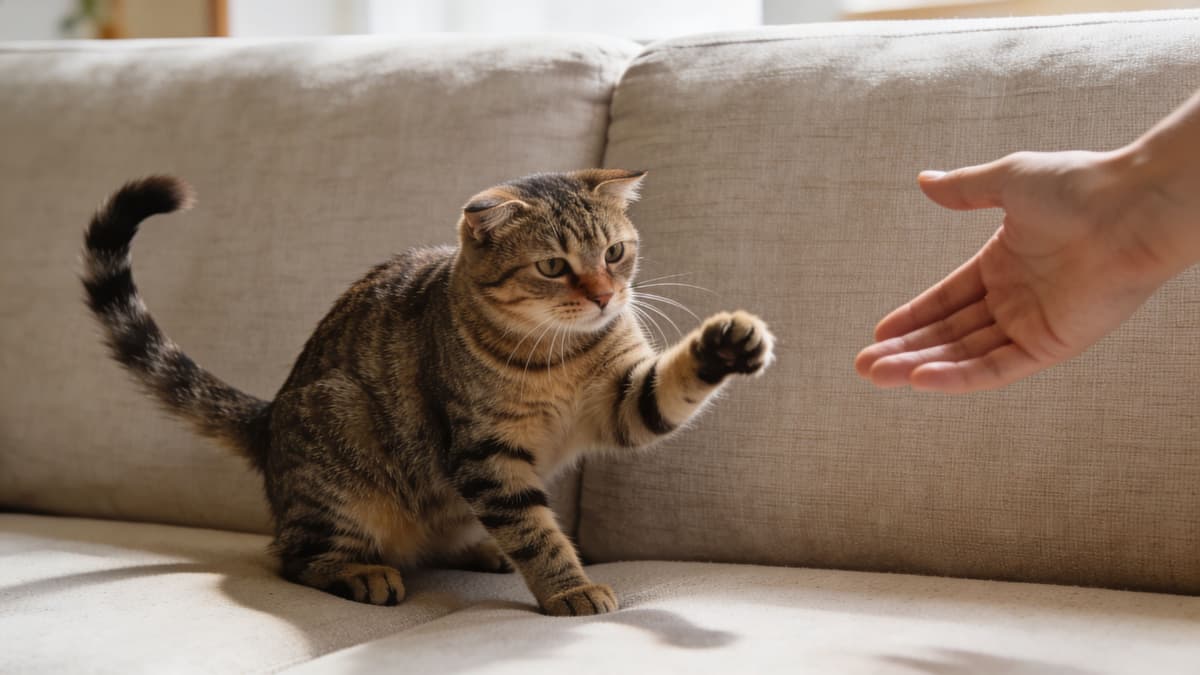
For 27 years, I have sat with animals and the people who love them, and I can tell you that when someone asks, why does my cat attack me for no reason, there is almost always a story under the claws. Last spring, a woman held her forearm out to me, fresh with scratches, and whispered, “I was only reaching to move him off the couch.”
What I gave her was not blame. I gave her a way to understand what her cat had been trying to say long before the lunge.
Why Your Cat’s Attack Isn't as Random as You Think
I remember that cat clearly. His name was Jasper, a handsome gray boy with watchful eyes and a body that stayed tense even while resting.
His owner told me he could be sweet one minute, then explode the next. Trust me, I have heard that heartbreak hundreds of times. The shock, the hurt, the fear of your own pet, it can shake a home.
When I connected with Jasper, what came through was not “mean.” It was “don’t make me move.” That message was immediate and firm.
In my experience, cats do not attack out of thin air. They react to something we missed. Sometimes it is pain. Sometimes it is fear. Sometimes it is a memory, a trigger, a build-up of stress, or an old survival habit that still lives in the body.
What that really means is this. From your point of view, it feels random. From your cat’s point of view, it makes perfect sense.
What I tell pet parents is that aggression is usually communication that arrived too late for words.
I have worked with animals and their families for nearly three decades, and I have found that healing begins when we stop asking, “What is wrong with my cat?” and start asking, “What happened right before this, and what does my cat need me to notice?”
I know that might surprise you, but cats are often far more transparent than we think. They just speak in timing, tension, posture, and energy.
The wonderful news is that once you know how to read the pattern, the behavior starts to feel less mysterious and much more workable.
Is It Really for No Reason? Uncovering Hidden Triggers
A few years ago, I spoke with a man about his cat Leo, who had started biting whenever anyone tried to pick him up. The family had begun calling him moody and mean.
I heard something different. I felt a sharp resistance around the hips and lower back, as if Leo was bracing before hands even touched him.

His owner took him in for a full veterinary check. Pain turned out to be part of the picture. That did not make Leo bad. It made him protective.
Could your cat be reacting to pain
Pain-induced aggression often shows up when an owner pets, handles, or moves a cat. Underlying problems can include osteoarthritis, injuries, dental disease, hyperthyroidism, or central nervous system disorders, and radiographic studies show osteoarthritis is present in 90% of cats over 12 years, while 20 to 30% of aggression cases referred to vets are linked to subclinical pain, as noted in this PetMD review of unprovoked cat attacks.
In short, a cat in pain may learn that hands predict discomfort. Once that association forms, even gentle touch can trigger a fast defensive response.
I find this absolutely fascinating, because many cats do not limp or cry. They become harder to touch, easier to startle, and quicker to strike.
What other hidden triggers do I look for
- Fear: A cat may feel cornered by a person, another pet, or a busy room.
- Overstimulation: Petting feels good, then suddenly feels like too much.
- Play drive: Hands and ankles can look like moving prey.
- Stress buildup: Small daily tensions can stack until one little moment tips the cat over.
Here’s another way to look at it. “No reason” usually means “no visible reason.”
When I tune in during sessions, I often get flashes of sequence. A draft from the hallway. A sore shoulder. A child hugging too tightly the day before. A cat outside the window that appeared every morning at dawn. These details matter.
If your cat has changed suddenly, especially around touch or movement, I always say start by becoming a gentle detective. Notice where your hand was going, what was happening in the room, and whether your cat had already been carrying tension.
What Are the Most Common Reasons for a Sudden Lunge?
One of the biggest turning points for cat parents is learning that not every attack comes from the same emotional place. Two cats can bite a hand, but for completely different reasons.

Is this redirected aggression
A woman once told me, “My cat attacked me while I was closing the curtains.” When I asked what had happened just before, she paused. “There was a cat outside the window.”
That is classic redirected aggression. The cat becomes highly aroused by something unreachable, then unloads that energy onto the nearest moving target.
Redirected aggression can account for up to 50% of owner-directed attacks in veterinary referral practices. It is more likely in multi-cat homes, where risk can rise by 2 to 3 times, and blocking sightlines with window films can reduce outdoor-cat triggers by up to 80%, according to this explanation of unexplained feline aggression.
In everyday terms, I call it an emotional short-circuit. The body says “attack now,” but the intended target is unavailable.
Never reach for a worked-up cat. Step back, create space, and let the nervous system come down before trying to help.
Or is your cat treating you like prey
This is the part I love most, because once people understand play aggression, shame often melts away. I once told a client, “He doesn't think he's hurting you, he thinks you're the most fun toy he's ever had!” and she burst out laughing in relief.
Young cats, under-stimulated cats, and cats who learned to chase moving body parts can stalk feet, leap from under furniture, and grab hands during play. The intent feels lighter than fear aggression, but the scratches are still real.
| Pattern | What it often looks like | What I sense behind it |
|---|---|---|
| Redirected aggression | Sudden explosive attack after a trigger in the environment | Frustration, alarm, high arousal |
| Play aggression | Stalking ankles, pouncing on hands, ambushing movement | Hunting energy, boredom, poor boundaries |
Think about it this way. A redirected cat is overwhelmed. A playful attacker is engaged, but unskilled.
In my experience, choosing the right response depends on knowing which one you are dealing with. Safety and calm matter in both cases, but the long-term fix is different.
How Can I Learn to Read My Cat's Warning Signs?
One of my clients, Maria, used to say her cat attacked “out of nowhere.” I asked her to stop watching only the mouth and claws, and start watching the whole body.

A week later she told me, “It’s like a barometer for his mood.” Once she noticed the tail, the flattened ears, and the sudden stillness, she could end the interaction before the bite.
What signs show up before the attack
Here’s what I’ve noticed with animals. The body nearly always whispers before it shouts.
- Tail changes: A twitching or lashing tail often means tension is rising.
- Ears shifting back: Even a slight flattening can be an early boundary signal.
- Pupil changes: Wide eyes can show heightened arousal or fear.
- Body stiffening: This quiet freeze can come right before a swat or bite.
- Skin rippling: Some cats show irritation across the back before they’ve had enough petting.
By the way, if you want more help decoding these signals, I often suggest studying a visual guide like this cat body language guide. It gives pet parents a clearer map of what their cat may be expressing before things escalate.
Why do some cats seem to give fewer warnings
Here, things get interesting. Some rescue cats never had a full chance to learn soft, gradual communication with people.
Cats with limited human exposure during the critical 2 to 7 week socialization window show 3.5 times higher rates of petting-induced aggression in adulthood, according to a 2023 Journal of Veterinary Behavior finding discussed in this video on early socialization and adult aggression.
What that really means is that a cat may not have learned to say, “Please stop,” in a gentle way. They may jump from discomfort to defense faster than a well-socialized cat would.
Take a moment to watch a calm handling example here.
I know that might surprise you, but when a cat has a shorter fuse, that is often history showing up in the present. It is not stubbornness. It is biography.
What You Should Do During and After an Attack?
When a cat lunges, people often react from shock. They yell, jerk away, push the cat off, or chase after them afterward to “fix it.” I understand the impulse, but it usually makes the next incident more likely.
What animals show me repeatedly is straightforward. Big human reactions can feel like more danger.
What do I do in the moment
- Go still if you can. Sudden movement can intensify the chase or defensive response.
- Create distance calmly. Back away, use a pillow or blanket as a shield if needed, and avoid grabbing the cat.
- Do not punish. No yelling, spraying, hitting, or scruffing. Punishment teaches fear, not safety.
- Secure space. If possible, let the cat retreat into a separate room to decompress.
I often hear a feeling from cats that goes something like this: “The big noise makes it scarier, so I have to be scarier too.” In short, punishment can turn one bad moment into a larger trust rupture.
What about the aftermath
Do not force an apology scene. Do not pick your cat up to prove everything is fine. Do not follow them around with affection.
Instead, lower the energy of the room. Offer space, fresh water, and a predictable routine. When your cat begins to settle, let them be the one to re-approach.
Calm distance is not rejection. It is one of the kindest forms of respect you can offer an overwhelmed cat.
In my experience, this quiet reset helps both nervous systems. Yours slows down. The cat’s slows down. That is where repair begins.
The wonderful news is that many relationships recover beautifully once owners stop meeting fear with force.
When Is It Time for a Vet versus a Pet Psychic?
A senior cat named Millie changed almost overnight. She had always been soft and affectionate, then suddenly started swatting when her owner walked past the kitchen table.
More recently in my practice, I have seen more pet parents assume a behavior problem when the body is asking for help. Millie’s owner booked a veterinary visit first, which was exactly right.

Undiagnosed medical issues are a major contributor to sudden aggression in older cats. Hyperthyroidism is prevalent in 10% of cats over age 10 and correlates with 40% of unexplained owner-directed aggression cases in recent veterinary analyses discussed in this overview of aggressive cat attacks.
When should the vet come first
Always start with a veterinarian if the aggression is sudden, intense, or new. I have been doing this work for 27 years, and I never treat a sharp behavior change as “just emotional” until the medical side has been checked.
Watch especially closely if your cat is older, avoids touch, startles more easily, or seems unlike themselves. A full medical workup can reveal what the behavior is protecting.
If travel is stressful, I also encourage cat parents to prepare well in advance. Something as simple as choosing one of these large pet carriers for cats can make transport safer and less overwhelming for a tense or painful animal.
What can a pet psychic add
Once urgent medical causes are being addressed, or if the vet has ruled out the obvious, intuitive work can help uncover context that tests cannot measure. I have connected with cats carrying fear from a former home, grief after losing an animal companion, or a deep dislike of a household rhythm that looked harmless to the humans.
Here’s where it gets particularly meaningful. A vet can assess the body. An intuitive reading can sometimes reveal the personal story around the behavior.
If you are skeptical but curious, I usually tell people to learn how this process is meant to complement care, not replace it. A simple starting point is this explanation of how pet psychics work.
These days, pet owners are telling me they want both grounded action and deeper emotional insight. I think that is wise.
For families who want written intuitive feedback about behavior, environment, and emotional triggers, PetPsychic.com offers animal communication readings using a recent photo, alongside practical veterinary and training support.
Your Path to a Deeper, More Trusting Bond
If your cat has attacked you and left you shaken, you are not alone in feeling this. I have sat with so many loving people who feared they had somehow failed their animal.
You have not failed. You are being asked to listen differently.
In my experience, the bond begins to change when you replace personal hurt with curiosity. You notice the warning signs. You respect the boundaries. You rule out pain. You learn the trigger pattern. Then the cat no longer has to shout.
This is a beautiful sign because hard behavior often appears right at the place where deeper understanding is possible. I find this absolutely fascinating. The claw is not the whole story. It is the headline.
For 27 years, I have watched frightened households become peaceful again when people meet their cat with steadiness instead of fear. Trust me, that shift matters.
What I’d tell a friend is simple. Learn the body language, get the medical check, and stay open to the emotional history your cat may be carrying. If you want to deepen your own intuitive connection in the process, I recommend reading how animal communication works in daily life.
Here, things become interesting. The question stops being “Why is my cat doing this to me?” and becomes “What is my cat trying to show me?” That question opens the door to trust.
Frequently Asked Questions
Can a cat who attacks suddenly become affectionate again
Yes, many can. I have seen cats return to warmth and trust once the underlying trigger is understood and handled with patience. If the behavior came from pain, fear, overstimulation, or a stressful habit in the home, change often starts when that pressure is reduced and the cat no longer feels the need to defend themselves.
Should I ever hiss back or punish my cat
No. In my experience, hissing back, yelling, spraying, or physically correcting a cat usually adds fear and confusion. Your cat may become more guarded, not less. A calm reset, distance, and better trigger awareness are much more effective for safety and long-term trust.
Why does my cat attack me when I walk by
This can happen when your movement triggers play drive, territorial tension, or built-up arousal. I have also seen cats target ankles because passing feet are the most exciting moving object in the room. Watch the setting closely, especially time of day, room location, and whether your cat seems playful or tense before the swipe.
Do household changes affect aggressive behavior
Absolutely. Cats are sensitive to new pets, visitors, moves, schedule changes, and even subtle shifts in the emotional tone of a home. By the way, some cats react strongly to changes humans barely register. If the attacks began after a disruption, that timing may be an important clue.
What if my rescue cat bites during cuddling with almost no warning
I would slow everything down and shorten contact before the cat reaches their limit. Some rescue cats were not gently socialized early in life, so they may go from okay to overwhelmed very fast. Think about it this way. Your job is not to force more affection. Your job is to make touch feel predictable and safe.
If you want gentle, practical insight into what your cat may be feeling beneath the behavior, PetPsychic.com can help you explore the emotional side of the puzzle with an animal communication reading. I see this work bring comfort, clarity, and a renewed sense of connection every day.

Find out what your pet is really trying to tell you
Understand the reason behind the behavior, in your pet’s own words, in a personalized reading delivered within 24-48 hours.
Get My Pet's Reading Get My Pet's Reading
Delivered within 24-48 hours · Double Reading Guarantee