Connect with an Animal Communicator Near Me Today
April 10, 2026
After 27 years of working as a pet psychic, I can tell you that people usually search for an animal communicator near me when something in their heart feels urgent. A client once came to me in tears over a cat who had started hiding in the laundry room, and what looked mysterious at first turned out to be fear tied to a new vibration and sound in the home.
If that is where you are right now, I want to help you find a communicator who is grounded, ethical, and helpful. Let me explain what I’ve found works, what does not, and how to choose someone who feels like a real fit for you and your animal.
Your Guide to Finding a Trusted Animal Communicator
I’ve spent 27 years listening to animals and helping their people make sense of behavior, grief, fear, and those quiet emotional truths that do not always show up on a lab test. When someone types in animal communicator near me, they are rarely just browsing. They are usually worried, hopeful, or grieving.
Not long ago, a woman reached out after her senior dog began staring at the front door every evening and whining softly. She asked me, “Do you think he’s confused, or is he trying to tell me something?” I told her we would listen before we assumed. In my experience, that is where good communication begins.
What I tell pet parents is straightforward. Do not choose a communicator just because they are close by. Choose the person whose process is clear, whose ethics are steady, and whose work gives you something usable.
I’ve found that the right reading does not just sound comforting. It helps you understand what to do next.
Trust me, there are gifted local communicators out there. There are also people with polished websites and very little depth. I know that might surprise you, but proximity is one of the least important parts of this decision.
I’ll walk you through the signs that animal communication may help, how to vet a practitioner, what remote sessions do well, and how to prepare yourself emotionally so the reading can land. Things get interesting here, because the fit matters almost as much as the gift itself.
How Do You Know If You Need an Animal Communicator?
The clearest sign is that you feel your animal is trying to tell you something, and the usual answers have not resolved it. In my experience, that feeling is often correct. Animals communicate constantly, but people do not always know how to sort instinct, fear, and intuition apart.
I once worked with a woman whose Golden Retriever had suddenly stopped wanting his usual walks. The vet found nothing physically wrong. During our session, I kept getting the same image, a loud truck and a sharp burst of sound on the street he associated with his route. We changed the route and gave him time to rebuild confidence, and his energy softened almost immediately.
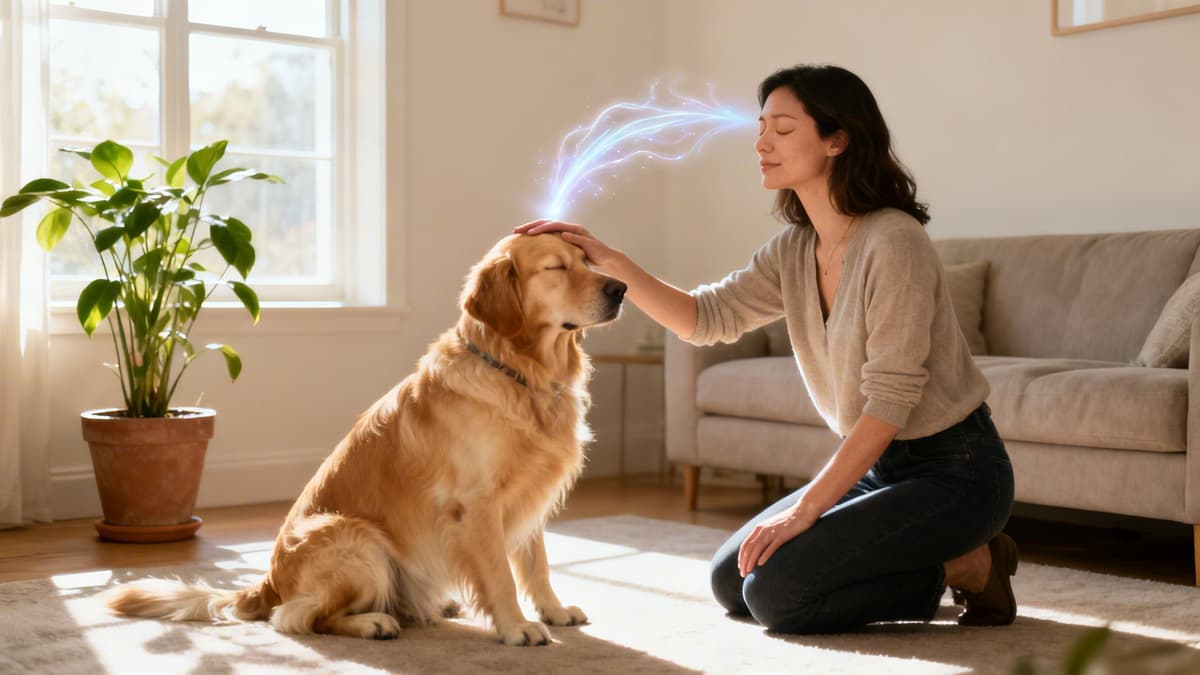
Here is an image that captures the kind of loving bond people are trying to understand more fully.

What situations bring people to me most often
- Sudden behavior changes, like hiding, pacing, refusing food, clinginess, or aggression that seems to come out of nowhere.
- Emotional stress in the home, especially after a move, divorce, loss, renovation, new baby, or another animal joining the family.
- End-of-life questions, when a pet parent wants emotional insight that can sit alongside veterinary guidance.
- Unfinished grief, when someone needs closure after a beloved companion has passed.
- A deeper bond, even when nothing is “wrong,” because some people want to understand what brings their animal joy or comfort.
These days, pet owners are telling me they feel more connected to their animals’ inner world than ever. That matches what the market is showing. The U.S. pet industry reached $147 billion in 2023, with 70% of households owning pets, and a 2024 survey found that 41% of pet owners have sought alternative therapies like animal communication, as noted in this pet industry overview on Petworks.
What else might help besides a reading
I always tell people to think practically, too. If your dog seems restless, anxious, or hard to settle, comfort in the environment matters. A supportive resting space can make a real difference, and I often point clients toward a guide to finding the perfect bed for your furry friend when we are looking at stress in the home.
In short, a reading is most useful when it helps you connect the emotional dots. It is not about making life mystical for the sake of it. It is about understanding what your animal may be reacting to, feeling, or needing so you can respond with more clarity.
If you keep thinking, “Something is off, but I can’t explain it,” that is often the moment an intuitive session becomes worth considering.
You’re not alone in feeling this. More recently in my practice, I’ve noticed people giving themselves permission to seek emotional answers sooner, before frustration or guilt takes over.
Where Can You Find a Legitimate Communicator Near You?
Local can feel comforting. I understand that. Sitting across from someone in your own town can make the whole thing feel more real.
But in my experience, legitimacy does not come from geography. It comes from how a communicator works, how they speak about the work, and what kind of trail they leave behind them.
Who should you ask first
I’ve found that the best referrals often come from people who work closely with animals every day. A veterinarian with an integrated approach, a seasoned pet sitter, a grief counselor for pet loss, or a thoughtful independent pet shop owner may know who people return to and why.
A client of mine once said, “I found three names online, but my dog walker only trusted one of them.” That recommendation ended up mattering more than the directory listing.
What should a real profile look like
When you search online, read slowly. Look for specific client feedback, not just praise. “She was amazing” tells me almost nothing. “She picked up that my cat was avoiding the kitchen after the feeding routine changed” tells me much more.
If you want a starting point for browsing options beyond basic local listings, I recommend reviewing a page like this animal communicator near me resource and then comparing each practitioner’s process, transparency, and ethics before you decide.
| Green flags | Red flags |
|---|---|
| Clear explanation of how sessions work | Vague promises with no process |
| Specific testimonials that describe real issues | Generic praise that could apply to anyone |
| Comfort discussing limits and ethics | Acts offended when you ask basic questions |
| Grounded tone and realistic expectations | Guarantees dramatic outcomes or miracles |
What a good first conversation sounds like
I remember a pet owner asking me, “Can you promise you’ll tell me exactly why my horse is refusing jumps?” My answer was no, because no ethical communicator should promise certainty on command. What I can do is listen well, look for patterns, and give the owner something honest to work with.
Here’s another way to look at it. A legitimate communicator makes room for nuance. Animals are clear, but humans are complex, and not every issue has a single dramatic answer.
Trust me, a quiet professional with a thoughtful intake process is usually more valuable than the loudest person in your search results.
What to Do Before Booking a Reading?
Before you book, slow down. Many people either protect themselves well here or rush straight into disappointment.
I’ve seen pet parents ignore their own discomfort because the website looked polished. I’ve also seen them find an excellent communicator because they asked a few calm, smart questions first. What that really means is your vetting process matters just as much as the session itself.

Why skepticism is healthy
I welcome healthy skepticism. In fact, I think it protects both you and the integrity of this field. A 2025 analysis of online forums found that 68% of pet owners expressed skepticism because of unverified claims, while 73% of people interested in the service hesitated because of fraud fears, according to this analysis summarized on Petworks.
I know that might surprise you, but I consider that a sign of discernment, not cynicism. People should be careful with their money and their hearts.
What I tell pet parents to check
- Read the process closely. If a communicator cannot explain how they work, I would keep looking.
- Ask about ethics. They should be clear that animal communication does not replace veterinary care.
- Look for evidence of real client experience. Years in practice, detailed testimonials, or a thoughtful intake process all matter.
- Notice their tone. Pressure, fear tactics, or grand claims are not signs of depth.
- Check whether they welcome questions. A grounded professional does not get defensive when you ask how a session works.
Here is a helpful video to keep in mind while you evaluate who feels trustworthy.
Questions worth asking before you pay
You can ask, “Do you work from a photo?” “Do you want a written question list?” “How do you handle upsetting information?” “Will I receive the reading live or in writing?”
I’ve found that real professionals answer plainly. They do not hide behind mystery. Things get interesting here, because the more grounded someone is, the safer the session usually feels.
If a communicator tries to impress you more than they try to inform you, I would pause right there.
By the way, I have had clients tell me they knew someone was wrong for them within five minutes of an introductory call. Trust me, that matters. Animals respond to authenticity, and so do people.
How Remote Communication Compares to In-Person Sessions
Many people assume a reading has to happen face to face to be real. In my experience, that is one of the biggest misunderstandings in this work.
Some of my clearest sessions have happened with animals I never met in person. I’ve connected with pets in other states, other countries, and homes I have never stepped inside. I find this absolutely fascinating, because distance changes far less than many expect.

What remote sessions often do better
Remote work can reduce distraction. A shy dog does not have to manage a stranger entering the home. A cat does not have to decide whether to hide under the bed. The animal stays in familiar energy, and I tune in through the photo, the question list, and the felt connection.
One reason this works so well is that many experienced communicators use structure. According to Val Heart’s explanation of professional animal communication methods, leading remote communicators use questionnaires and photo analysis in a focused telepathic process, and that method can yield over 90% success in observable behavioral shifts when the owner is actively involved.
In everyday terms, the owner becomes part of the outcome instead of just a spectator. That is powerful.
When local, in-person sessions still make sense
There are times when in-person support feels emotionally easier. Some people want the comfort of sitting with someone. Some horses and farm animals are part of a broader property dynamic, and being physically present may help the human feel more settled.
I once worked with a woman who said, “I know remote should work, but I need to look someone in the eye.” That was honest, and honesty is useful. The right format is the one that lets you receive the information well.
How I compare the two
| Remote sessions | In-person sessions |
|---|---|
| Useful when you want access beyond your local area | Useful when physical presence helps you feel grounded |
| Can be calmer for sensitive animals | Can feel reassuring for first-time clients |
| Often built around photos and written questions | May include live observation of behavior in the moment |
| Good when you care more about fit than distance | Good when travel and scheduling are manageable |
What I tell pet parents is this. Do not confuse physical closeness with energetic quality. Think about it this way, a nearby communicator who is vague and unsteady is not more helpful than a remote one with a clear process.
If you want to understand why this style of session can still feel very personal, I suggest reading this explanation of remote pet readings and emotional connection. One option in this space is PetPsychic.com, which works from a recent photo and written questions, offers readings in writing within 24 to 48 hours, and describes a double reading guarantee if the first session does not resonate.
The wonderful news is that you are not limited to whoever happens to be closest. You can choose for fit, clarity, and steadiness. What often amazes me is this: animals connect beautifully when their humans stop forcing the idea that it has to look a certain way.
What I’d Tell a Friend About Preparing for a Reading
If you were my friend, I would tell you to prepare your heart before you prepare your questions. The reading lands better when you are open, honest, and not trying to control every detail.
I say that with a lot of tenderness. After 27 years in this work, I’ve watched people arrive with fear so loud that they could barely hear their animal’s message. I’ve also watched that fear soften the moment they let themselves breathe.

What should you do the day before
Write down your top questions. Keep them simple and real. “Why are you anxious when I leave?” is better than trying to impress anyone with spiritual language.
I once had a client preparing to ask about pain levels in her elderly dog. During the session, the dog kept showing me joyful images from his younger years. It was as if he was saying, “Please remember me whole, too.” This is the part I love most, because animals often bring the exact medicine their people did not know they needed.
What if this is about end-of-life
This deserves extra gentleness. As of 2025, there are numerous U.S. pets over age 10, and end-of-life consultations are rising. Animal communication is increasingly used to offer emotional insight that supports veterinary choices and gives grieving owners closure and peace of mind, as described in a discussion of this work.
In short, a reading is not about asking your animal to make the medical decision for you. It is about listening for comfort, readiness, fear, love, and anything they want you to know while your veterinarian guides the clinical side.
Your job is not to be perfect during a reading. Your job is to be present enough to hear what matters.
More recently in my practice, I’ve seen people benefit from taking ten quiet minutes before a session. Sit down. Put your phone away. Look at your pet’s photo. Let yourself remember that this is a relationship, not a test.
If you want a practical walkthrough of how to get yourself ready, I recommend this guide on how animal communication works and how to prepare. Here’s another way to look at it. A good reading is part listening, part receiving, and part allowing yourself to be changed by what you hear.
Frequently Asked Questions
Can a communicator talk to a pet who has passed away?
Yes. In my experience, this is one of the most healing forms of animal communication. I have worked with many grieving pet parents who needed reassurance, closure, or one more felt moment of connection. The messages often carry the same personality, humor, tenderness, or emotional truth the animal had in life, and that can bring enormous peace.
Is animal communication a substitute for veterinary care?
No. I treat it as a complementary practice, never a replacement for medical care. A reading may help you understand emotional stress, relationship dynamics, or where your pet seems uncomfortable, but diagnosis and treatment belong with a licensed veterinarian. In my experience, the most ethical sessions respect that boundary clearly.
Do I need someone local for the reading to work?
No, not necessarily. I’ve found that many strong sessions happen remotely when the communicator uses a clear intake process, a recent photo, and focused questions. Some people still prefer local support for personal comfort, and that is valid, but the quality of the connection usually depends more on the communicator’s skill and steadiness than on physical distance.
What should I bring into a session emotionally?
Bring honesty more than certainty. You do not have to be perfectly calm or spiritually polished. Just come willing to listen. In my experience, the best sessions happen when pet parents are open to hearing something useful, even if it is different from what they expected.
If you want a clear next step, you can explore PetPsychic.com to see how photo-based readings work, what questions you can ask, and whether that format feels like the right fit for you and your animal.

Curious what your pet is thinking?
Get a personal, intuitive reading from a gifted animal communicator, delivered to your inbox within 24-48 hours.
Get a Pet Psychic Reading Get a Pet Psychic Reading
Delivered within 24-48 hours · Double Reading Guarantee